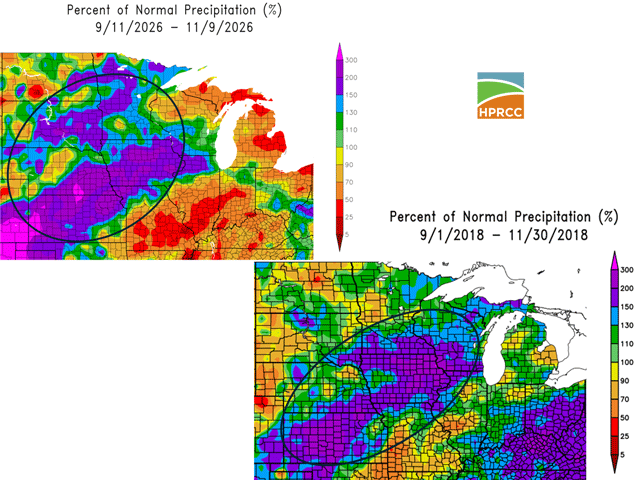
A historically wet September set the scene for slow harvest progress in both 2018 and 2026 in the Western Corn Belt.



Enrollment for Agricultural Risk Coverage/Price Loss Coverage continues through Dec. 11 for the 2026 crops. Farmers are making their elections...

Montana ranchers Tristan and Shaylyn Stark bring family together for weaning day, evaluating calf performance, marketing steers and selecting...
Bryce Anderson has been DTN's ag meteorologist and fill-in market analyst since 1991. He combines his expertise in weather forecasting with a south-central Nebraska farm background to bring in-depth, focused commentary on the top weather developments affecting agriculture each day.
His comments in the DTN Ag Weather Brief and the DTN Market Impact Weather articles are read by persons involved in all aspects of the agricultural industry and in all major crop and livestock production areas of the U.S. and Canada.
Bryce also delivers forecast commentary on regional and national farm broadcast programs and hosts DTN audio and video productions.
Prior to joining DTN, Bryce was in radio and television farm broadcasting and agricultural meteorology at stations in Iowa, Missouri and Nebraska. He holds a degree in broadcast journalism from the University of Nebraska, and a certificate of broadcast meteorology from Mississippi State University.
A historically wet September set the scene for slow harvest progress in both 2018 and 2026 in the Western Corn Belt.
A historically wet September set the scene for slow harvest progress in both 2018 and 2026 in the Western Corn Belt.
A historically wet September set the scene for slow harvest progress in both 2018 and 2026 in the Western Corn Belt.
Precipitation amounts of 2 to 4 times the normal in October gave winter wheat a good start on moisture.
Nebraska's entire grain fill period had record-level warmth in 2026.

Major Indonesia palm oil areas face peak dryness during the next three months.
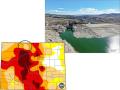
Snowmelt moisture provided less than one-quarter of the average volume to the North Platte River system in 2026.

Irrigated corn sites are mostly below average, and rainfed sites are mostly no better than average as 2026 winds down.

Eastern and southern Australia wheat areas have turned notably drier as wheat enters its grain-producing stages.
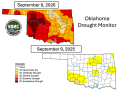
Drought this fall in Oklahoma is the most intense since 2012.

Corn under irrigation had heat stress this season, even with available moisture.
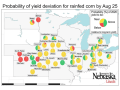
The UNL Hybrid-Maize yield model points to near- to above-average non-irrigated Midwest corn yields as of Aug. 25, 2026.
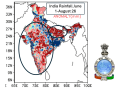
Monsoon rains have bypassed some high-production states in the India subcontinent.
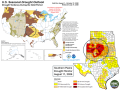
Extreme to exceptional drought has a tight grip on Oklahoma and Texas Panhandle winter wheat areas.