


Ag Policy Blog
USDA Preparing to Notify Landowners About New Base-Acre Expansion
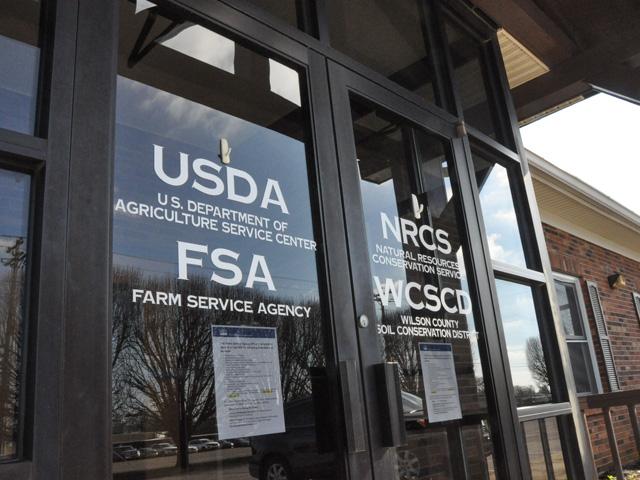
OMAHA (DTN) -- Landowners with acres potentially eligible to enroll as base acres for USDA commodity programs should get notifications sometime in the next month informing them about their eligibility.
Richard Fordyce, USDA's undersecretary for Farm Production and Conservation (FPAC), told DTN in an interview that landowners should start to receive notifications within the next month about whether they have farmland eligible for enrollment in base acres.
"We're getting close to being able to send out those notifications to landowners about what base-acre changes they'll have," Fordyce said.
In response to a statement issued by the National Association of Farmer-elected Committees, Fordyce also acknowledged at least some local county offices are facing staffing challenges after USDA encouraged a wave of retirements and resignations last year.
The One Big Beautiful Bill Act last summer included a provision allowing USDA to add up to 30 million base acres to the Agricultural Risk Coverage/Price Loss Coverage (ARC/PLC) programs. The provision was a major expansion for the farm safety net.
Fordyce has emphasized the notices for base acres will go to landowners, not farm operators. Farmers who are renting ground not enrolled in base acres should inform their landlords these notifications will be coming soon.
Farm owners also will have 90 days to opt out if they have some reason for not wanting to see their acreage enrolled in ARC or PLC programs. At the same time, there are no additional steps needed by landowners to add those acres.
"They don't need to do anything if they want to accept those additional base acres," Fordyce said. "Those will just be part of that farm number going forward."
Fordyce also clarified landowners will not lose any base acres under this exercise. He said at least some people have asked him about that possibility.
"The answer is absolutely not," he said. "This is an opportunity to add base where that is available."
At the same time, while landowners will receive notices explaining a boost in base acres, the increase in base acres also cannot exceed the number of acres planted on a farm either.
While USDA is adding 30 million acres to the commodity crop programs, the legislation did not provide an opportunity for farmers to update or reallocate their current base acres.
P[L1] D[0x0] M[300x250] OOP[F] ADUNIT[] T[]
At the moment, it is still unclear exactly how many acres are eligible to enroll in base. In order for acreage to qualify it must have been reported as planted acreage for commodity crops between 2019 and 2023. That has required Farm Service Agency (FSA) offices to spend a lot of time in the past several months comparing base acres with reported planted acreage to determine which landowners would be eligible.
The actual assignment of the commodity tied to those base acres will depend on the reported planted acres for those crops during that 2019-2023 period.
FSA shows landowners have 246.6 million base acres spread across 27 commodities. Corn (92.8 million acres), wheat (62.2 million acres) and soybeans (52.8 million acres) make up the lion's share of base acres at 207.8 million acres.
An analysis last year by the University of Illinois' Farmdoc economists showed there was an average of 38.4 million acres planted in principal commodity crops between the 2019-2023 crop years beyond the current base acres.
USDA will likely end up prorating the eligible acreage a landowner can add to base acres. If, for instance, USDA comes up with 40 million eligible acres, then a farmer with 100 eligible acres would likely see that cut 25% to 75 new base acres.
SPECIALTY CROP ASSISTANCE
Farmers who raise produce and other specialty crops also have been asked in recent months to report their acreage. That work is close to being finished by local offices, Fordyce said. For some acres of the country that focus on specialty crops required deploying extra USDA staff to help local offices.
"We were able to do that and so the acreage reports are pretty well done and we know the universe of acres there," Fordyce said.
That will lead USDA to set the payment rates for the $1 billion Assistance for Specialty Crop Farmers Program (ASCF). Like the Farmer Bridge Assistance (FBA) program, USDA will send out pre-filled application forms.
USDA also is encouraging specialty crop farmers to set up accounts at login.gov to make it easier to review their applications and sign them remotely.
COUNTY OFFICE STAFFING CHALLENGES
Fordyce acknowledged USDA continues to try to rebuild some county office staffs after department cuts last year through the deferred resignation program (DRP).
The National Association of Farmer-elected Committees (NAFEC) on Wednesday issued a news release raising concerns about local Farm Service Agency office staff losses. NAFEC said its members disagree with Trump administration officials' statements that the speedy delivery of Farmer Bridge assistance payments indicates adequate Farm Service Agency county staffing levels. NAFEC urged farmers and ranchers to tell their representatives in Congress that staffing levels need to be increased.
"NAFEC is concerned that the administration is focused on cutting local staff in the countryside, while maintaining staffing at the national level," the group said in a news release.
Fordyce agreed the DRP losses became difficult to manage. Fordyce said he has visited counties that might normally have five staff but were down to two people supporting the farmers in that county. "Certainly, that's impactful," he said.
The hiring freeze is now over and USDA is working to hire people back into those offices, Fordyce said. "Has it been a challenge for some counties and localities in the country? Absolutely. But we're working to try to get folks back into those county offices."
In its release, NAFEC Executive Vice President Craig Turner said keeping local staffing in communities is essential if USDA wishes to maintain a high level of service at FSA offices.
"You can be for certain, without additional staffing, producer service will be disrupted," Turner said. "Agriculture producers should all be concerned. Having our local office staffed to adequately serve our farming communities is at stake. The ability to apply in person with a local staff member is at stake. NAFEC urges all agriculture producers to contact your congressional leaders and request FSA county office staffing levels be increased to adequate levels!"
NAFEC members are farmers and ranchers who have been elected to the committees to oversee the county offices that deliver farm benefits.
While USDA has been stressing more enrollment and program delivery online, NAFEC stated the county staff, "know first-hand just how important it is to get program benefits to their customers, which is why they stay late off the clock, and work to get the job done," NAFEC said.
NAFEC added, "The software, while beneficial, did not magically identify all the acres of crops needed to determine the payment rates. The beneficial software did not magically determine who was, or was not, an eligible farmer to receive payment, where to send the payments by producer account, or how to process and review the payments to ensure correctness. These actions were all performed throughout the year by FSA county office staff, many of whom have now taken early retirements and buyouts under the administration's initiative to reduce local staffing across the nation."
DTN Political Correspondent Jerry Hagstrom contributed to this report.
Chris Clayton can be reached at Chris.Clayton@dtn.com
Follow him on social platform X @ChrisClaytonDTN
(c) Copyright 2026 DTN, LLC. All rights reserved.
Comments
To comment, please Log In or Join our Community .