



Market Matters Blog
Upper Mississippi and Great Lakes Shipping Seasons Have Commenced
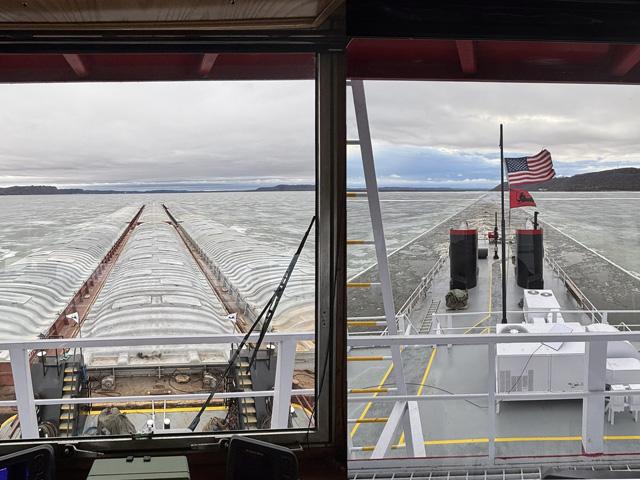
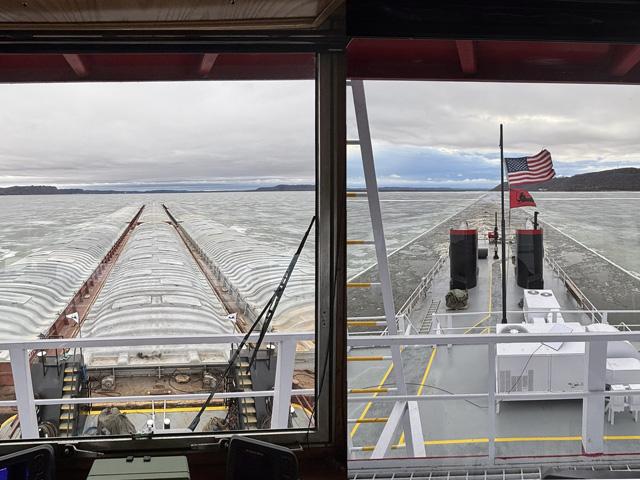
The 2026 shipping season is officially underway, starting with the Mid-Mississippi River opener after the National Grain and Feed Association (NGFA) declared the waterway open at 7:00 a.m. on March 19, following the MV John R. Operle's arrival in Dubuque, Iowa, at 16:30 p.m. on March 18. MV is a commonly used shipping term meaning motor vessel.
According to NGFA Barge Freight Trading Rule 18(J), the Dubuque and South (Mid-Mississippi) opening commences the first 07:00 hours of the first business day after the first empty dry cargo covered barge suitable for loading, originating at or below Winfield, Missouri, reaches Dubuque, Iowa.
The final hurdle to complete the entire Upper Mississippi opening this year was getting through still ice-covered Lake Pepin. The USACE, St. Paul District, said on their website, "Lake Pepin is the last major barrier for vessels reaching the head of the navigation channel in St. Paul, Minnesota. Located between the Minnesota cities of Red Wing and Wabasha, Lake Pepin is the last part of the river to break up (ice) because the river is wider, and subsequently, the current is slower there than it is in other parts of the river. If a tow can make it through Lake Pepin, it can make it to St. Paul. The Army Corps of Engineers measures ice thickness on Lake Pepin throughout the spring to report to tow companies about the impending ice-out."
I contacted the captain of the MV Angela K, Captain Aaron Hundt, and he said, "We arrived just below Lake Pepin around 3:00 a.m. on Saturday, March 22, and I decided to let the warm weather do its thing all day hoping that it would soften up a little more before we made a run for it. I started across the Lake as the first boat to cross around 7:00 a.m. and it took about 4 hours to cover the 5-mile stretch of ice. It looked like the top layer had really softened up, but there was still a consistent 8-10 inches of ice we were busting through."
Hundt added, "We were the first boat all the way up, but there was a small boat that was behind waiting for us to break through Lake Pepin. He only had a couple empties, making better time and is a single lock so he asked if he could come around us."
P[L1] D[0x0] M[300x250] OOP[F] ADUNIT[] T[]
When the Hastings railroad bridge near Lock 2 reopened on March 23, the smaller tow MV Crockett moved ahead of MV Angela K and was locked through with two barges. Following MV Crockett through Lock 2, the MV Angela K remained on track to be the first arrival of the season in St. Paul. The tow was pushing nine barges carrying magnesite, ammonium phosphate and calcium ammonium nitrate. Reaching St. Paul marks the unofficial start to the navigation season as it is the last port on the Upper Mississippi River to open every year.
According to the Corps, the earliest date for an upbound tow to reach Lock and Dam 2 was March 4, in 1983, 1984 and 2000. The average starting date of the navigation season is March 22. The latest arrival date in a non-flood year was April 4, 2008. Historic flooding in 2001 delayed the arrival of the first tow until May 11.
GREAT LAKES/ST. LAWRENCE SEAWAY SEASON OFFICIALLY OPEN
After the latest close on record, Jan. 12, 2026, the U.S. Department of Transportation's Great Lakes St. Lawrence Seaway Development Corporation (GLS) celebrated opening the vital waterway's 68th navigation season at the St. Lambert Lock in Quebec, Canada. GLS Administrator Mike McCoshen was joined by St. Lawrence Seaway Management Corporation (SLSMC) President and CEO Jim Athanasiou to welcome MV BLACKY -- the first commercial vessel to travel through the lock and kick off the new navigation season, according to a press release from the Great Lakes St. Lawrence Seaway Development Corporation.
The opening of the Seaway also paves the way for the first saltie (ocean-going ship) to enter from the Atlantic Ocean at Montreal, Quebec. At the far end of the Seaway, in the Port of Duluth-Superior, the first saltie is a welcome sight and signals the opening of their grain shipping season. The distance from the Atlantic Ocean to Duluth, Minnesota, on Lake Superior is 2,038 nautical miles. Here is more info on the St. Lawrence Seaway: https://greatlakes-seaway.com/….
Northwest of the main St. Lawrence Seaway system are the Soo Locks. The Soo Locks are a set of parallel locks, operated and maintained by the United States Army Corps of Engineers, Detroit District, located on the St. Mary's River. The locks allow freighters to navigate between Lake Superior and the lower Great Lakes, the St. Lawrence Seaway, and international markets. Link to more info on the Soo Locks: https://www.lrd.usace.army.mil/….
In a March 10 press release, the U.S. Army Corps of Engineers, Detroit District, said they would open the Poe Lock, part of the Soo Locks, in Sault Ste. Marie, Michigan, to all marine traffic at 12:01 a.m. EDT on March 25, marking the start of the 2026 Great Lakes shipping season. The tugboat Dirk S. VanEnkevort, pushing the barge Michigan Trader, was the first to pass through the lock. Federal regulation (33 CFR 207.440) establishes the operating season based on the feasibility of vessels operating during typical Great Lakes ice conditions. Link to USACE press release: https://www.lrd.usace.army.mil/….
Vessels entering the Great Lakes/St. Lawrence Seaway will encounter ice in spots but otherwise should have smooth sailing. The Great Lakes Ice Tracker for March 25, 2026, showed combined ice coverage at 19%. Lake Superior is 19% covered, Lake Michigan is 10%, Lake Huron is 38%, Lake Erie is 4% and Lake Ontario is 3% covered.
Mary Kennedy can be reached at mary.kennedy@dtn.com
Follow her on social platform X @MaryCKenn
(c) Copyright 2026 DTN, LLC. All rights reserved.
Comments
To comment, please Log In or Join our Community .