



Ethanol Blog
USDA Final Rule Lets Farmers Profit From No-Till, Cover Crops Through Biofuel Tax Credit
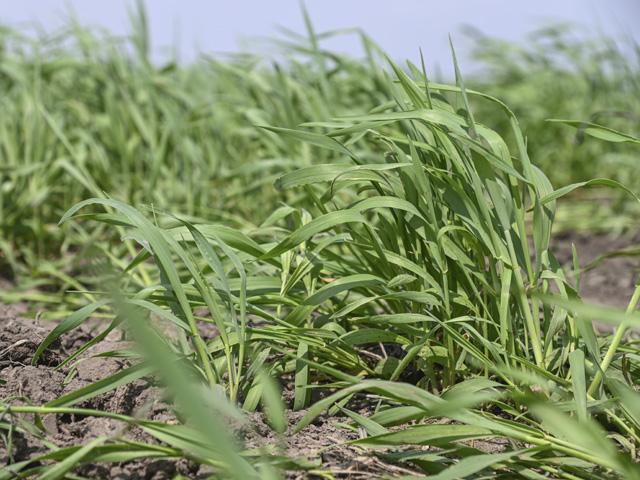
LINCOLN, Neb. (DTN) -- If you're a farmer who's already practicing no-till, using cover crops or managing nitrogen efficiently, the final rule released by USDA on Friday now makes it easier to track those practices and profit from them.
The USDA's technical guidelines for regenerative agriculture biofuel feedstocks create a pathway for farmers to sell their crops as low-carbon intensity feedstocks, namely corn, soybeans, sorghum and spring canola.
Biofuels and agriculture groups on Friday pointed to the release of the guidelines as an important step for farmers hoping to profit from a future sustainable aviation fuel industry that uses their crops to produce fuel.
Brian Jennings, CEO of the American Coalition for Ethanol, said if the U.S. Treasury incorporates into a final 45Z Clean Fuel Production tax credit rule, the USDA rule and the newly released feedstock carbon intensity calculator, it would provide certainty for farmers and biofuel producers.
"USDA's final rule represents meaningful progress toward enabling farmers who have been adopting low-carbon practices to work with biofuel producers who may want to monetize those practices through the 45Z credit," Jennings said in a statement.
"For years, ACE has advocated for science-based approaches to clean fuel programs which accurately reflect the benefits of reduced tillage, cover crops, nutrient management and other low-carbon farming practices. This rule, if adopted by Treasury for 45Z and other jurisdictions for their low-carbon markets, will enable farmers and biofuel producers to finally monetize those practices."
P[L1] D[0x0] M[300x250] OOP[F] ADUNIT[] T[]
American Soybean Association president and Ohio farmer Scott Metzger said the new rule would "unlock a new premium soybean market."
"Domestic markets, bolstered by biomass-based diesel industry expansion, improve basis and expand a reliable, local customer base for our soybeans," he said in a statement.
"Soybean farmers fought hard to improve 45Z to support domestic market growth for U.S. soy, and for the first time ever, the USDA regenerative feedstock rule will ensure that the 45Z biofuel tax credit will not only benefit biofuel producers but the farmers who produce homegrown regenerative biofuel feedstocks."
Geoff Cooper, president and CEO of the Renewable Fuels Association, said in a statement to DTN that U.S. farmers deserve to profit from the work they're already doing.
"America's farmers are the most efficient in the world and USDA's rule begins to provide a mechanism that finally quantifies and recognizes the environmental benefits of cultivation practices that are already widely in use," Cooper said.
The eligible low-carbon practices that reduce carbon-intensity scores include no till. That includes no full-width soil disturbance between harvest and next planting. Strip tillage is allowed within T-DISC value of 0.075 and must be practiced four out of every five years.
Other eligible practices include reduced tillage and cover crops. Grazing cover crops is now allowed under the final rule while fertilizing cover crops is not allowed.
Nutrient-use efficiency is also identified as a practice, including using synthetic fertilizer, nitrification inhibitors and manure.
The rule also requires five years of record keeping and to make the information available to third-party verifiers. Farmers are also required to prepare biofuel feedstock reports.
"This rule is a great step forward from the draft rule, providing greater flexibility for farmers to adopt the practices that make the most sense for their farm," said Monte Shaw, executive director of the Iowa Renewable Fuels Association.
"The benefits of recognizing regenerative ag practices ripple throughout rural America. Farmers can benefit from adopting these practices. Biofuels producers can benefit from sourcing low-CI feedstocks and accessing massive new markets around the globe. And maybe most importantly, biofuels production will now be the single biggest driver of regenerative ag practices that improve water quality throughout rural America."
Read the rule here: https://public-inspection.federalregister.gov/…
Todd Neeley can be reached at todd.neeley@dtn.com
Follow him on social platform X @DTNeeley
(c) Copyright 2026 DTN, LLC. All rights reserved.
Comments
To comment, please Log In or Join our Community .