



An Urban's Rural View
Why Free Trade Isn't Coming Back
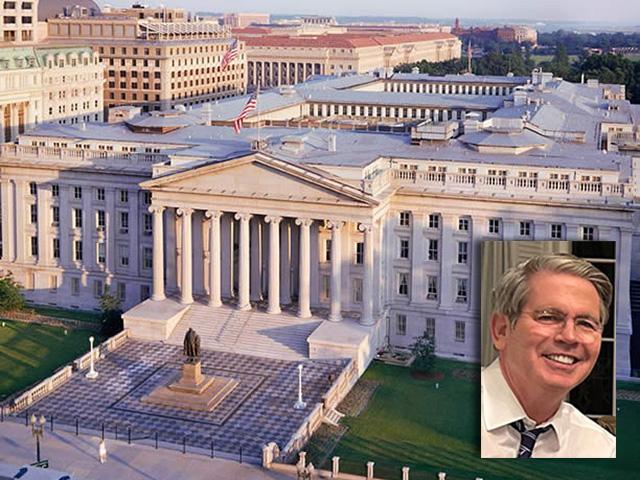
There was a time not so many years ago when Washington believed in free trade and raced to sign free trade agreements. Exporting sectors like agriculture were among the beneficiaries. They'd love to go back to those days.
Don't hold your breath. Over the years, support for free trade was undermined by the loss of high-wage manufacturing jobs to industrial hollowing out. What put the nail in free-trade's coffin, though, was the growing perception that China poses a threat to the United States, coupled with China's increasing dominance of global manufacturing. It's uncomfortable relying on a geopolitical adversary for critical goods.
In an important speech in late May, Treasury Secretary Scott Bessent said that for too long the U.S. ignored the national security implications of trade. It allowed its industrial base to erode, thinking it could always import whatever was needed.
Economic security is national security, he said, because "a nation that cannot manufacture, mine, shop or refine its needs gradually cedes its strength -- and sovereignty -- to others." (https://home.treasury.gov/…)
Bessent was providing the intellectual underpinning for the administration's tariff policy but it's a rationale with which many Democrats would agree. Officials in the Biden administration, like then Commerce Secretary Gina Raimondo, said similar things on several occasions.
In a way, Washington's increasing interest in economic self-sufficiency is a reaction to Beijing's. For many years now, Chinese policy statements have more or less explicitly said that China doesn't want to depend on the world for anything.
Agriculture? The Chinese can't grow enough soybeans at home, but they fear depending on imports, especially from the U.S. They have diversified and made Brazil their preferred supplier but they're also working to reduce soybean consumption by developing fermented feeds for their pigs. (https://www.reuters.com/…)
P[L1] D[0x0] M[300x250] OOP[F] ADUNIT[] T[]
Manufacturing? China has succeeded in becoming what the U.S. once was -- a country that can make almost everything domestically. By investing big time in overcapacity, driving down prices and overwhelming competitors it has become the nearly exclusive manufacturer of many products.
Fear of losing access to critical goods was rising even before China cut the U.S. off last year from critical rare-earth materials whose processing China dominates. The last three administrations have been committed to making more of what America consumes in America. Where the two parties differ is on how to go about it.
Both Trump administrations employed tariffs. Biden's used a combination of targeted tariffs and government subsidies. But the goal -- and the underlying fear -- were the same.
It isn't possible, though, to abandon interdependence altogether, and not just because of China's manufacturing dominance. Specialization has made some countries so good at producing particular products that it's nearly impossible for other countries to catch up.
Two acronyms exemplify the point:
-- ASML. This company, based in the Netherlands, makes the most sophisticated machines used to make the most sophisticated semiconductors. No other company anywhere can match its Extreme Ultraviolet lithography machines.
They sell for hundreds of millions of dollars and without them production of high-end semiconductors would screech to a halt. It took decades for ASML to develop its techniques, which makes its monopoly hard to break.
-- TSMC. This company makes the world's most sophisticated semiconductors at its home base in Taiwan. It is ASML's biggest customer, but what really distinguishes it are a local network of suppliers and an engineering culture that competitors have found tough to match. TSMC has semiconductor fabs in other countries, including one in Arizona, but it makes the highest-end chips only in Taiwan.
Then there are the cases of near domination, like the Japanese firms that collectively have big market share in the obscure business of producing chemicals used in semiconductor production. Companies elsewhere have pieces of the action but many struggle to match the Japanese in purity and yield.
As these examples suggest, absolute autarky is unattainable. Even China can't do what ASML and TSMC do. (It might be able to annex Taiwan someday, taking over TSMC, but it's not likely to match TSMC otherwise. For starters, its companies can't buy EUV machines because of U.S. sanctions.)
In his speech Bessent conceded this point. He said there's a difference between "dangerous overdependence" and "healthy interdependence." The U.S., he admitted, will need "supply chains with trusted partners" for some products.
Problem is, the Trump administration has been slapping big tariffs on trusted partners, including those with specialized capabilities. The Biden administration's tariffs targeted China. The Trump approach has been tariffs on almost all products from almost all countries in hopes of spurring a broad manufacturing renaissance.
Bessent played down the differences in approach. "Reasonable people can debate the calibration of any particular instrument," he said. "But the central strategic insight is undoubtedly sound: trade policy, industrial capacity, and national security are inseparable."
Because both parties have bought into that insight, farm groups pushing for a return to free -- or at least freer -- trade will have a difficult time prevailing.
Urban Lehner can be reached at urbanize@gmail.com
(c) Copyright 2026 DTN, LLC. All rights reserved.
Comments
To comment, please Log In or Join our Community .