



Ag Policy Blog
USDA Expedites Reorganization, Some Farmers on Board with Plan
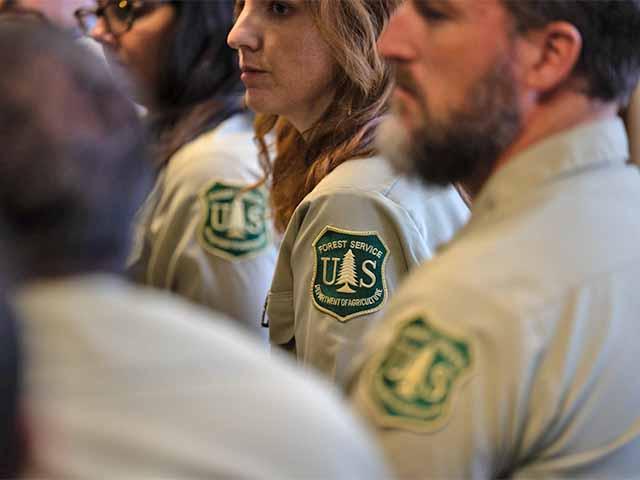
WASHINGTON (DTN) -- Nearly 2,600 U.S. Department of Agriculture employees and their unions are awaiting Tuesday's preliminary injunction hearing, which could determine whether the Trump administration can continue relocation notices and other parts of its reorganization plans.
The hearing is scheduled for 11 a.m. Tuesday in the U.S. District Court for the Northern District of California. Judge Susan Illston could issue a broad injunction halting the reorganization, pause specific actions, allow USDA to continue moving forward while the case proceeds, or end the debate.
But as it moves forward, USDA has been accelerating its reorganization, using buyout authorities to reduce its workforce, advancing relocation notices and leases for regional hubs. It's also implementing changes that unions say have treated bargaining-unit and non-bargaining-unit employees differently, violating bargaining agreements.
See: Labor Unions and Nonprofits File Another Motion to Halt USDA's 'Unlawful Reorganization Plan'
For farmers, the response so far has been less confrontational. A recent August poll of DTN subscribers found that nearly one-third support the reorganization, while another third said it was too early to tell whether the changes will be effective.
Thirty percent said the changes would improve USDA services, while acknowledging that short-term disruptions are expected. Thirty-one percent said it was too early to tell, 21% said they were not familiar enough with the changes to say and 18% said the reorganization would hurt farmer services and USDA should reconsider the plans.
The poll included 114 responses from a sample of DTN subscribers, who are grain and cattle operators.
EMPLOYEES LEAVING AS REORGANIZATION MOVES FORWARD
In 2025, USDA saw a major exodus of employees through the Deferred Resignation Program, which offered employees full salary and benefits on paid administrative leave in exchange for voluntary resignation by the end of 2025. About 15,100 employees participated.
In 2026, the tools of choice are the Voluntary Early Retirement Authority (VERA) and Voluntary Separation Incentive Payment (VSIP) buyouts. Both allow agencies that are downsizing or restructuring to offer incentives for employees to leave.
According to Government Executive reporting, the agency expected about 5,000 additional employees to accept VERA offers beginning in February and received an extension from the Office of Personnel Management (OPM) to continue the effort. If the department did not meet that goal, it planned to shrink the workforce through "relocations, reassignments and downgrades."
The Forest Service offered these early-exit opportunities at several points in the reorganization process, according to a Forest Service employee who spoke with DTN on the condition of anonymity.
P[L1] D[0x0] M[300x250] OOP[F] ADUNIT[] T[]
Asked whether they would take one, the employee said, "I'm not going anywhere. I'm not taking your offer."
While buyouts are an established human resources tool, the employee said, "I never heard of them honestly until this past year."
The National Agricultural Statistics Service (NASS) also offered buyout opportunities this summer, in addition to relocations that could make it more difficult for workers to remain with the agency.
"I think it just speaks to how they're really just trying to get staff to leave. Why else would they be offering this?" they said.
WORKFORCE REDUCTIONS AND TELEWORK
For employees who remain, the changes have created uncertainty about whether their jobs will remain in their current locations -- or whether they will remain at all.
The Forest Service employee who spoke with DTN said the changes have eroded the job security that once came with federal employment.
"It very much felt like a secure job that like this was this was safe. This was for a lifetime, and any of that sense of security is gone now," they said.
The employee said workers see through USDA's efforts to reorganize. "If you're telling someone they have to move a long distance away, they know that's going to lead to attrition," they said.
That potential attrition is also tied to USDA's push to end telework.
Remote work has historically allowed agencies to retain employees who otherwise might not relocate, but unions have challenged USDA's return-to-office policies.
On Aug. 19, an arbitrator found that USDA improperly revoked telework agreements without individualized employee assessments, violating its collective bargaining agreement in a case involving American Federation of State, County and Municipal Employees at Rural Development and USDA's Foreign Agricultural Service.
The decision is the latest in a growing series of federal telework cases in which unions have successfully challenged blanket return-to-office policies, gaining some power in the reorganization process. It was the 12th such union win this year.
USDA has finished bargaining agreements with all of its mission areas, but some unions say the department is violating federal law and recently negotiated agreements.
The same Forest Service employee told DTN that days after unions filed paperwork seeking a preliminary injunction, non-bargaining-unit GS-14 and GS-15 employees received reassignment notices about a month earlier than the agency had promised.
"Once that went live, the very next Monday, all these non-bargaining unit employees (BUE) 14s and 15s got notice that they had to fill out a survey within three days, declaring their preference for where they wanted to be located and what topics they wanted to focus on, and that their letters were start coming in this week," they said.
The reassignment letters were supposed to be sent out one month later, and agency leadership had reassured workers that union and nonunion employees would be treated similarly. "It goes against like agency talking points internally where they're like BUE and non-BUE will treat you guys all the same, and they were not," they explained.
Other claims of bargaining violations include issuing bargaining notices after the news release, potential anti-deficiency act violations and not completing a civil rights impact analysis.
NO TURNING BACK?
At the same time, USDA is continuing to make physical moves to prepare for workers.
As of July 17, the Natural Resources Conservation Service has entered final negotiations for new space in Fort Worth, Texas. USDA is also changing a lease in Salt Lake City, Utah, from NRCS to Forest Service headquarters space. The department submitted a request to the General Services Administration for a new lease in the Bannister Building in Kansas City, Missouri, as part of plans to establish a USDA hub. USDA also executed a new lease at 2300 Main in Kansas City to establish another USDA hub.
Those moves could complicate a successful preliminary injunction. If the court stops one or more parts of the reorganization, the department might need direction on how to handle employee relocations, leases and changes to employee roles already underway.
The legal challenge could disrupt administrative functions of USDA, but for farmers, the greater concern may be the loss of staff at local offices, reported earlier this month, rather than administrative slowdowns in Washington.
See, "USDA hasn't looked at staff attrition ahead of relocations, but downplays its impact,"
Also see, "Inside a USDA Staff Shortage," https://www.dtnpf.com/…
Jake Zajkowski can be reached at jake.zajkowski@dtn.com
Follow him on social platform X @jzajkow
(c) Copyright 2026 DTN, LLC. All rights reserved.
Comments
To comment, please Log In or Join our Community .