

Big Packers Appeal Beef-Fixing Class
Beef Packers Challenge Cattle Producer Class in $9 Billion Antitrust Case
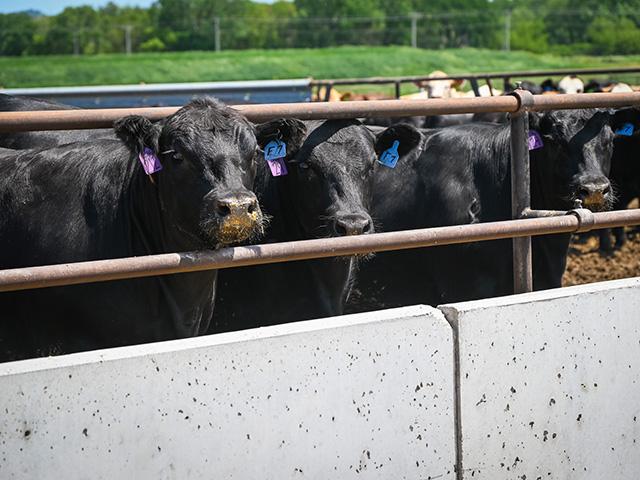
LINCOLN, Neb. (DTN) -- The nation's largest beef packers have challenged a Minnesota federal judge's certification of a nationwide cattle producer class, arguing before a federal appeals court that the district court improperly shifted key burdens of proof to packers in an ongoing beef price-fixing antitrust case.
In July, the U.S. District Court for the District of Minnesota certified a class of producers, including three damages classes that include beef buyers from large commercial purchasers down to individual consumers.
In their appeal to the U.S. Court of Appeals for the Eighth Circuit, National Beef, Tyson Foods and Cargill alleged the district court made two fundamental errors, including shifting the burden from the plaintiffs to the defendants. In addition, the companies allege the court erred in how plaintiffs attempted to prove injury.
According to the packing companies, cattle producers had the obligation to prove that common evidence could show injury across the class before the court certified the classes.
Those classes in their entirety could be seeking $9 billion in damages.
"While defendants may be correct that the alleged episodic conduct had only episodic impact, defendants would have to present evidence to that end to undermine cattle plaintiffs' theory of harm to the fact finder at trial," the packers said in their appeal.
P[L1] D[0x0] M[300x250] OOP[F] ADUNIT[] T[]
"The district court recognized plaintiffs had not done so and yet certified a damages class. Instead, despite recognizing that defendants 'may be correct' that the alleged episodic conduct led to only episodic (i.e., not common) impact, the district court held defendants could attempt to show lack of common impact at trial."
When it comes to how plaintiffs in the case attempted to prove injury, the packers told the appeals court that their expert analyzed feedlot data rather than data from actual cattle owners who constitute the proposed class.
"Plaintiffs instead ran their regression only on feedlots, many of which are not class members because they do not themselves produce (or own) fed cattle but rather sell on behalf of multiple fed cattle producers," the packers said in their appeal.
Throughout the appeal, the packers argue the district court should have denied certification outright because the plaintiffs failed to meet legal requirements.
A series of class actions and individual lawsuits were filed against the beef packers starting in 2019.
In September 2021, the court began consolidating the direct purchaser plaintiff cases, and in October 2021 the court coordinated all cases.
In 2022, additional individual cases were filed in federal court, and the Judicial Panel on Multidistrict Litigation transferred the cases to the federal court in Minnesota.
Fed-cattle prices increased steadily between 2009 and 2014 because of demand and a shortage of fed cattle following the droughts of 2011 through 2013.
Then, after prices peaked in November 2014, the cattle industry expected fed-cattle prices to stabilize in 2015 and continue around that level for several years. Instead, that did not occur.
Read more on DTN:
"Beef Antitrust Case Moves Forward," https://www.dtnpf.com/…
Todd Neeley can be reached at todd.neeley@dtn.com
Follow him on social platform X @DTNeeley
(c) Copyright 2026 DTN, LLC. All rights reserved.