


Ag Policy Blog
USDA Trade Chief Bets on Rapid-Response Missions to Lift Farm Economy
The Trump administration is betting that rapid-response trade missions -- putting farm groups and agribusinesses directly in front of overseas buyers -- can help lift farm profitability.
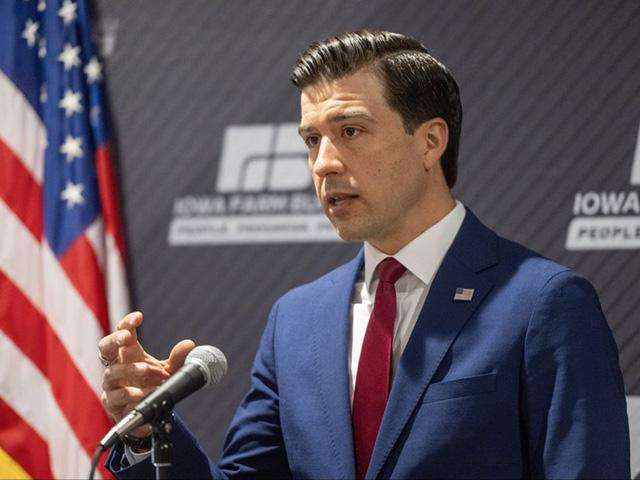
Luke Lindberg, USDA's undersecretary for Trade and Foreign Agricultural Affairs, traveled to Iowa with President Donald Trump on Tuesday. Lindberg also participated in a roundtable hosted by the Iowa Farm Bureau Federation that included representatives from various commodity groups.
Lindberg noted the president's speech hit on both year-round E15 and trade agreements to boost demand for farm products.
"We're all in alignment here that the main goal is to grow our demand for our products, both overseas and here domestically," Lindberg said Wednesday in a phone interview with DTN.
Lindberg
Lindberg stressed the need for "rapid response" trade missions with new deals to get various commodity groups in the country meeting prospective buyers.
"It's not just about getting trade agreements signed," he said. "We need to get sales done under those trade agreements so that we can bring dollars back to places like Iowa."
SOUTHEAST ASIA PUSH
Lindberg was in Malaysia two weeks ago and will lead a trade delegation to Indonesia next week that will include representatives from 41 businesses and commodity groups.
Lindberg highlighted the potential to increase exports in southeast Asia.
"Indonesia is one of the top five largest countries by population globally so their needs are many," he said. "There are a number of product categories I do believe that we will be successful in. We have dairy producers coming over, for example, and we would love to see Indonesia move forward on some biofuels activity domestically there as well."
P[L1] D[0x0] M[300x250] OOP[F] ADUNIT[] T[]
The Trump administration and Indonesia reached a framework on a trade deal last July that eliminates tariffs on 99% of U.S. products, including all agricultural products. That includes exempting U.S. food and agricultural products from all of Indonesia's import licensing policies.
Indonesia right now is the No. 11 market for agricultural commodities at just under $3 billion in sales in 2024, though the pace of agricultural exports to the country was down 14% through October, according to USDA. Soybeans remain the biggest U.S. agricultural export to Indonesia right now at about $1.2 billion a year. Distillers grain also has been a major growth export to Indonesia as well.
"We're optimistic that that trade relationship will be a bountiful one for our farmers here in the future," he said.
The Trump administration also signed a trade agreement with Malaysia late last year and is now in the implementation phase. A key breakthrough in that agreement, Lindberg said, was Malaysia's formal recognition of the U.S. food safety system, a step that helps remove long-standing non-tariff barriers.
"When these countries agree that our system is safe, that really unlocks a tremendous amount of opportunity for our folks," Lindberg said.
USDA also has a trade mission organized to Manila, Philippines, in early April.
USMCA, CHINA REMAIN TOP FARMER CONCERNS
At the Iowa roundtable, farmers stressed the importance of the U.S.-Mexico-Canada Agreement (USMCA), Lindberg said.
USMCA is up for a review this year and agricultural groups want to protect the agreement and access to those markets.
"Both of those markets have proven to be a great sales opportunity for our producers," Lindberg said.
There also was some discussion about China as well. China purchased about 12 million metric tons of U.S. soybeans this year and has committed to an additional 25 million metric tons going into next year. However, unresolved issues remain, particularly regarding beef access. China right now needs to follow through on certifying some beef processing plants to sell into the country again.
"We're tracking all of the various aspects of what China has agreed to and making sure to hold them accountable to the agreement they've made here with our family farms," Lindberg said.
INDIA SEEN AS A LONG-TERM OPPORTUNITY
While U.S. farm groups often look to India as a growth opportunity, India and the European Union just struck a free trade deal this week that reports out of New Delhi describe as "the mother of all deals."
Among the broad aspects of the India-EU deal, wine from Europe will see tariffs slashed and India will see zero tariffs selling products like shrimp and fish into Europe. Still, both the EU and India also included provisions excluding sensitive agricultural products.
Lindberg acknowledged growing interest among U.S. producers in India, particularly for corn co-products such as distillers dried grains, though biotechnology restrictions remain a hurdle.
"It's obviously the world's most populated country and they have a high demand domestically for much of what we produce here in the United States," Lindberg said. "It's just a matter of making sure that their administration makes the decision to work towards a better trade future with the United States and that we can figure out a trade agreement that is reciprocal and fair to both parties," Lindberg said.
GREATER TRADE PROMOTION AHEAD
The trade push could expand more aggressively -- in 2027. The One Big Beautiful Bill Act last summer establishes the Agricultural Trade Promotion and Facilitation Program, which will function with two existing programs, the Market Access Program and the Foreign Market Development Program (MAP and FMD). Fiscal 2027 opens up another $285 million a year in mandatory funding, which is more than double the combined MAP and FMD budgets of $234.5 million. MAP and FMD also require annual appropriations, which are subject to possible cuts.
Also see, "Trump Backs E15, Champions Trade Deals for Ag at Iowa Rally,"
Chris Clayton can be reached at Chris.Clayton@dtn.com
Follow him on social platform X @ChrisClaytonDTN
(c) Copyright 2026 DTN, LLC. All rights reserved.
Comments
To comment, please Log In or Join our Community .