



Minding Ag's Business
My Sentimental and Economic Case for Prime Rib
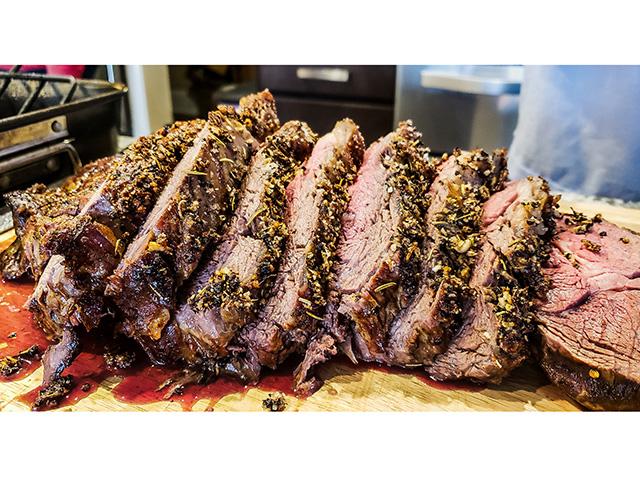
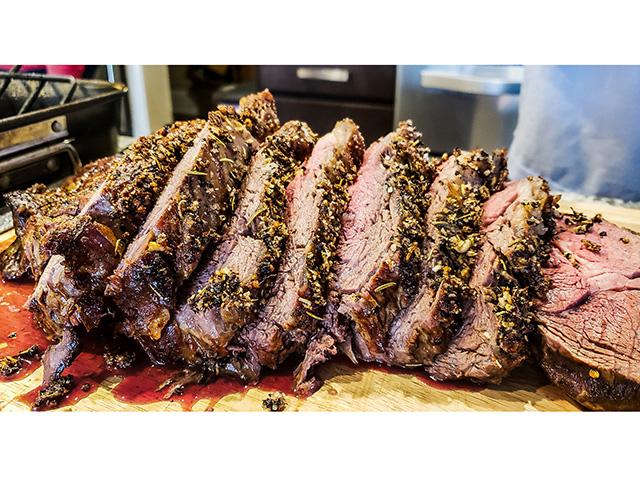
Growing up, the Christmas dinner menu was always more flexible than Thanksgiving. Mostly, we had ham, sometimes turkey, and on a few special occasions, my mom made prime rib. I felt like it was the only meal that could justify using the nice tablecloth and my parents' wedding china.
So, when it's my turn to host Christmas dinner, I make prime rib. Everyone gets excited. My mother wants the rarest slice from the middle, and my father-in-law wants the end piece. They are diametrically opposite in almost every way but come together over a mutual love of beef. My 4-year-old daughter will even pause her assault on the breadbasket to eat some.
Feeding people a good meal has always given me a deep sense of joy. I put out a spread at every opportunity, and this special Christmas meal fills my heart far more than my stomach. That's saying something!
I don't care how much it costs. I know not everyone has the budget to make that declaration; yet American consumers vote for beef with their wallets every day at the grocery store. Americans are poised to consume more than 28 billion pounds of beef in 2025, or 58.5 pounds per person, according to USDA data from September. That's despite the average price of ground beef climbing above $6.25 per pound.
P[L1] D[0x0] M[300x250] OOP[F] ADUNIT[] T[]
Some of it is sentimental attachment to different foods, but to millennial moms with families to feed, it's practical. Most of us want to feed our families nourishing food, and children are frustratingly picky. I will gladly spend $6.25 on a pound of ground beef because my 7-year-old loves tacos and hamburgers. It's less processed than chicken nuggets or hot dogs (of which he eats plenty), and I hope it will help bridge the gap to a more developed palate.
However, like many moms in my cohort, I elect to buy a half beef from a local farmer each year. On a price-per-pound basis, the beef is cheaper than the grocery store. I like knowing where my beef comes from, how it's raised and how it's processed, because I've been there to see it. I also like to support local businesses when I can.
These are values broadly shared among the nation's 30- to 45-year-olds, who represent a growing share of consumer spending power. While many are sensitive to the prices paid at the grocery store, they're more likely to ditch the bag of potato chips and soda, whose prices are comical compared to their nutritive value.
Importing beef from Argentina doesn't do it for this crowd. Millennials want quality and care where their food comes from. I've had many meaningful conversations about the beef production cycle with my peers -- most of whom have no connection to agriculture -- since President Donald Trump suggested increasing Argentine imports.
I explained that higher imports could, perhaps, lower prices at the grocery store in the short term, but in the long term, they could break the production cycle, force ranchers out of business, fuel further consolidation and push prices up. These outcomes are nonstarters for those of us who will be feeding teenagers a decade from now.
So, I will continue to serve prime rib for Christmas dinner. I will pay more for next year's cow, and I will keep sharing what it takes to bring beef to the dinner plate, so hopefully others vote for U.S. beef with wallets, too.
Katie Dehlinger can be reached at katie.dehlinger@dtn.com
Follow her on social platform X @KatieD_DTN
(c) Copyright 2025 DTN, LLC. All rights reserved.
Comments
To comment, please Log In or Join our Community .