


Ag Policy Blog
Senate Leaders Look for SNAP Offsets Ahead of Farm Bill Markup
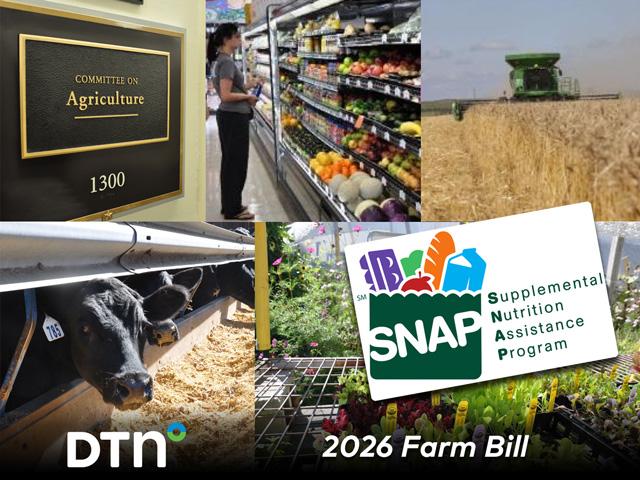
WASHINGTON (DTN)-- The farm bill is still on track for a Senate Agriculture Committee markup before the August recess, provided Sen. Mitch McConnell, R-Ky., returns to the Senate for a crucial Republican vote following his hospitalization and the Supplemental Nutrition Assistance Program (SNAP) can find a pay-for to extend its cost-share provision at Democrats' request.
Senate Agriculture Committee Chairman John Boozman, R-Ark., has made multiple comments this week explaining that moving forward without McConnell "might be difficult."
McConnell's vote is significant not only for the Agriculture Committee but also for other key legislation, affecting the ability to make the farm bill a priority by the end of the year.
"That's very necessary to have a Republican majority on the Appropriations Committee," Sen. Grassley said.
See: Senate Faces Tighter Vote Margins
Lawmakers are also attempting to resolve ongoing SNAP cost-share negotiations, where between $6 billion and $12.5 billion would need to be found to cover the costs of delaying the provision for one or two years, which Democrats are drawing a hardline on.
The One Big Beautiful Bill Act requires most states to pay a portion of SNAP benefit costs -- between 5% and 15% -- if their SNAP payment error rate exceeds 6%, beginning in October 2027. Previously, the federal government paid the full cost of SNAP benefits.
The 2025 Congressional Budget Office report on HR1 reported a projected increase in state SNAP spending by $17 billion, also the previously estimated amount that would need to be covered to support a cost-share delay.
However, a new CBO estimate shows delaying the cost-share requirement would cost about $6 billion for a one-year extension and $12.5 billion for a two-year extension, according to a spokesperson for the Senate Agriculture Committee.
P[L1] D[0x0] M[300x250] OOP[F] ADUNIT[] T[]
Boozman is trying to find a way he can trade Democrats' demand for cost share for a direct vote on the farm bill, without cost.
But neither side of the aisle has indicated to DTN where those dollars would come from -- either within the farm bill or from outside the legislation and how the program could be expanded without new funds.
Budget-neutral legislation and reconciliation in a deficit-conscious environment is potentially the biggest obstacle for all farm policy right now.
The House faces its own offset challenges, with fiscal conservatives insisting to pass $12 billion dollars in farm aid, agriculture leaders must find way to pay for it in the House Agriculture Committee. Conservative lawmakers all week have been arguing such an offset will be required.
Katie Bergh is a senior policy analyst on the food assistance team at the Center for Budget and Policy Priorities (CBPP).
She described the anticipated federal cuts and states' efforts to reduce SNAP error rates -- largely by tightening eligibility determinations -- as the "deepest-ever cuts to the food assistance program."
"This is an emergency, and it should be treated as such from congressional scoring rules," she said.
STATES ARE WAKING UP
Food assistance provisions carried over from the One Big Beautiful Bill have removed 4 million people from SNAP so far, according to CBPP.
Nearly half of the states are projected to face SNAP cost-share bills of $100 million or more beginning in October 2027, Bergh said.
She adds about one in seven rural households use SNAP to put food on the table
States preparing for the change have attempted to lower their SNAP error rates; but, in some cases, have also reduced program participation, leading to lower federal SNAP spending.
"We have USDA data for all states through March of 2026, and in that period, the number of people receiving SNAP nationwide fell by more than 4 million people. That's a roughly 10% decline and the steepest drop in SNAP participation in almost 30 years, going back to the so-called welfare reform law in 1996," Bergh said.
A significant financial burden would be placed on state budgets beginning in October 2027 if the requirement is not delayed. Two current Republican senators who voted for the One Big Beautiful Bill Act are now running for governor of states that would face those additional costs.
Sen. Tommy Tuberville is running for governor of Alabama after vacating his Senate seat to seek the open governorship following Gov. Kay Ivey's term limit. Sen. Marsha Blackburn is running for governor of Tennessee to succeed term-limited Gov. Bill Lee.
"Those substantial costs are going to be challenging for states to absorb, kind of regardless of whether they're a blue state, a red state or a purple state," Bergh said.
Multiple lobbyists and congressional staff have pointed DTN to the timeline of the 2018 farm bill, when the Senate passed its version in late summer before a conference committee finalized negotiations during the lame-duck session in December.
Corn, soybean and renewable fuel leaders stormed Washington this week, pushing their own versions of E15 legislation and thanking Congress for its recent wins this summer. DTN spoke with these leaders; interviews forthcoming.
See: States' First-Ever Bill for SNAP Benefits Could Cost Billions: https://www.cbpp.org/….
Jake Zajkowski can be reached at jake.zajkowsi@dtn.com
Follow him on social platform X @jzajkow
(c) Copyright 2026 DTN, LLC. All rights reserved.
Comments
To comment, please Log In or Join our Community .