

Ag Policy Blog
Farm Action Offers a White Paper to Rebuild the Cattle Herd While Lowering Beef Prices
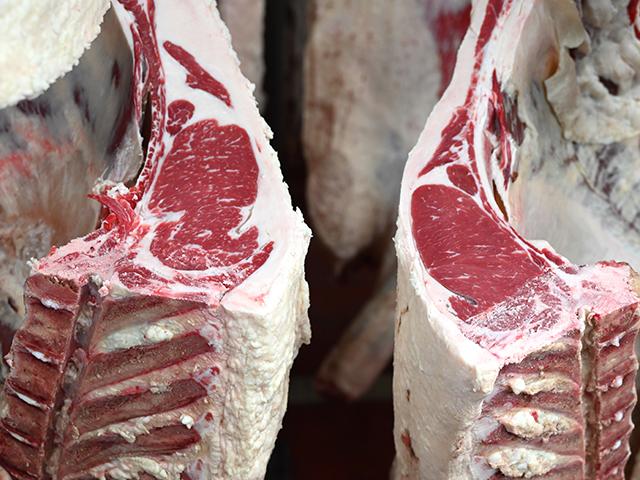
Groups are weighing in with their proposals to both grow the size of the U.S. cattle herd and lower prices for beef at the same time.
On Tuesday, the group Farm Action will release a white paper advocating for some policy changes the group says would help rebuild the cattle herd and expand domestic meat processing at the same time.
As has been well documented, the total beef cow and calf herd in the U.S. was reported at 76.6 million head by USDA. Even adding in 9.57 million dairy cattle, the 86.2 million head puts the U.S. cattle herd at a 75-year low. The herd declined about 300,000 head from 2025. The numbers also marked eight straight years of herd contraction.
At the same time, consumers face higher retail prices. The average cost of ground beef in May was $6.75 a pound. In comparison, during the peak of the pandemic in June 2020 when news reports were showing empty meat cases, a pound of ground beef was averaging $4.70 a pound.
Still, Farm Action and others push back on a strategy to increase beef imports.
"While increasing foreign beef imports may appear to offer a straightforward solution to high consumer prices, an import-driven strategy fails to address the underlying structural challenges facing the U.S. cattle sector," the group stated.
Given that meat processing remains highly concentrated, imports are unlikely to offer meaningfully lower retail prices, but also "may undermine incentives to rebuild the domestic herd and increase dependence on foreign supply chains at a time when the United States is already facing growing food security and trade challenges."
That actually concurs with Agriculture Secretary Brooke Rollins' view that the U.S. shouldn't rely more heavily on foreign beef imports.
Yet, as Politico reported on Monday, there are already officials arguing the U.S. should reopen the border to Mexican livestock imports because the U.S. now has its own cases of New World screwworm. Politico quoted Sen. Roger Marshall, R-Kansas; Sen. Tommy Tuberville, R-Ala.; House Agriculture Committee Chairman GT Thompson, R-Pa.; and New Mexico Agriculture Secretary Jeff Witte, a nonpartisan official.
"Probably what we could do to help bring down the cost of hamburger, though, is to open up our borders," Marshall said to Politico, adding, "The horse is out of the barn here" already with screwworm.
Farm Action offers a different strategy in a series of recommendations:
MCOOL
Restore mandatory Country of Origin Labeling (MCOOL), a proposal likely to garner the wrath of major meatpackers. Yet, Sen. Cory Booker, D-N.J., pressed last week in a hearing with Rollins that MCOOL is needed to help consumers identify where their meat is from. Farm Action maintains MCOOL would provide more transparency for consumers "while creating stronger market signals for domestic cattle production."
"If you want to talk about imports, if you have MCOOL then there's actually a like way for American producers to compete and introduce cheaper imports without like pulling the rug out from under their feet. Right now, the problem is that without MCOOL, imports just muddy the water. You just don't know what you're getting," said Sarah Carden, Farm Action's research and policy director.
TAX BREAK FOR HEIFER RETENTION
P[L1] D[0x0] M[300x250] OOP[F] ADUNIT[] T[]
Officials have been stressing ways for cow-calf producers to retain heifers rather than feeding them out.
Farm Action also advocates for offering a temporary federal tax credit, such as $500 per retained breeding heifer. Given that herd rebuilding is a multi-year challenge, producers face short-term financial risks by holding back heifers when the market is pressing them to sell. A temporary tax incentive could offer a way to help increase cattle supplies without undermining producer profitability.
BUILD OUT PASTURE
USDA on Friday issued a directive to the U.S. Forest Service to make it easier for ranchers to use federal lands for grazing. The directive from Rollins prioritizes offering grazing permits for vacant and closed grazing allotments and streamlining the process. The Interior Department has made similar moves with the Bureau of Land Management.
Farm Action presses for establishing a pasture restoration program "modeled after elements of the Conservation Reserve Program (CRP)." Farm Action proposes converting marginal farm ground back to pastureland.
Livestock groups have been calling for Congress to modify the rules for CRP in the farm bill that would allow more haying and grazing. Sen. Jerry Moran, R-Kansas, raised this issue with Rollins last week, citing that CRP ground left ungrazed increases fuel for wildfires when droughts hit.
Farm action also calls for other incentives through conservation programs to protect grazing lands.
EXPAND REGIONAL PROCESSING CAPACITY
After rolling back grants provided by the Biden administration, USDA is now looking at retooling meat-processing grants for small-to mid-sized operations. Farm Action calls on Congress and the administration to continue to offer such incentives such as "targeted financing, technical assistance, and procurement support."
Tied to that, Farm Action stated one way to help these smaller processors get established is to ensure they have access to federal contracts. Carden pointed to federal contracts that buy beef for schools, the military, correctional facilities and food assistance programs.
"So, the U.S. government buys a ton of beef, right? Why isn't that connected to the investments it is making in processing and making sure they can move their product as they develop and grow?" Carden said.
P&S REVISIONS NEEDED
One area few people are discussing right now is tightening the Packers and Stockyards Act (P&S). While the administration and others look at antitrust issues in the meatpacking industry, Congress has not brought up ways to strengthen enforcement under the P&S Act.
Farm Action calls for retooling P&S so producers seeking relief under the laws are not required to demonstrate harm across the entire industry to challenge unfair, deceptive, discriminatory and anti-competitive conduct.
As smaller producers are well aware, those high standards have made it almost impossible for individual producers to challenge unfair practices in court.
THE THIRD RAIL: CHECKOFF REFORM
Along with bringing back MCOOL, Farm Action also proposed reforming the commodity checkoffs.
We've been down this road before and reforming the checkoffs is almost akin to changing Social Security. Congress doesn't want to touch it and the last time there was a serious effort to reform the beef checkoff all of the reform groups ended up quitting the effort.
At one time, there was an attempt to increase the beef checkoff by $1 a head to solely promote U.S. born, raised and processed beef; but even that effort failed to garner industry support.
Farm Action points out concerns over the relationships between checkoff programs and trade associations that lobby Congress.
"When you talk about programs that are undermining domestic production, it's not hard to talk about checkoff programs," Carden said.
She added, "We're not even talking about removing them, we're just talking about introducing reforms to make sure that programs that cattle ranchers are paying to work in their interests are actually doing that."
Farm Action's policy roadmap: https://farmaction.us/…. If not available, this link will be active later Tuesday.
Chris Clayton can be reached at Chris.Clayton@dtn.com
Follow him on social platform X @ChrisClaytonDTN
(c) Copyright 2026 DTN, LLC. All rights reserved.
Comments
To comment, please Log In or Join our Community .