

Production Blog
10 Tips to Stay Ahead of Tar Spot
Indiana farmers have had planting delays this year, and now they have tar spot to complicate the scenario. Purdue University plant pathologist Darcy Telenko confirmed the first positive tar sample in that state on June 9 in Randolph County.
Last week, Mandy Bish, University of Missouri plant pathologist, issued a news release urging growers in that state to start scouting early and often. Frequent rain and unseasonably cool weather in May created favorable conditions for tar spot to develop in Missouri cornfields in June, she observed.
"We've detected tar spot in June in each of the last three years, and I anticipate the same for 2026," Bish said. Early detection is not a reason for panic, but it is a reason to monitor the progress of the disease before making a fungicide application.
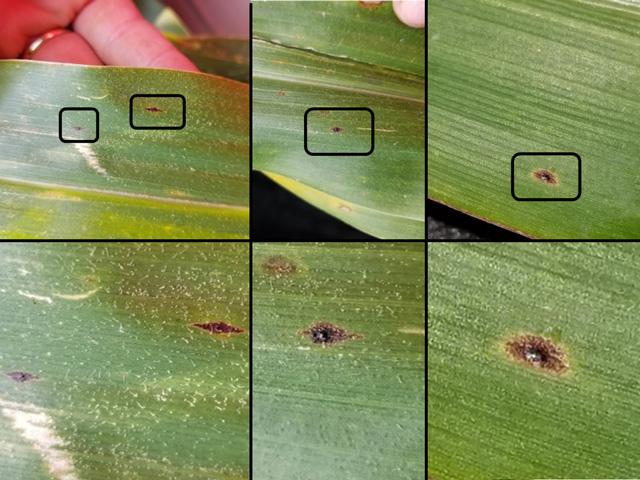
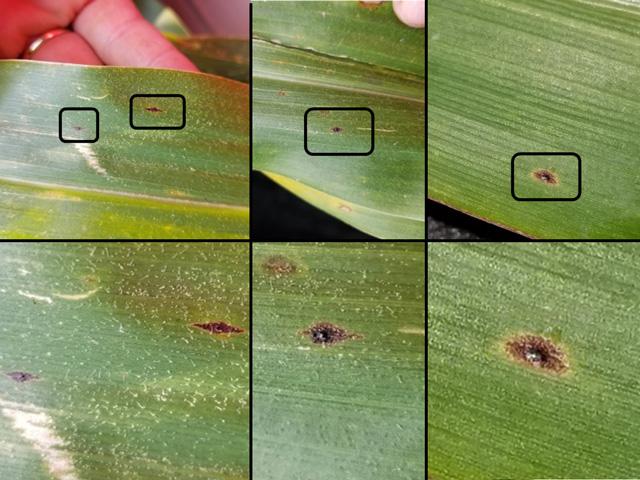
Tar spot is caused by a fungus that survives in corn residue. Symptoms include small, raised, black lesions (stromata) scattered across both the upper and lower leaf surfaces. In severe cases, lesions may also appear on husks and leaf sheaths. Corn is the only known host for the tar spot fungus.
Telenko used eight seasons of tar spot observation, research and field experience to come up with the following 10 tips to stay ahead of tar spot.
1. Every season is different. Tar spot development is driven by the disease triangle -- susceptible host, pathogen presence and favorable environmental conditions. Weather patterns through June are especially important and often determine when disease becomes established in the lower canopy.
2. Scout early and scout often. Begin monitoring fields when corn reaches V7 to V8, focusing on the lower canopy for the first tar spot stromata. To distinguish tar spot from insect frass (false tar spot), try rubbing the spot and inspecting the underside of the leaf for a corresponding lesion directly beneath the upper-canopy spot. Early detection is critical. Once disease severity reaches 5% or greater in the upper canopy, fungicides are unlikely to effectively slow disease progression. Follow disease monitoring maps to track first detections in your area.
3. Host resistance provides an important advantage. Selecting hybrids with moderate resistance can significantly reduce disease development and slow epidemic progression within the canopy, improving overall disease management.
P[L1] D[0x0] M[300x250] OOP[F] ADUNIT[] T[]
4. Fungicides remain an effective tool, but they have limitations. Tar spot can challenge fungicide residual activity and canopy coverage, particularly during prolonged periods of disease pressure. Consult the latest fungicide efficacy ratings or fungicide efficacy tools when selecting products.
5. Application timing is critical. Fungicide applications can be made too early or too late. Based on Indiana research, the optimal window for a single fungicide application is generally between tasseling (VT) and milk (R3) stages to maximize disease suppression and yield protection.
6. Consider return on investment (ROI). Evaluate the economics of one versus two fungicide applications. An application triggered early in the season may require a second treatment to maintain protection through grain fill and ensure adequate late-season coverage.
7. Expect some disease at season's end. Even well-managed fields will likely have some tar spot present by maturity. Complete disease elimination is not a realistic expectation, particularly given limitations in fungicide residual activity and canopy penetration.
8. Practice fungicide stewardship. Use fungicides judiciously and strategically when disease risk and crop growth stage indicate the greatest potential for disease management and yield preservation. Responsible use helps preserve fungicide efficacy for the future.
9. Leverage available decision-support tools. Utilize disease monitoring maps, forecasting tools, fungicide efficacy resources, and local Extension updates to guide scouting efforts and management decisions throughout the season.
10. Continue asking questions and sharing observations. Grower experiences, field observations, and emerging challenges help identify knowledge gaps and drive future research priorities, improving tar spot management recommendations for everyone.
Find the Purdue release about tar spot here: https://indianafieldcroppathology.com/….
Find the University of Missouri release about tar spot here: https://extension.missouri.edu/….
Tar spot map includes a handy table on recommendations on when to spray if tar spot is detected: https://cropprotectionnetwork.org/….
Tar spotter and forecasting tools offer insights on if environmental conditions are favorable for tar spot: https://cropprotectionnetwork.org/….
Fungicide efficacy tables on Crop Protection Network: https://cropprotectionnetwork.org/….
There's also a new tool to help sort products https://cropprotectionnetwork.org/….The
Indiana Field Crop Pathology website will have in-season updates https://indianafieldcroppathology.com/….
Pamela Smith can be reached at pamela.smith@dtn.com
Follow her on social media platform X @PamSmithDTN
(c) Copyright 2026 DTN, LLC. All rights reserved.
Comments
To comment, please Log In or Join our Community .