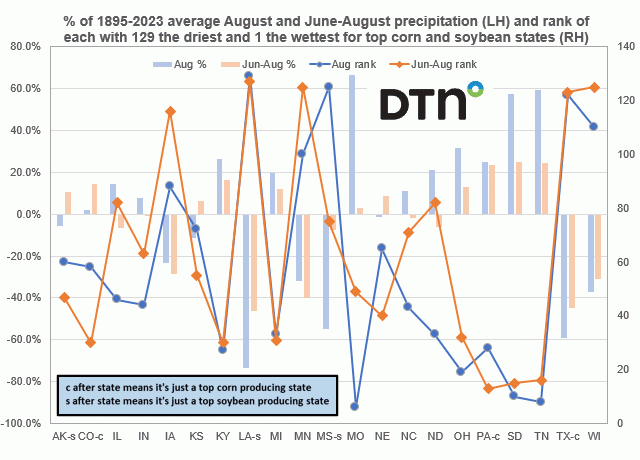


Percent of the 1895-2023 average August and total June through August precipitation for the top 21 corn and soybean producing states vs. the rank of where each state stands for both August and cumulative June-August precipitation
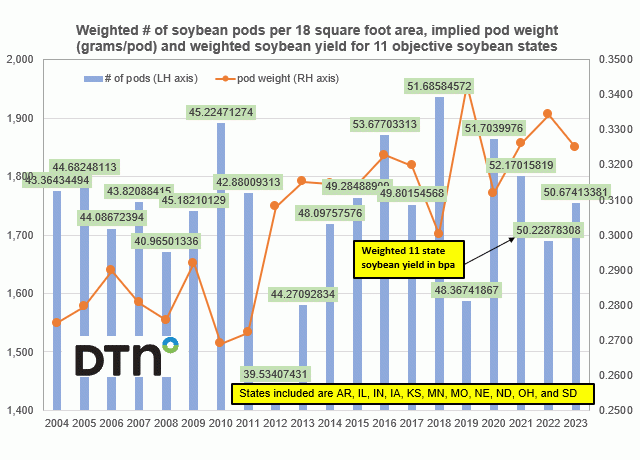
11-state objective number of soybean pods per 18 square foot area vs. the implied soybean pod weight in lbs./pod
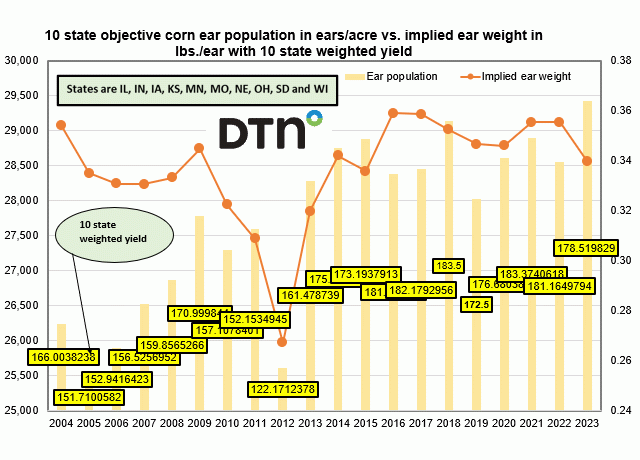
10-state objective corn ear population in ears/acre vs. the implied ear weight in lbs/ear
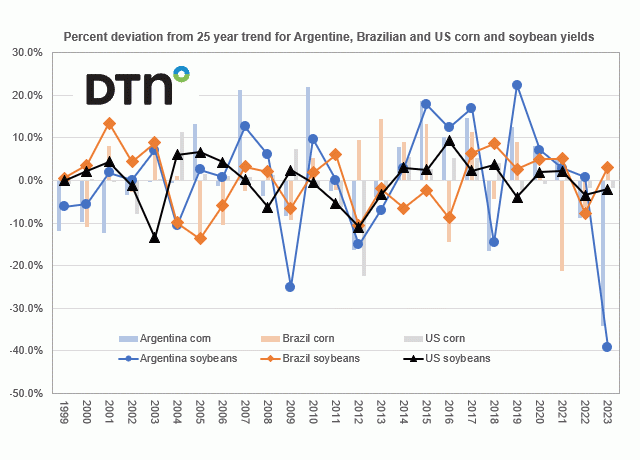
Percent deviation from the 25-year trend for Argentine, Brazilian and U.S. corn and soybean yields
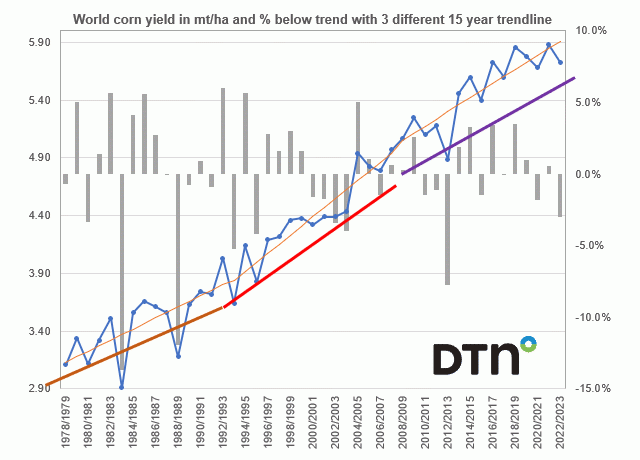
Actual yields from 1978-2022 and three separate trend lines (1978-1992 in orange, 1993-2007 in red and 2008-2044 in purple) vs. the percent that the actual yield deviates from their respective 15-year trend line
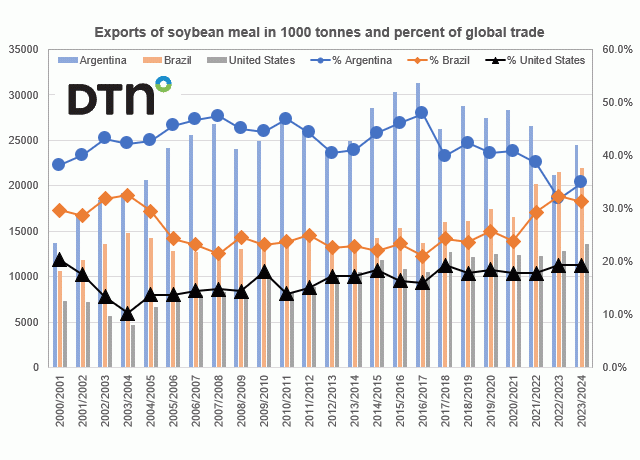
Exports of soybean meal from the three largest world shippers and their percent of global trade.
Percent of Indiana and Iowa topsoil and subsoil in the combined short and very short categories in third week of August vs. percent that their final corn yields deviated from the 25-year trend.
The pace of U.S. corn exports has been quite sluggish for some time with the USDA posting several downward revisions for the 2022/23 marketing year over the past few months and again in this month's WASDE report.
The U.S. has been selling China quite a few soybeans in recent weeks as the PRC is reacting to rising Brazilian FOB premiums as their harvest winds down, congestion at some of the Brazilian ports and uncertainty as to how large the U.S. crop this fall will be.
The USDA August 14, 2023, crop progress report contained corn and soybean condition improvements signaling a potential yield increase.
The USDA August crop production report contained average corn and soybean yields a tad below average trade guesses but not too much out of line.
Dry or even drought conditions appear to be the real culprit affecting corn and soybean condition ratings.
End of July 2023 crop ratings for the top 18 corn producing states and the U.S. vs. the percent that the 2023 rating deviates from the 1986-2023 end of July rating average
U.S. soybean crop ratings as of week 28 and then on week 36, and after the critical growing month of August vs. the percent that the final yield deviated from the 1986-2022 trend.
Soybean crop ratings for week 29 for the top 18 producing states for 2023, the 1986-2023 average and where this year's week 29 rating ranks for the complete week 29 history from 1986 to 2023
Percent of the U.S. corn, soybean and spring wheat producing area in D1-D4 drought as of third week of July vs. the percent that the final yield of each of these crops deviated from the 2000-2022 trend.
Ukraine's percent of global sunflower oil production and exports vs. its percent of global wheat and corn production and exports on the left hand-axis.
The seasonal corn condition ratings by week with the average and plus and minus one standard deviation lines using data from 1986 to 2022 vs. the five-year average and the weekly crop ratings so far for 2023.
This chart shows the week 26 (or around the beginning of July) spring wheat ratings for the top three producing states and the U.S. figure is also included.
DIM[2x3] LBL[blogs-fundamentally-speaking-list] SEL[[data-native-ad-target=articleList]] IDX[2] TMPL[news] T[]
DIM[2x3] LBL[blogs-fundamentally-speaking-list-2] SEL[[data-native-ad-target=articleList]] IDX[5] TMPL[news] T[]