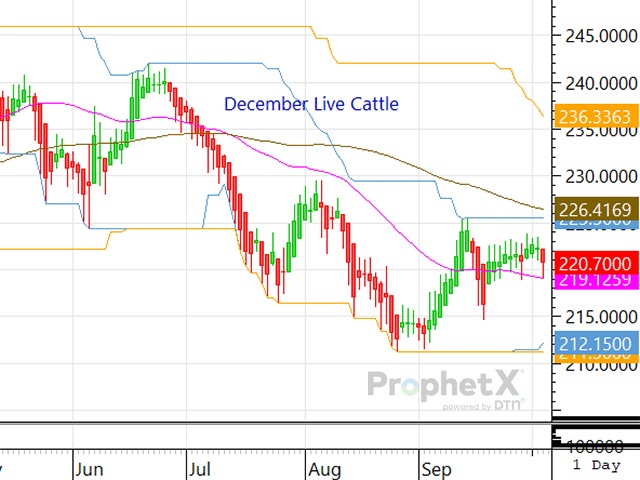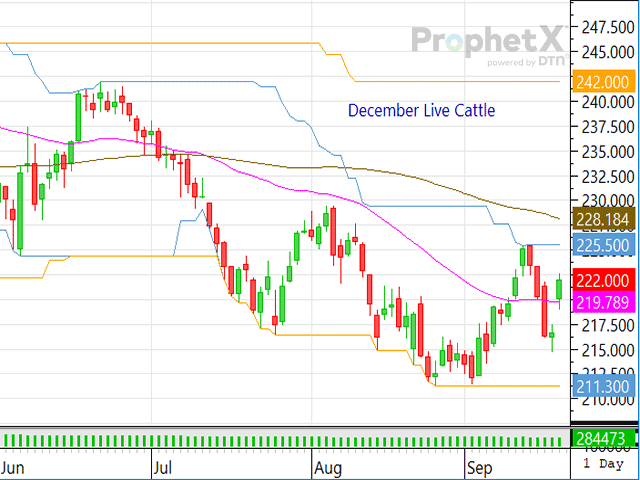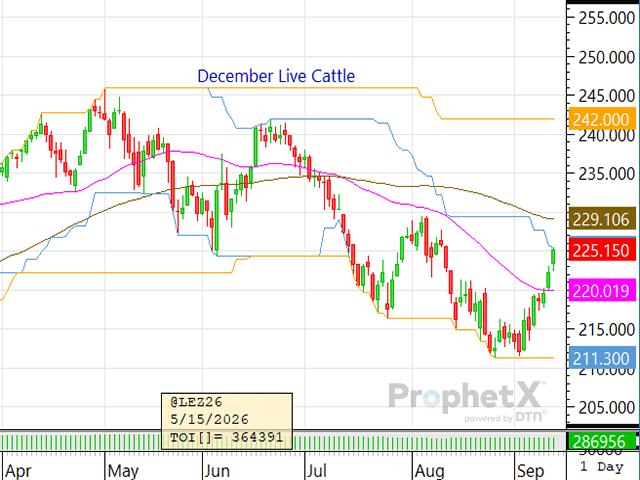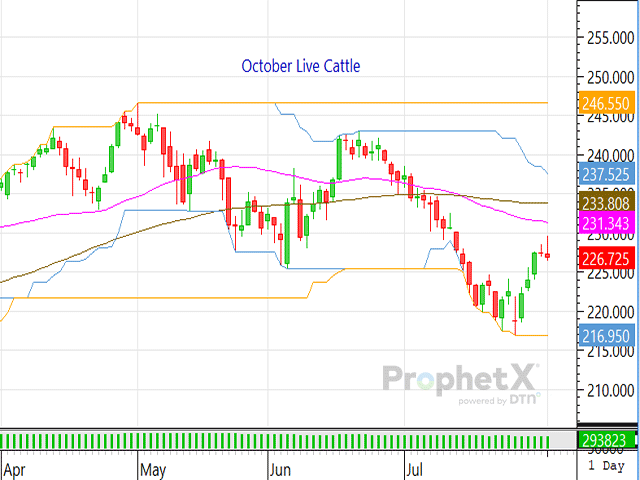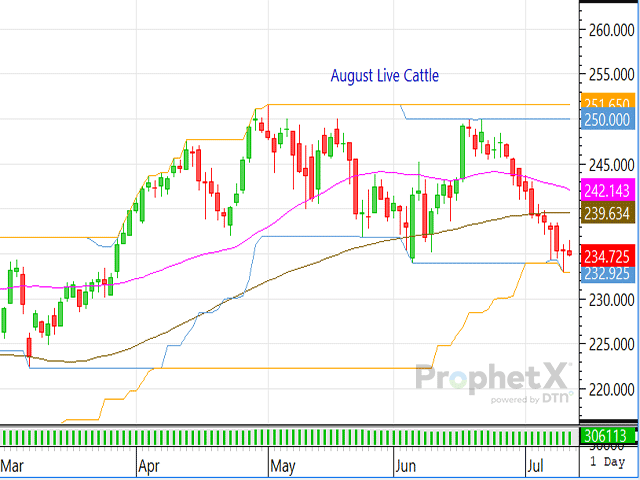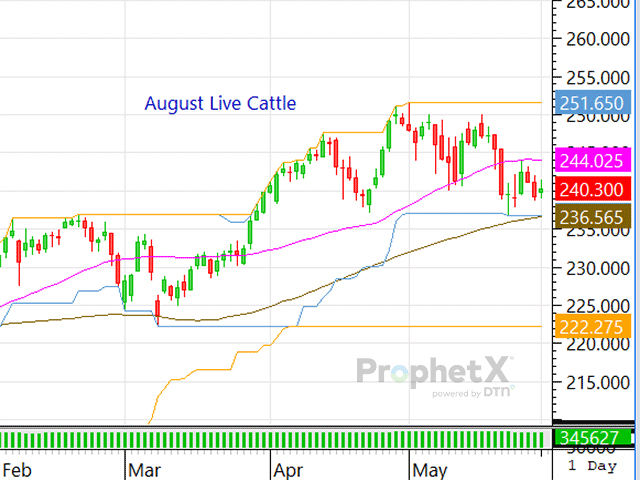
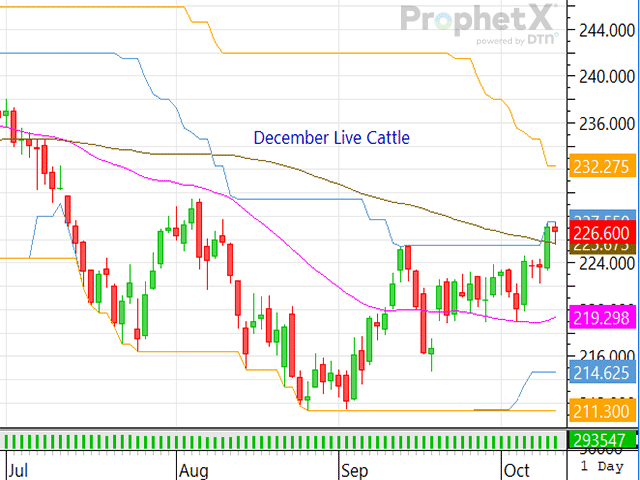
Thanks to the rally seen in last week's fed cash cattle market, and because of the current support in the equity markets, the cattle contracts rallied through Monday's trade. Join this week's DTN webinar on what factors to watch for moving ahead.
From Superior Livestock's Corn Belt Classic online feeder cattle sale, to the monthly Cattle on Feed report, to the upcoming DTN Beef Industry Exchange webinar, you'll want to block out time for these big-ticket items happening in the next two weeks.
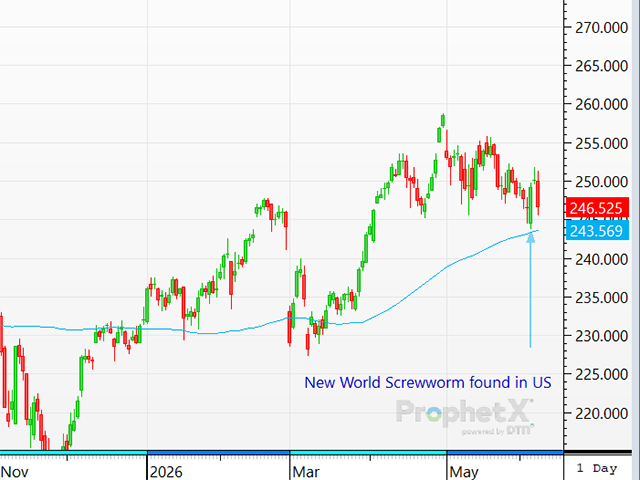
Following last week's whirlwind surrounding the finding of New World screwworm in the U.S., the cattle complex is longing for greater fundamental support to help move the market forward.
Cattle futures contracts are continuing to chop sideways as traders brace because the marketplace is highly volatile.
While the White House touts that China has agreed to buy $17 billion in agricultural commodities under an agreement reached last week, a new report shows U.S. agricultural exports to China fell by $14.9 billion during much of the past year.
The cash cattle market has been on fire lately. But with a holiday-shortened week coming up and the futures up against resistance pressure, feedlots may not see as much interest from packers this week as they have over the last month.
If only the market was as simple as supply and demand, consumers, and the cattle needed to produce the beef those consumers desire; wouldn't that be the day? Unfortunately, that's not how the markets operate and headline day-trading isn't going anywhere -- even if it does...
Last week's fed cash cattle market scored new highs in both the Northern and Southern regions. However, after last week's rally, traders seem on edge about the week ahead.
With the board trading sharply higher and the year's strongest beef demand month just days away, will fed cash cattle prices trade higher this week?
It's too early to say whether the spring high is in for the fed cash cattle market. However, if support doesn't develop from both a fundamental and technical sense, it's going to be difficult for the market to trade much higher.
With supplies of lean beef extremely thin, last week, choice cuts were cheaper on average than select cuts.
Groups aligned with the Make America Healthy Again (MAHA) push are calling on USDA to improve the sourcing of meat at schools and implement the new dietary guidelines as well. These changes could drive up the costs of lunches for 30 million children nationally as schools already...
After trading lower over the last month, the cattle complex seems to have regained its bullish attitude.
Both the live cattle and feeder cattle contracts were able to close higher Monday afternoon, but with choppy boxed beef prices, historically slow throughput, and cash prices yet to be determined, the week still has some challenges ahead.
Despite wildfires engulfing Nebraska and the JBS meatpacking plant shutting down amid a union labor strike in Colorado, the cattle complex was able to hold its composure throughout Monday's trade and end the day higher.
The notion of a looming strike does not bode well for the cattle complex as fear and uncertainty unravel both the market's fundamental and technical components.
Between the conflicts in the Middle East to the unknown details regarding a potential strike at the JBS plant in Greeley, Colorado, the cattle complex is under some unforeseen pressure.
Although the fed cash cattle market performed exceptionally last week and traded $1 higher in the South and $7 higher in the North, cattle contracts closed lower on Monday as too many external pressures weighed negatively against the marketplace.
Despite financial struggles forcing consolidation and collaboration, farmers remain determined to continue their legacy and food production mission.
Record domestic use despite high prices has resulted in the need for increased supplies (including record imports) and limited exports.
DIM[2x3] LBL[blogs-harringtons-sort-cull-list] SEL[[data-native-ad-target=articleList]] IDX[2] TMPL[news] T[]
DIM[2x3] LBL[blogs-harringtons-sort-cull-list-2] SEL[[data-native-ad-target=articleList]] IDX[5] TMPL[news] T[]