



Ethanol Blog
FEW 2026: Ethanol Industry Pushes Back on E15 Myths
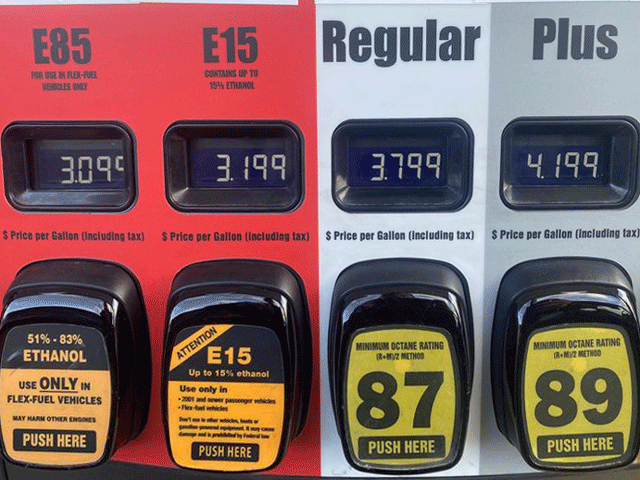
Ethanol industry leaders pushing to permanently unlock year-round E15 fuel sales say they are still fighting myths -- and powerful opponents -- despite nearly a decade of evidence that expanded ethanol blends haven't shuttered a single U.S. refinery. That was a central message from Growth Energy CEO Emily Skor, who delivered the keynote address at FEW 2026, the 42nd International Fuel Ethanol Workshop & Expo, before a crowd of 2,360 in St. Louis on June 3.
The three-day event, produced by Ethanol Producer Magazine and organized by BBI International, included education, networking and collaboration that highlighted the ethanol industry's continued commitment to expansion, innovation and operational excellence. More than 550 ethanol producers, 340 exhibitors and 200 speakers from across the ethanol value chain attended the event, representing 46 U.S. states, eight Canadian provinces, and 23 countries, according to a FEW news release. Among the topics addressed at this year's event were strategies for ethanol producers to improve plant performance, maximize profitability, reduce carbon intensity, strengthen operational reliability and position their facilities for long-term success.
During her speech on the second day of the event, Skor traced the ethanol industry's trajectory over the past half-century.
"It was 50 years ago, in the mid-1970s, when Congress established the first real incentives for ethanol," Skor said. "By 2001, the U.S. still only produced about 1.6 billion gallons of ethanol a year. Four short years later, by 2005, we'd more than doubled -- to almost 4 billion gallons. Four years after that, we'd more than doubled again -- about 11 billion gallons by 2009.
"What did that? What sparked that takeoff? Three big things happened. No. 1: Our nation had gotten an energy security wake-up call, after Sept. 11 and the wars in the Middle East. No. 2: Consumers were facing an affordability crisis at the gas pump. And No. 3: Elected officials responded with policy that met the moment and acknowledged the value of ethanol. That included the Renewable Fuel Standard (RFS)."
Skor noted that 2025 marked the 20th anniversary of the Renewable Fuel Standard. Since then, she said, American biorefiners have produced more than 250 billion gallons of ethanol, ethanol plants have bought 93 billion bushels of corn and American farmers have captured more than $400 billion in additional revenue.
P[L1] D[0x0] M[300x250] OOP[F] ADUNIT[] T[]
"The RFS is a prime example of an important truth: When our leaders get policy right, it can transform everything," Skor said. "And we are working today to make that happen again -- to build momentum for other policy transformations that will carry us into the next two decades and beyond."
As the industry pushes for permanent year-round sales of E15, Skor addressed what she called persistent false narratives that have complicated that effort.
"Loud and powerful voices are continuing to push debunked attacks on ethanol," Skor said. "Like falsely claiming that nationwide E15 means a mandate, when it really means consumer choice. Or the old myths about smog and air quality, when E15 actually burns cleaner than E10. Or the absurd claim that mid-sized refiners are on the brink of bankruptcy, and E15 could push them over the edge.
"We've had E15 since 2019 by administrative action -- eight years -- and, as recently confirmed by EPA Administrator Lee Zeldin, not a single refinery has closed because of E15. And by the way, as Sen. Chuck Grassley (R-Iowa) pointed out recently, the most vocal mid-sized refiners already bring in more profit than every single-family farm in America put together. You would be shocked at how often we still have to remind and re-educate leaders about the very basics of ethanol and energy policy."
According to a fact sheet from the Renewable Fuels Association, a typical American household choosing E15 over E10 would need to purchase just 13 additional gallons of fuel over the course of a year. (https://ethanolrfa.org/…)
Skor closed her remarks with a call to action for attendees to carry the industry's message directly to lawmakers.
"Ethanol means American energy dominance," she said. "Ethanol means lower gas prices and affordability. Ethanol means a stronger farm economy and rural jobs. This is our time. This is our moment to step up and deliver the solutions that our country needs."
The industry's advocacy is playing out against an active legislative backdrop. The U.S. House passed H.R. 1346 on May 13 by a 218-203 bipartisan vote, a bill that would permanently authorize year-round, nationwide sales of E15. The measure now awaits action in the Senate, where it faces a 60-vote threshold and uncertain prospects. (https://www.dtnpf.com/…)
The stakes for corn country are significant. DTN Ag Policy Editor Jake Zajkowski recently reported that stalling E15 expansion risks the loss of 30 million corn acres, underscoring the economic urgency that Skor and other industry leaders pressed at FEW 2026.
Read Growth Energy's news release on Skor's keynote at FEW (the full text of her speech is at the bottom of the release) here: https://growthenergy.org/….
Read Zajkowski's recent article, "Stalling E15 Expansion Risks Corn Acres," here: https://www.dtnpf.com/….
DTN/Progressive Farmer Content Manager Anthony Greder contributed to this article.
Mary Kennedy can be reached at mary.kennedy@dtn.com
Follow her on social platform X @MaryCKenn
(c) Copyright 2026 DTN, LLC. All rights reserved.
Comments
To comment, please Log In or Join our Community .