


An Urban's Rural View
What Happens in Norway Won't Stay in Norway
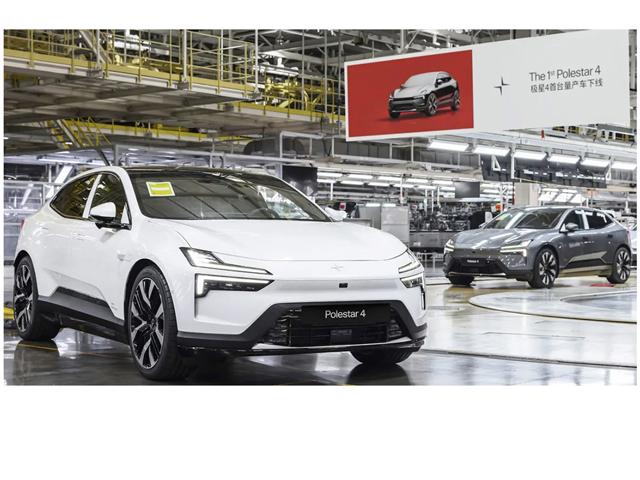
One of the things that surprised this tourist in Oslo last February was the vast number of electric vehicles. EVs were everywhere. Every taxi I rode in was electric.
I shouldn't have been surprised. Norway has long been a leader in adopting electric cars. Last year, encouraged by government subsidies, EVs accounted for 95.9% of Norway's new car sales, up from 88.9% in 2024. Here is an article; you'll need to run it through a translator for English. (https://ofv.no/…)
More are coming. Though EVs seemed ubiquitous in Oslo, two out of three passenger cars in Norway still run on fossil fuels. The country's goal is none.
It's making progress. Besides essentially eliminating fossil-fuel vehicles from new car sales, electric cars in 2025 surpassed diesels for the first time to become the largest single powertrain on Norway's roads.
Other countries are headed in the same direction. At first, climate change drove the trend. Then the Iran war gave it a boost by raising concerns globally about the price and availability of oil-derived fuels.
Last year EVs accounted for 55% of all new car sales in China and 28% in Europe. The International Energy Agency predicts 28% of all new car sales worldwide will be EVs this year, with 50% growth in Asia-Pacific countries outside China and 45% growth in Latin America. By 2035, the IEA expects 50% of global new car sales to be EVs. (https://iea.blob.core.windows.net/…)
The United States is an outlier. Last year, fewer than 10% of U.S. new car sales were EVs. This year, sales are declining. The Trump administration, which loves oil, has undone the previous administration's pro-EV policies.
Detroit's big-three car makers, which had invested heavily in new EVs and EV-battery development, got Trump's message and reversed course. Several previously announced new vehicles were cancelled.
Tens of billions of dollars in EV-related investments were written off as losses. Detroit still sells EVs and has plans for new ones, but the interest is much diminished. Meanwhile, China is moving fast into EVs.
P[L1] D[0x0] M[300x250] OOP[F] ADUNIT[] T[]
This, alas, is a movie I've seen before.
In early 1984, I became the Wall Street Journal's Detroit bureau chief. I had spent the previous three-plus years in Tokyo for the Journal.
I'd covered the negotiations leading to Japan's "voluntary restraints" on car exports to the U.S. I'd written about the manufacturing advances that had given Japanese cars high quality. I'd witnessed the prominence of small cars in Japan, and elsewhere.
That was why the Journal sent me to Detroit. "Japan is kicking Detroit's ass," the Journal's managing editor said. "We need someone shaping our worldwide auto coverage who understands Japan."
Introducing myself in Detroit, I found a pronounced lack of curiosity about Japan. Twenty seconds after learning I'd recently arrived from Tokyo, the car executives I was meeting were changing the topic to the Tigers, the Lions or the Red Wings.
Some had a vague idea what their Japanese competitors were up to. None seemed much interested in digging deeper into the matter.
Denial, I think they call it.
Today the competitor to be feared is China. According to the IEA, China manufactured nearly 75% of the world's EVs last year and accounted for nearly 80% of battery-cell production.
Competition between Chinese EV makers is fierce. They're moving up the learning curve fast. Their cars keep getting better.
The U.S. has 100% tariffs on China's EVs so Detroit is safe in the short run. But Ford's executive chairman recently warned Detroit "can't expect to keep them out forever."
In China, some EVs are cheaper than conventional cars. As batteries improve, they'll eventually be price-competitive everywhere, even without subsidies. They're already quicker, quieter and have lower maintenance costs, and their range keeps improving.
No one should be surprised if someday EVs are so far superior to fossil fuel-powered cars that the public demands them. If Chinese EVs are the gold standard then, Detroit will be playing catch-up.
I'm more sympathetic to the big three than I was when Japan was their problem. Detroit's executives know what's going on in China. They're even willing to talk about it.
They have the disadvantage of a domestic market with vast open expanses of territory and limited EV-charging infrastructure. Being whipsawed by Washington's changing whims every four years doesn't help.
With Chinese EVs banned in the U.S., the inroads they make in Norway or Brazil or Thailand won't impress American consumers. They won't see them.
Watch, however, what happens in Mexico and Canada the next few years. If Chinese EVs win big there, some of those cars will show up on roads here. Americans may well like them.
The U.S. is an EV outlier, but how long will it remain one? Detroit doesn't want a remake of this movie.
Urban Lehner can be reached at urbanize@gmail.com
(c) Copyright 2026 DTN, LLC. All rights reserved.
Comments
To comment, please Log In or Join our Community .