

An Urban's Rural View
Brace for Higher Interest Rates
The bond market has been pushing interest rates higher in recent weeks. Though the Federal Reserve Board's Federal Open Market Committee kept the benchmark federal funds rate unchanged at its Aug. 28-29 meeting, it could well follow suit by year's end.
The policy statement the FOMC released after that meeting left markets and commentators wondering what the committee is waiting for. According to the statement, "economic activity is expanding at a solid pace," and the unemployment rate is low but "inflation remains elevated related to the committee's 2 percent goal." (https://www.federalreserve.gov/…)
In other words, the Fed is achieving the "maximum employment" part of its dual mandate but failing the "price stability" part. That's a recipe for a rate increase.
Three of the 12 voting members of the committee wanted to act now. They dissented, preferring a quarter-point increase to holding the benchmark rate unchanged. Minutes of the committee's April and June meetings show other committee members contemplating rate hikes, too. (https://www.federalreserve.gov/… and https://www.federalreserve.gov/…)
More: When the FOMC members made their latest economic projections in June, eight of the 19 members expected a rate increase sometime this year. (Only 12 of the 19 votes, with four of the voting slots rotating annually.) (https://www.federalreserve.gov/…)
The committee's hawkish mood is easy to understand. The latest personal consumption expenditures price index, the Fed's preferred inflation measure, declined only 0.1% from the previous month. It was 3.7% higher than a year earlier.
Inflation has been well above the Fed's 2% target for five years. There's little reason to think it will subside to 2% any time soon. Iran's continuing chokehold on the Hormuz Strait portends continuing high energy prices.
P[L1] D[0x0] M[300x250] OOP[F] ADUNIT[] T[]
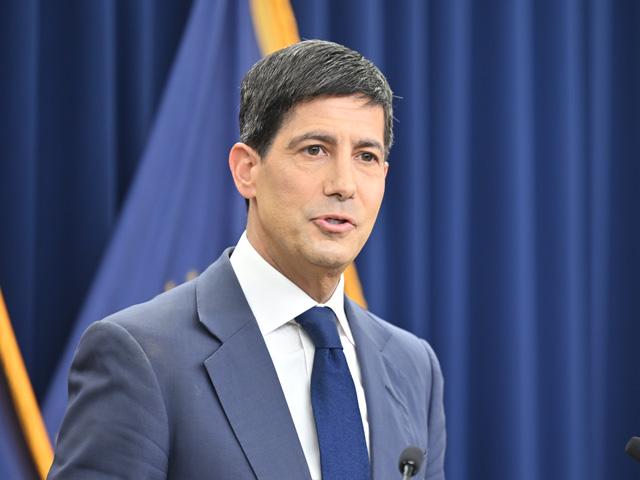
It looks, then, like the FOMC's next move should be up and soon. The question is, does Federal Reserve Board Chair Kevin Warsh agree?
After Warsh's first FOMC meeting in June, markets thought the answer was yes. Though the committee held its target rate unchanged at that meeting, Warsh sounded hawkish at the post-meeting press conference. He was cagey; unlike recent predecessors, he rejected giving "forward guidance" about the direction of rates. But he vowed that the Fed would bring inflation down.
Everyone knows President Donald Trump said any Federal Reserve chair he nominated would favor lower interest rates. But at his Senate confirmation hearing in April, Warsh said he'd made no promises to the president. He assured senators he wouldn't be Trump's puppet.
Hearing his June press conference, bond investors decided he was a closet hawk. They pushed up market interest rates, arguably in anticipation of Fed rate increases. Warsh, however, interpreted those increases differently.
At his latest press conference, he said market participants were reacting to news about economic growth and inflation rather than anticipating future Fed moves. "Market participants are learning to play the ball, not the referee," he said.
The markets didn't react well. His remarks spurred sharp increases in interest rates on long bonds, those most sensitive to inflation. This looked like fear the Fed might let inflation get out of control. As a Wall Street Journal headline put it, "Kevin Warsh's Honeymoon With the Bond Market Is Already Over." (https://www.wsj.com/…)
As for Warsh's remark about referees and balls, the Journal's Chief Economics Commentator, Greg Ip, countered: "The Fed isn't a neutral umpire, it's the most important player in the game."
Warsh's defenders say he's just making the markets do their job: Base investment decisions on their assessments of the economy, not the Fed's intentions. But as long as there's an actor with the Fed's power over the economy around, markets must pay attention to it.
Warsh and his supporters may think that by shutting up and not giving guidance the Fed forces investors to ignore the central bank. What silence actually does is leave investors making raw guesses as to where the Fed is going. Many of their guesses will be wrong. Markets will be more volatile.
When Warsh sounded hawkish in June, markets drove up rates in anticipation of Fed rate increases. When he seemed pleased in September that markets were doing the Fed's work for it, bond investors drove up rates for fear the Fed wouldn't act.
The first kind of anticipation is healthy even if it involves "playing the referee." The second is worrisome. It's a warning sign Warsh is losing credibility.
It may not be a very serious or lasting loss -- time will tell -- but credibility is crucial for the Fed. It wouldn't be surprising if Warsh felt the need to restore it, which is yet another reason to think the FOMC will be raising rates soon.
Barring an unexpected downturn in inflation, then, the Fed has many reasons to raise rates. Will that happen in September, before the midterm elections, or at the Fed's final meeting of the year in December?
If the Fed raises rates in September, Warsh will face a cranky president. If it doesn't raise them, he'll face a cranky bond market.
We will soon see which is of greater concern to Warsh.
Urban Lehner can be reached at urbanize@gmail.com
(c) Copyright 2026 DTN, LLC. All rights reserved.
Comments
To comment, please Log In or Join our Community .