

An Urban's Rural View
To Save the Climate, He Says, Grow More Food on Less Land
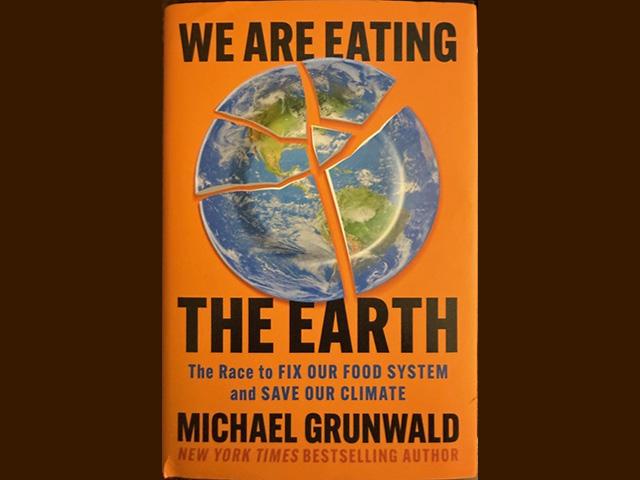
One of the most talked-about recent books on food and agriculture starts from a premise many commercial farmers would dispute and arrives at some conclusions that will surprise them.
They're surprising some environmentalists, too.
The premise: Climate change is real, frightening and requires changes in farming practices. From that premise and from the title -- "We're Eating the Earth: The Race to Fix Our Food System and Save Our Climate"
-- you might expect this book to be a paean to organic farming and regenerative agriculture. (https://www.amazon.com/…)
Not so. One of author Michael Grunwald's main conclusions is that for farmers to reduce carbon emissions, task one is to grow more food on less land. He's for greatly increased yields -- and appreciates that farmers may need to use fertilizer and crop protection to get them.
He's open-minded about GMOs for the same reason. He even has good things to say about the productivity of feedlots and factory farms.
P[L1] D[0x0] M[300x250] OOP[F] ADUNIT[] T[]
From his emphasis on growing more food on less land flows another surprising conclusion: Though good for the soil, organic farming and regenerative agriculture can worsen the climate problem if they reduce yields.
Without rising yields, Grunwald argued, more wild land will be turned into farmland to feed the world's fast-growing population. Wild land -- forests, wetlands, peat bogs -- stores much more carbon.
Forests, Grunwald said, can store as much as 20 tons per acre. By comparison, he said, regenerative agriculture can draw from half a ton to three tons per acre. There is, then, a carbon opportunity cost to using even more of the planet's land than the current 40% to grow food.
Corn and soybean growers won't like one of Grunwald's conclusions: Biofuels are a climate disaster. "Land used to grow fuel can't grow trees or grow food that reduces the pressure to cut down trees elsewhere -- and that has a climate cost as real as the emissions from diesel tractors or burping cows."
This pressure to convert land elsewhere to growing food, called indirect land use change or ILUC, is a central tenet of Grunwald's guru, Tim Searchinger, one of ethanol's leading critics. In the endnotes, Grunwald said his reporting included a five-year conversation with Searchinger, who is a key character in the book.
Livestock guys won't like another of Grunwald's conclusions: Alternative proteins like the Impossible Whopper and actual meat produced in laboratories would solve a lot of climate problems if they ever took off.
On the other hand, for that to happen, he says, alternative proteins must be improved to taste as good as -- not just close to, but as good as -- real meat, and cost no more. And, in the case of cell-based meat, be granted the legal right to go to market. Grunwald's not optimistic any of this will happen soon but he's rooting for it.
Beef is especially problematic, Greenwald said, not so much because of those burping and farting cows, though they're part of the problem, but because beef uses "nearly half the world's agricultural land to produce 3% of its calories." He doesn't realistically think many Americans will give up beef. He hopes they switch more of their meat meals to pork and chicken.
The biggest climate wins, he said, will come from raising cows on less land, like Brazil's plan to intensify grazing yields on 100 million acres of degraded pastures. Feedyards, he argued, are preferable to grass feeding. Visiting the Magnum Feedyard in Colorado, Grunwald wrote: "The inefficiency of beef makes it worse for the climate than other food, while the efficiency of Magnum makes its beef better for the climate than other beef."
Many cattle guys will agree with the kudos for feedlots. Where they'll disagree is when Grunwald argues, as he did in a recent New York Times piece, that feedlots and factory farms should be treated "like any other factories" and required to obey the Clean Water Act. (https://www.nytimes.com/…)
Researchers are working on oodles of ways to improve yields of both livestock and crops, from mixing seaweed into cattle feed to growing oil-producing pongamia trees, from biotech alternatives to fertilizer and pesticides to genetically engineered embryos designed to produce only steers, which convert grass and grain to beef more efficiently. Grunwald takes readers on a cook's tour of these and other efforts, with emphasis on the difficulties most face in scaling.
There's more -- a lot more -- in "We're Eating the Earth." At a discussion recently with a small group of ag professionals, Grunwald admitted his ideas had "pissed off" both farmers and environmentalists. He hoped, though, that they were grappling with them.
Like them or hate them, they're ideas well worth grappling with.
Urban Lehner can be reached at urbanize@gmail.com
(c) Copyright 2026 DTN, LLC. All rights reserved.
Comments
To comment, please Log In or Join our Community .