


An Urban's Rural View
Why Sweeping Mines in the Strait of Hormuz Won't Be Easy
If the Iranians are successful in mining the Strait of Hormuz, the consequences for the world economy -- very much including the price of fertilizer and diesel for U.S. farmers -- will be horrific. The U.S. will have to do something about this. The question is: What?
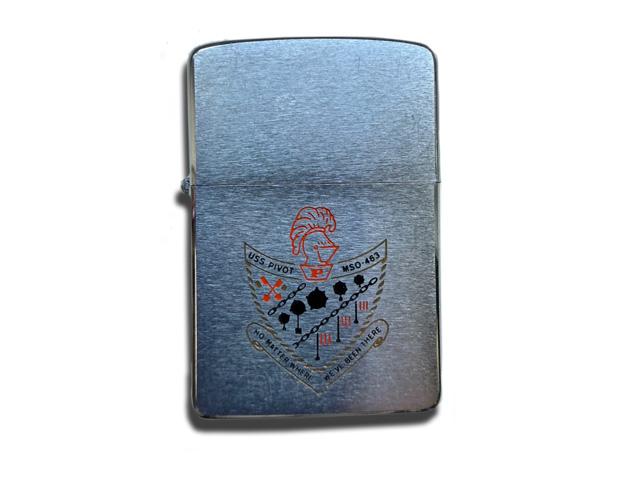
Having spent a couple years in my early 20s as a minesweeping officer on two U.S. Navy minesweepers, I've been devoting some thought to this. I make no pretense to expertise as a military strategist, but maybe my experience lets me ask the right questions.
Please don't thank me for my service. Thank the Americans who volunteered to fight the Vietnam War. I was drafted and rather than end up a foot soldier in a war I didn't believe in I signed up for Naval Officer Candidate School.
In reality, I owe the Navy thanks for its contribution to my personal development. Minesweepers being small ships with a small crew and complement of officers, 23-year-old boot Ensign Lehner was made the head of two departments -- deck, including minesweeping and gunnery, and supply. On a destroyer, each would have had its own head, a full Lieutenant, two ranks above Ensign.
With all that responsibility on my shoulders, I had no choice but to grow up.
In 1972 the U.S. mined Haiphong Harbor, North Vietnam's main seaport. International law says those who mine must be prepared to sweep. It wasn't long before the minesweeping officers in my flotilla were each asked to submit a plan for removing the mines from Haiphong.
P[L1] D[0x0] M[300x250] OOP[F] ADUNIT[] T[]
Two years of streaming sweep gear in practice minefields convinced me we shouldn't send minesweepers into real ones. Better to do the job, I thought, without risking ships and crews. My plan: First, send in a small manned inflatable boat dragging a sonar probe to locate the mines, then either detonate them by shooting them from a safe distance or let divers disarm them.
Apparently, I wasn't the only one who suggested keeping minesweepers out of minefields. To sweep Haiphong Harbor in 1973, the Navy used helicopters to drag sweep gear. Helicopters hadn't occurred to me, but I was glad to see risk aversion prevailed.
Within years of my return to civilian life, minesweepers were decommissioned. The Navy is even phasing out the somewhat more sophisticated mine countermeasures ships that replaced them. If the U.S. decides to sweep mines in the Hormuz Strait, helicopters or unmanned boats with high-tech sonar probes will locate the mines. Underwater drones will detonate them.
But will the U.S. sweep? Mines aren't the Iranians' only weapon. They could attack minesweeping helicopters with drones, which would be hard to defend. Clearing mines is difficult enough without having to do it under fire.
Even in peacetime, ridding Hormuz of mines would take weeks. Minesweeping is slow, painfully slow. The ocean is a proverbial haystack when it comes to finding mines. In my day, minesweepers could only make four knots or so when streaming gear.
But at least back then we had a lot of minesweepers. Today's sweep technology is much more advanced and can sweep faster, but the Navy has much less of it.
Rather than sweep, the U.S. might try to prevent mines from being laid in the first place. It's no doubt attacking the small mine-bearing boats the Islamic Revolutionary Guard Corps is deploying.
Experts say the IRCG has spent decades preparing to block the Strait of Hormuz. When the war began, it had as many as 5,000 sea mines and hundreds of midget submarines and other small mine-delivery vessels. (https://www.foreignaffairs.com/…)
Perhaps the surest way to keep mines out of the strait would be to occupy the adjacent shore. Deploying ground troops would constitute a major escalation that would make the war even more unpopular back home. Still, the U.S. is reportedly sending 2,500 marines and an amphibious assault ship to the front.
Iran no doubt intends to continue shipping its own oil through the strait, mines or no mines. According to a March 10 Wall Street Journal story, Iran was exporting more oil through the Strait of Hormuz than before the war. (https://www.wsj.com/…)
To continue exporting, the Iranians will have to leave open a safe channel through the minefield. The U.S. can use satellite cameras to figure out where that channel is, so you may wonder why friendly tankers couldn't use the same channel.
I haven't seen anyone address this question, but the likely answer is that those friendly tankers and any U.S. destroyers accompanying them would be sitting ducks. The Iranians could send drones at them. They might even have high-tech Chinese or Russian anti-ship missiles to use for the task.
Using mines, drones and missiles to control the Strait of Hormuz gives Iran enormous leverage and makes a quick end to the war difficult. Don't be surprised if the U.S. solution to this dilemma is a major escalation.
Urban Lehner can be reached at urbanize@gmail.com
(c) Copyright 2026 DTN, LLC. All rights reserved.
Comments
To comment, please Log In or Join our Community .