


An Urban's Rural View
The US Has Run Trade Deficits for 50 years. Is This an Emergency?
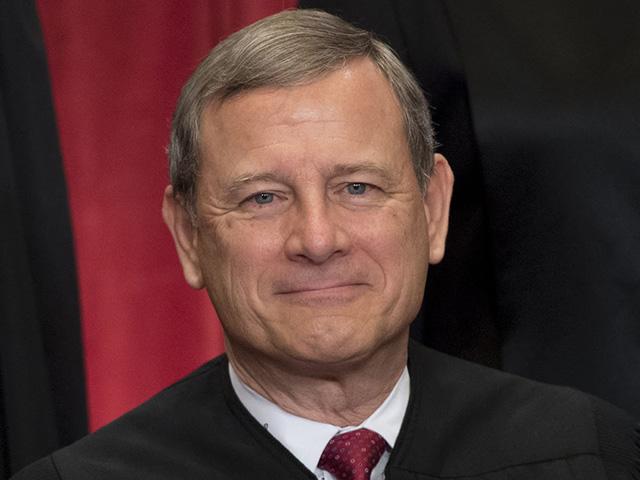
In its decision rejecting President Donald J. Trump's tariffs, the Supreme Court reined in a particularly glaring abuse of presidential emergency powers. One thing it didn't do is question whether an actual emergency existed.
Courts have always deferred to presidents' assessments of what constitutes an emergency. So engrained is this deference, plaintiffs often don't even raise the issue. Yet presidents, and not just Trump, have been declaring dubious emergencies for years.
The emergencies on which President Trump based his claim to tariff powers are a case in point. The International Emergency Economic Powers Act he relied on talks about an emergency existing in cases where there's "an unusual and extraordinary threat" to the nation's well-being. Trump said the nation's trade deficits constituted an emergency, but they are neither unusual nor extraordinary.
The United States has run trade deficits every year since the mid-1970s. Reasonable people can differ over whether they're a problem requiring a solution -- most economists think not -- but given their longevity they're not the kind of problem that requires emergency action. There's been plenty of time for the Congress and the president to discuss what should be done.
The president came closer to an actual emergency when he cited fentanyl importation as another rationale for tariffs. Yet most fentanyl comes into the U.S. from China and Mexico.
At most, another handful of countries are involved. If fentanyl is an emergency, it's hardly an emergency justifying levying high tariffs on almost every product from almost every country on earth, which is how Trump used this emergency power.
P[L1] D[0x0] M[300x250] OOP[F] ADUNIT[] T[]
Though tacitly accepting the validity of the emergencies cited, the Supreme Court ruled 6-3 that the emergency powers granted the president by the International Emergency Economic Powers Act didn't include tariffs.
The IEEPA doesn't contain the words tariff or levy. It does mention the power to "regulate ... importation," which could be interpreted to include tariffs. But Chief Justice Roberts' opinion noted that the court has long "expressed reluctance to read into ambiguous statutory text extraordinary delegations of Congress's powers," in this case the power to levy tariffs. (https://www.supremecourt.gov/…)
(Attention, ag groups: After ignoring your request not to impose new tariffs in the wake of the decision, Trump went ahead with tariffs anyway. He relied on a statute that arguably provides even less support than did the IEEPA. See you in court?)
In 2023 the Supreme Court used similar logic requiring specific statutory language in batting down President Joe Biden's emergency-power attempt to forgive $430 billion in student debt. Biden had cited a statute giving the president the power to "waive or modify" student-loan rules during a war or national emergency. The emergency, he said, was the COVID-19 pandemic. The court said the power to "waive or modify" didn't include the power to forgive debt. (https://www.supremecourt.gov/…)
Once again, the court didn't question whether an actual emergency existed. There was strong reason to think it did in March of 2020, when first-term President Trump declared the pandemic a national emergency. But was it still an emergency in August of 2022?
Maybe, but one of the problems with these emergencies is many of them never go away. Of the 91 that by one count have been declared since 1976, 50 remain in force. We are, critics charge, in a "perpetual state of emergency."
Judging from the ordinary meaning of language, the president would have "emergency powers" if -- and only if -- a problem requires immediate action and cannot wait for Congress to come into session and deliberate. That's not how it's been done in practice, though.
Emergency powers have become a way for presidents to grab power from Congress even when the "emergency" isn't urgent. Trump's trade-deficits emergency is the classic example.
In dispatching the tariffs case and a few Biden-era cases, the court has enunciated what it calls the "Major Questions doctrine." It says presidents can only exercise a significant power belonging to Congress if Congress has clearly and specifically delegated that power.
In his concurring opinion in the tariffs case, Justice Neil Gorsuch, a Trump appointee, said this doctrine isn't anti-administrative state. It's pro-Congress:
"Yes, legislating can be hard and take time. And, yes, it can be tempting to bypass Congress when some pressing problem arises. But the deliberative nature of the legislative process was the whole point of its design. Through that process, the Nation can tap the combined wisdom of the people's elected representatives, not just that of one faction or man. There, deliberation tempers impulse, and compromise hammers disagreements into workable solutions. And because laws must earn such broad support to survive the legislative process, they tend to endure, allowing ordinary people to plan their lives in ways they cannot when the rules shift from day to day." (https://www.supremecourt.gov/…)
Scholars and statesmen will debate those words for years to come. I would simply add that if Congress wants its power back as much as Gorsuch wants it to, how about replacing the 1976 National Emergencies Act with a law that has teeth? Then the court could base future decisions on what it might call the Phony Emergencies doctrine.
Urban Lehner can be reached at urbanize@gmail.com
(c) Copyright 2026 DTN, LLC. All rights reserved.
Comments
To comment, please Log In or Join our Community .