


An Urban's Rural View
Can Kevin Warsh Avoid Becoming Arthur Burns?
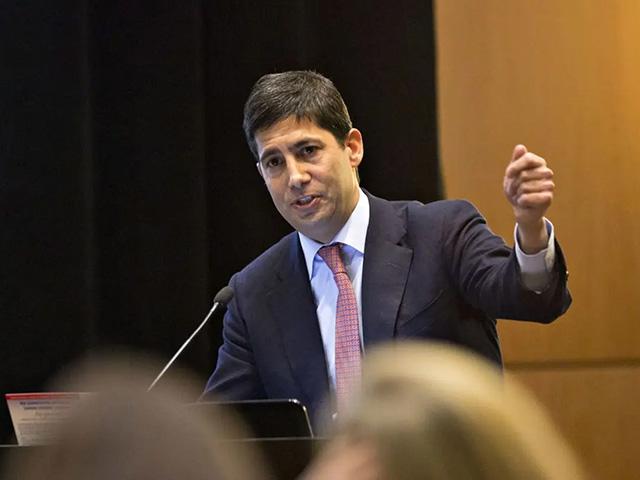
In the end, the president chose the man many on Wall Street favored to chair the Federal Reserve Board. Kevin Warsh, who served as a Fed governor from 2006 to 2011, is well-connected on Wall Street and in international banking circles.
Warsh put those connections to good use during the 2008 financial crisis when he was the Fed's ambassador to Wall Street. He'll be the right man in a future crisis when the Fed must play lender of last resort. The Wall Street Journal's editorial writers called him "President Trump's best second-term appointment." (https://www.wsj.com/…)
For a president who demands a say in interest rates to choose Warsh seems odd, however. In 2010, Warsh gave a speech defending the Fed's independence in setting monetary policy. He argued that maintaining the Fed's credibility required "fierce independence from the whims of Washington and the wants of Wall Street." (https://www.federalreserve.gov/…)
The most important question about Warsh today is whether he's willing and able to live up to those words.
Donald Trump isn't a Fed-independence fan. He has not only pummeled the current chair, Jerome Powell, with criticism for not lowering the Fed's benchmark interest rate to Trump's preferred 1% or less. He has also, by allowing a grand jury investigation of Powell, sent a chilling message: "Do what the president says or a pretext could be found to jail you."
(Republican Senator Thomas Tillis of North Carolina says he will block Warsh's confirmation even though he considers him qualified until the criminal probe of Powell is resolved.)
Warsh has long been known as a fierce inflation hawk. He was against low interest rates even when inflationary pressures were minimal. He left the Fed in 2011 publicly criticizing its decision to stimulate the economy by buying long-term bonds in the market, a practice known as quantitative easing, or QE.
P[L1] D[0x0] M[300x250] OOP[F] ADUNIT[] T[]
When Trump's presidency was resurrected in 2024, Warsh began calling for lower rates. He attributes this switcheroo to Silicon Valley's artificial intelligence and Trump's deregulation, which he says will boost productivity, allowing faster GDP growth without inflationary consequences.
Still, it looks like he bowed to Trump to get the job he had long campaigned for. That perception may be unfair but there's no denying the timing of the change was convenient.
Warsh is smart enough to know that in accepting the job from a president who is determined to have his way, he risks suffering the fate of an earlier Fed chair appointed by a determined president: Arthur Burns.
In his 2010 speech Warsh said, "The only popularity central bankers should seek, if at all, is in the history books." The history books have not accorded Burns much popularity.
Fearful he would lose the 1972 election, President Richard Nixon pressured Burns to stimulate the economy in dozens of meetings. Though Burns had qualms, he ultimately engineered a 10% expansion of the money supply. The economy boomed. Nixon was reelected.
Eventually, though, Nixon's pressure and Burns's capitulation became a textbook example of why central banks should be independent. In 1973, the inflation rate hit 6.2%. It was a shocking 11% in 1974 and 9% in 1975. In the second half of the '70s the rate never went below 5.8% and one year was as high as 11.3%. For the most part, the history books have blamed Burns.
Warsh doesn't want to be Burns. Admirers say he has the political skill to manage the president and avoid becoming Burns. The markets' initial reaction to the appointment was to sell gold and silver and buy dollars, suggesting some investors think Warsh is still at bottom an inflation hawk.
They may not be entirely wrong. Warsh is still highly critical of quantitative easing; there's a good chance he would push to shrink the Fed's $6.6 trillion balance sheet.
Imagine the Fed were selling lots of long-term QE bonds at the same time it was sharply lowering short-term interest rates. Would that be stimulative? Deflationary? Or might the two policies cancel each other out?
On a more practical level, investors may simply be convinced that even the persuasive Warsh wouldn't be able to achieve a two-point interest rate. The chair, after all, is but one of 12 voters on the interest-rate setting Fed committee. Several of those 11 seem reluctant to cut further at all, much less drastically. Five aren't appointed by the White House. (https://www.dtnpf.com/…)
In 2010 Warsh said he was "confident that any attempt to influence inappropriately the conduct of Fed policy would yield a strong and forceful rebuke by Fed officials and market participants alike." But he was appointed by a president who wrote on social media in December that "Anybody that disagrees me will never be the Fed chairman!"
Let's hope markets aren't too optimistic about Kevin Warsh's ability to avoid becoming Arthur Burns.
Urban Lehner can be reached at urbanize@gmail.com
(c) Copyright 2026 DTN, LLC. All rights reserved.
Comments
To comment, please Log In or Join our Community .