


Ag Policy Blog
E15 Council's 'Bright Light' Also Comes With Risks for the RFS
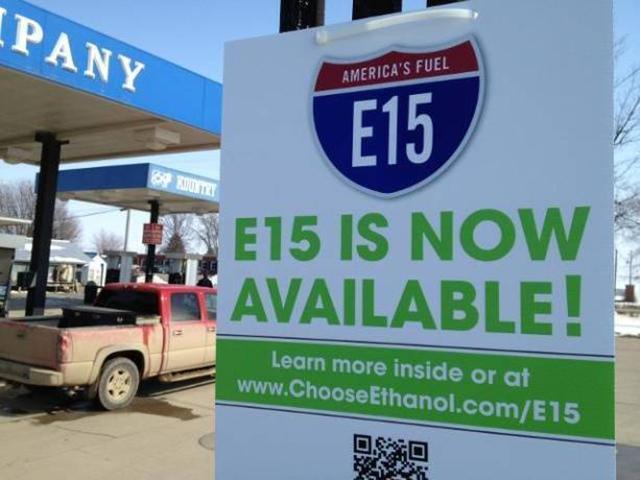
It's difficult to quantify what is at stake for the ethanol industry at this very moment, but the "bright light at the end of a very dark tunnel" could be nationwide year-round E15 -- it could be a freight train loaded with more refined oil barreling the other direction.
The sudden creation of the E15 Rural Energy Council by House Speaker Mike Johnson, R-La., happened more than a week ago, but there have not been any official details about membership or how the council will operate.
And time is short. Under the legislative mandate creating the council, the group is supposed to propose legislation by Feb. 15. If the House follows the language in the bill, a legislative proposal would come up for a House vote by the end of February.
It should be noted that the appropriations bill that included the E15 Rural Energy Council language remains tied up in the U.S. Senate gridlock amid broader gridlock over federal the funding package. Given that the Senate is changing these bills, the House will have to again vote on the funding measures as well, potentially as soon as Monday.
So far, a handful of Republicans have declared they are on the council, which is supposed to be co-chaired by Rep. Randy Feenstra, R-Iowa, and Rep. Stephanie Bice, R-Okla.
Other Republicans who have said they are on the council: Rep. Adrian Smith of Nebraska, Rep. Mark Alford of Missouri, Rep. Derrick Van Orden of Wisconsin and Rep. Gabe Evans of Colorado.
A handful of Democrats also wrote a letter on Tuesday to Johnson asking for fair representation on the council, led by Rep. Nikki Budzinski, D-Ill.
There are a lot of unanswered questions about the E15 Rural Energy Council beyond who gets membership. For instance, will the council be holding public meetings and hearings? Once the council drafts legislation, what's next? Does the council's work then run through the House Energy and Commerce Committee for a full markup? Then, of course, how does any of this ultimately play in the U.S. Senate?
After President Donald Trump spoke Tuesday in Iowa, there was a quick flood of emails from groups praising the president for declaring his support for nationwide year-round sales of E15. Monte Shaw, executive director of the Iowa Renewable Fuels Association, made the "bright light" comment.
But Trump's speech also had a notable tell. In talking about Congress working on a deal for E15, Trump said, "We've got it for farmers, consumers and refiners, including small and mid-sized refiners."
P[L1] D[0x0] M[300x250] OOP[F] ADUNIT[] T[]
The phrase "small and mid-sized refiners" should jump out. There has been an emphasis to protecting small refiners, which is defined under the Renewable Fuels Standard (RFS) as refiners processing fewer than 75,000 barrels a day of crude oil. The RFS doesn't define "mid-sized refiners" but whoever wrote Trump's remarks had been given enough industry background to insert that distinction.
Biofuel advocates say they had an agreement with the vast majority of oil refiners to get E15 done, but the deal was blown up by six or seven refiners --- oil companies that generate anywhere from $8 billion to nearly $58 billon in annual revenue. These refiners – producing anywhere from 200,000 to nearly 7000,000 barrels of oil per day – have convinced enough lawmakers that they will go into the poorhouse if they lose access to small refinery exemptions (SREs).
Beyond that, they also are pressing to change the Renewable Fuels Standard to lower the costs of Renewable Identification Numbers (RINs) as well. Their argument is blunt: without relief, refineries will shutdown and jobs will be lost as a result.
These mid-sized refiners had a down year in 2024, coming off a strong 2023 year for profitability. Even so, most of them remained profitable on a full-year basis and have posted profitable quarters in 2025 as well.
And RINs aren't the problem. EPA issued a report in 2022 concluding that, in general, refiners can and do recover their RIN costs by selling their petroleum blendstock at prices that reflect those RIN costs.
Yet, these refiners are portraying themselves as victims of RFS compliance costs, even as they combine for $170 billion-plus in annual revenue. By comparison, the entire ethanol industry produces about $33-40 billion in ethanol – roughly 16 billion gallons priced at $2.10 to $2.50 a gallon. And this same set of refiners only blend a portion of that ethanol.
But these refiners are going to press their case. They are going to press it hard and they are going to press it fast.
There's a familiar game played on Capitol Hill, as any farmer who has engaged in this process knows. You blitz the Hill with members of you group during the day. Maybe you get a couple of chairmen and ranking members to speak to your group on the Hill or a nearby hotel as well. Then comes the important part: You host a reception -- on the Hill or off -- with food and an open bar. You invite both Senate and House members, and their staffs. You wine and dine.
Right now, there are likely some of these "small and mid-sized refiners" working to set up their blue-collar workers in some five-star Washington hotels, and you can imagine the receptions will be first class as well.
Regardless of the process, farmers and biofuel producers can't afford to sleepwalk through the E15 Rural Energy Council assuming the light at the end of the tunnel won't run them over in the end.
See, "Ag, Biofuels Groups Push E15 Rural Council for Quick Legislative Solution Before Feb. 15 Deadline,"
See, "Trump Backs E15, Champions Trade Deals for Ag at Iowa Rally," https://www.dtnpf.com/…
Chris Clayton can be reached at Chris.Clayton@dtn.com
Follow him on social platform X @ChrisClaytonDTN
(c) Copyright 2026 DTN, LLC. All rights reserved.
Comments
To comment, please Log In or Join our Community .