


An Urban's Rural View
Dollars, Gold or Pork Bellies? Your Choice
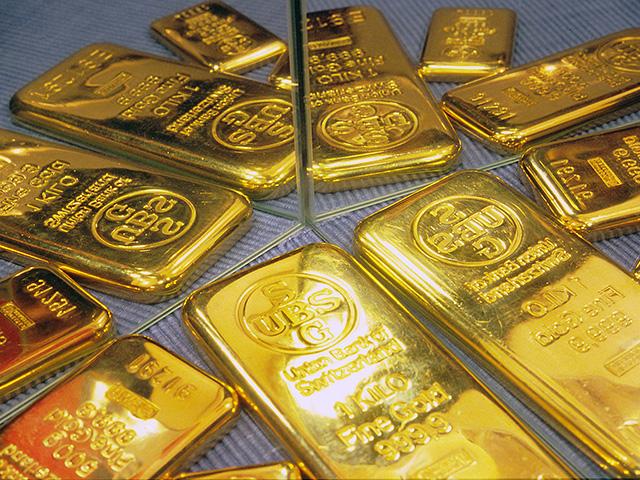
Gold is up 50% over the last 12 months and explanations for the leap abound. Surging government debt. Sticky inflation. Weakness in the international reserve currency, aka the dollar.
At the root of all these explanations is the notion that gold is an alternative store of value to fiat money -- currencies issued by governments but not backed by a physical commodity. When people fear a decline in the purchasing power of the currencies that governments print, they turn to gold. It's a "safe haven" asset.
Yet for me, these explanations have always begged a more fundamental question: Why do people regard gold as a store of value in the first place? What makes gold intrinsically more valuable than other commodities?
With soybeans or cattle, you have food. Unless you're a dentist or a jeweler, what can you do with gold? You can't use it at the supermarket; to buy food, you'd have to first convert it into -- shudder! -- fiat money. All you can do with gold is what governments do -- store it.
Survivalists store gold believing fiat money will be worthless after a massive catastrophe that leaves people in chaos and without such basics as electricity and running water -- say, a nuclear war. They're probably right.
But will gold be worth that much more? If food is desperately scarce in this dystopian post-catastrophe world, will someone who possesses food really be willing to trade it for bars of shiny metal?
I admit, I feel uneasy questioning gold this way. After all, human beings have valued gold for thousands of years. Smarter people than me have satisfied themselves the metal is inherently valuable. Countries have tied their currencies to it.
And yet, history supports a provocative thought about why gold is valued: It's cultural.
P[L1] D[0x0] M[300x250] OOP[F] ADUNIT[] T[]
In the beginning, many thousands of years ago, people esteemed gold for its glitter. Gold objects were status symbols.
As international trade grew and barter became less practical, people needed a convenient medium of exchange. Gold was one of the early "currencies." The others included cowrie shells, iron, silver, salt and textiles.
Gold outlasted many of the others because it was easier to handle and ship. It could be made into coins, which could be tested to assure they're really gold. Bars or coins could be weighed to assure their value.
Gold was especially advantageous compared to metals like copper or silver. Gold occurs far more rarely in nature, giving it scarcity value. Unlike silver or copper, it doesn't tarnish. Unlike iron, it doesn't rust.
Notice, though, that these are comparative advantages. The ancients needed an easily portable, widely accepted medium of exchange. Gold was better than the alternatives. But more than anything, people trusted it as money because they knew other people would accept it as payment for goods and services.
In that respect, gold isn't as different from fiat currency as we sometimes pretend. We accept it has value because we know other people accept it has value.
True, gold has a longer history of acceptance than paper bills, its value does not depend on government action and its relative rarity means there's little danger of a quick increase in supply that lowers its price.
But fundamentally, it has monetary value by accepted convention, much like fiat money.
The difficulty of increasing gold's supply is particularly important when comparing it to other commodities. Farmers may wonder why, if doubts about fiat money have propelled gold's price dramatically higher, the price of the hard commodities they grow hasn't also surged.
Alas, unlike gold, which has to be found and mined and whose price is determined mainly by demand, prices of ag commodities are driven by a far more complicated interplay of supply and demand. As farmers know all too well, supply plays a particularly important role.
Meanwhile, demand for ag commodities is ultimately about their uses in the real world as food and fiber and energy. By contrast gold, for the most part, is mainly an alternative store of value. When folks are fearful, demand for it soars.
The odd thing that has happened this year isn't that ag commodities didn't soar with gold. It's that market interest rates didn't. While gold is up more than 50% year to date, the interest rate on the 10-year Treasury note is down 11%.
If investors were really as fearful as the runup in gold implies, you'd think they'd be pushing interest rates higher. A deeper discussion of this anomaly will have to wait for another column.
In setting forth these thoughts I'm not trying to encourage anyone to sell, or not buy, gold. I'm merely suggesting the metal's underlying value is less intrinsic and more of a cultural phenomenon than gold lovers think.
Personally, in a post-catastrophe world, I'd pick pork bellies.
Urban Lehner can be reached at urbanize@gmail.com
(c) Copyright 2025 DTN, LLC. All rights reserved.
Comments
To comment, please Log In or Join our Community .