


Ag Policy Blog
Waiting for FBA Details, House Members Press for Speedy Aid to Specialty Crops Growers
WASHINGTON (DTN) -- The Trump administration will release the crop specific payment rates under the Farmer Bridge Assistance (FBA) program by the end of December, a USDA spokesperson said, suggesting the details of the program could come a week later than expected.
A bipartisan group of more than 100 members of Congress last week also sent a letter to the House and Senate agriculture committee leaders urging them to tell USDA to provide aid to specialty crop growers as soon as possible under FBA.
Earlier Agriculture Undersecretary for Farm Production and Conservation Richard Fordyce had said the payment rates would be released the week of December 22, although a news release said the rates would "be released by the end of the month."
A spokesperson told DTN Political Correspondent Jerry Hagrstrom late last week that the payment rates would be released before the end of the month.
The $11 billion in payments will go to farmers who produce barley, chickpeas, corn, cotton, lentils, oats, peanuts, peas, rice, sorghum, soybeans, wheat, canola, crambe, flax, mustard, rapeseed, safflower, sesame, and sunflower.
USDA has said, "FBA will help address market disruptions, elevated input costs, persistent inflation, and market losses from foreign competitors engaging in unfair trade practices that impede exports."
"The FBA program applies simple, proportional support to producers using a uniform formula to cover a portion of modeled losses during the 2025 crop year. This national loss average is based on FSA reported planted acres, Economic Research Service cost of production estimates, World Agricultural Supply and Demand Estimates yields and prices and economic modeling."
Farmers who qualify for the FBA program can expect payments to be released by February 28, 2026.
The remaining $1 billion of the $12 billion in bridge payments will be reserved for commodities not covered in the FBA program, such as specialty crops and sugar, for example, though details including timelines for those payments are still under development and require additional understanding of market impacts and economic needs.
The $12 billion in farmer bridge payments, including those provided through the FBA Program, are authorized under the Commodity Credit Corporation Charter Act and will be administered by the Farm Service Agency.
P[L1] D[0x0] M[300x250] OOP[F] ADUNIT[] T[]
A USDA spokesperson also clarified to DTN Ag Policy Editor Chris Clayton that the payment limit will be strictly limited to $155,000 per entity or individual.
HOUSE MEMBERS: FOCUS AID ON SPECIALTY CROPS
A bipartisan group of more than 100 members of Congress sent a letter to the House and Senate agriculture committee leaders urging them to tell USDA to provide aid to specialty crop growers as soon as possible.
The effort was led by Specialty Crop Caucus Co-Chairs Reps. Jim Costa, D-Calif.; David Rouzer, R-N.C.; Sanford Bishop, D-Ga.; and David Valadao, R-Calif.
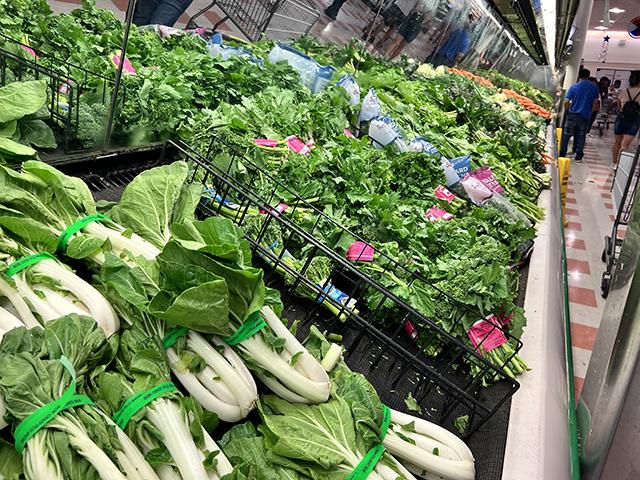
USDA has set aside $1 billion to help non-commodity farmers including specialty crops and sugar, but is still working on a formula for distributing the funds.
"As members of Congress who represent specialty crop growers in the United States, we urge you to ensure specialty crops equitably benefit from economic relief solutions provided to U.S. agriculture as soon as possible," the House members wrote.
The Specialty Crop Farm Bill Alliance (SCFBA) on Friday applauded the bipartisan leadership of the Congressional Specialty Crop Caucus for urging immediate and equitable economic relief for specialty crop producers and called on Congress and the administration to act without delay.
"After months of uncertainty, specialty crop growers urgently need clarity and meaningful relief, and we appreciate the Specialty Crop Caucus for elevating this issue and making clear that specialty crops must be included in any relief package for American agriculture," the co-chairs of the SCFBA said.
"Specialty crops are both an economic engine and the source of the most nutritious foods in the American diet, but current policies fail to reflect their importance to public health and food security."
The alliance noted, "Specialty crops -- including fruits, vegetables, tree nuts, nursery, greenhouse, and floriculture products -- generate more than $75 billion annually in U.S. agricultural cash receipts, account for more than one-third of all U.S. crop sales, and support rural economies nationwide."
"Yet, under the current USDA farm aid framework, $11 billion is allocated to row crops while only $1 billion is reserved for specialty crops and other commodities, with key details on eligibility, payment formulas, and timing still unresolved. At the same time, specialty crop producers continue to face steep increases in labor, fertilizer, fuel, and pesticide costs without corresponding increases in market prices."
The SCFBA is co-chaired by Cathy Burns, CEO of the International Fresh Produce Association; Mike Joyner, president of the Florida Fruit & Vegetable Association; Dave Puglia, president and CEO of Western Growers; and Kam Quarles, CEO of the National Potato Council.
The Northwest Horticultural Council said in a note to its members this week that the alliance in which it participates met with USDA officials this week to discuss the needs of specialty crop growers and recommendations for the program.
DTN Ag Policy Editor Chris Clayton contributed to this report.
Also see, "Projecting Farmer Bridge Assistance Payments," https://www.dtnpf.com/…
Jerry Hagstrom can be reached at jhagstrom@nationaljournal.com
Follow him on social platform X @hagstromreport
(c) Copyright 2025 DTN, LLC. All rights reserved.
Comments
To comment, please Log In or Join our Community .