


Production Blog
Contemplate the Cost of Losing Glyphosate
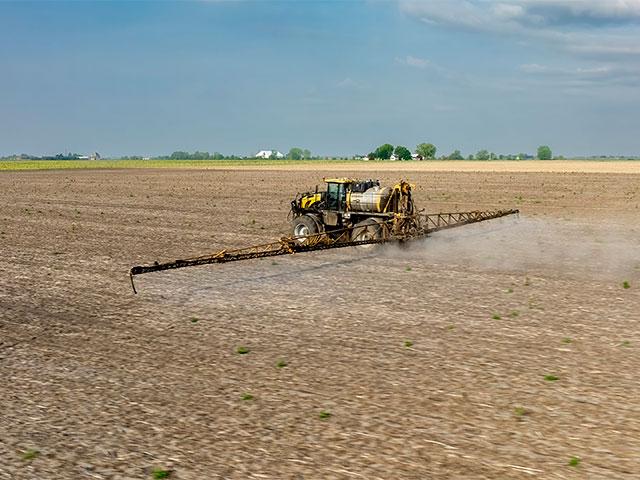
Some of us remember life without glyphosate. When the herbicide first came on the market, we watched amazed as rope wick applicators filled with Roundup (glyphosate) replaced bean-walking farm kids. Roundup Ready crops followed and bean buggies got parked.
Those were the days when advertisements claimed glyphosate would never break and we watched as glyphosate transformed agriculture. The industry consolidated. Traits and chemicals married. Herbicide innovation went by the wayside -- in large part because we had glyphosate.
Nature always prevails -- even if we like to pretend it doesn't. The words herbicide resistance eventually became the new alarm bell. Now, lawsuits and personal health claims against Roundup herbicide dominate headlines.
In Illinois, those disputes have led to added concerns about the possible ban of the herbicide. Illinois state legislators are working on several bills that, if passed, would introduce new regulations or restrictions on pesticide use in the state. And those proposals prompted a group of scientists to dig deeper and ask what cost a ban of the weedkiller represents.
The analysis from the University of Illinois-Champaign and the Illinois Soybean Association estimates Illinois corn and soybean farmers could lose up to $609 million per year -- representing a 3.6% revenue loss -- if the state banned the herbicide glyphosate.
Aaron Hager, an extension weed scientist at the University of Illinois, co-authored the report. Long an advocate of responsible use of glyphosate and all herbicides, Hager told DTN he believes glyphosate remains a valuable and important tool for farmers.
"We obviously have issues with glyphosate-resistant weeds, but dozens and dozens of other weed species remain susceptible to glyphosate," said Hager. "I would argue it still is one of the most cost-effective herbicide options available to Illinois farmers.
"Without glyphosate, how will corn farmers control emerged annual and perennial grass species? Go back to Accent and Beacon? What folks don't realize is ALS resistance in Illinois foxtail populations is not uncommon," he said.
Hager also noted pesticide bans put Illinois farmers at a competitive disadvantage to neighboring states. In 2025, Illinois farmers harvested more than 639 million bushels of soybeans, making Illinois the top soybean producing state.
There's the conservation angle to consider, too. Glyphosate is a key element in conservation tillage and often used as the burn-down herbicide to control cover crops used to promote soil health.
University of Illinois science writer Lauren Quinn covers the study in the following news release. It is well worth a read and can be accessed digitally here: https://aces.illinois.edu/… .
What would it cost farmers if Illinois banned glyphosate?
P[L1] D[0x0] M[300x250] OOP[F] ADUNIT[] T[]
By Lauren Quinn
A new analysis from the University of Illinois-Champaign and the Illinois Soybean Association finds that Illinois corn and soybean farmers could lose up to $609 million per year -- representing a 3.6% revenue loss -- if the state banned the weedkiller glyphosate.
The estimate represents a realistic scenario in which farmers would replace glyphosate with more expensive and slightly less effective herbicide products, and accounts for modest yield losses. But the study's authors say any yield loss, even equating to just 3.6% of a farmer's bottom line, would be hard to bear.
"I don't know of any farmer who wants to take a revenue loss by any stretch of the imagination, and especially when we've got such tight margins right now," said study co-author Aaron Hager, professor and faculty Extension specialist in the Department of Crop Sciences, part of the College of Agricultural, Consumer and Environmental Sciences (ACES) at Illinois. "Profits have been projected to be negative again this year for a lot of Illinois farmers, many of which may be on the verge of not being able to survive."
The researchers became curious about economic impacts after glyphosate bans were introduced in past Illinois legislative sessions. Considering increasing public attention and court cases related to glyphosate, they recognized that another ban could be proposed at any time.
Meanwhile, multiple other pesticide bans were proposed (https://extension.illinois.edu/…) in Illinois earlier this year. The researchers say their analysis methods could be applied to other chemicals.
"We actually discussed studying several different chemicals initially and landed on glyphosate," said study co-author Corey Lacey, environmental policy manager at the Illinois Soybean Association. "We chose it because a glyphosate ban would probably have the biggest impact on farmers since it is one of the most used crop protection tools by corn and soybean farmers in Illinois. So a glyphosate ban is something that we really have to talk about and put some real numbers to."
Estimating the loss
Lead author Sandy Dall'erba, founding director of CREATE (the center for Climate, Regional, Environmental And Trade Economics) and professor in the Department of Agricultural and Consumer Economics in ACES, took a quantitative approach to the analysis.
He started by tallying the total usage and expenditures related to glyphosate in the state. To calculate potential revenue impacts under a ban, he relied on published estimates of corn and soybean yield losses with decreased glyphosate use. Then he considered alternative herbicides, measured their higher cost and lesser efficiency, and estimated the price increase these new options would experience in the event of a glyphosate ban.
The results indicate that Illinois corn and soybean farmers could lose $300 to $609 million per year, representing a 1.8 to 3.6% revenue loss.
What's missing
The analysis paints a picture of economic hardship for Illinois farmers, but the researchers acknowledge that it does not represent every consequence of a hypothetical glyphosate ban. For example, it doesn't capture the potential human health and environmental impacts of shelving glyphosate, nor indirect costs related to using other crop protection tools.
"Our analysis is somewhat partial in the sense that it is only looking at one aspect -- the economic impacts on the farmer. A complete assessment would also need to consider effects on the agrifood supply chain, public tax revenues, human health, and the environment before weighing the overall costs and benefits of a glyphosate ban," Dall'erba said.
Glyphosate is a key element in conservation tillage, used as the burn-down herbicide to remove standing vegetation before planting. Without it, fuel costs -- and their associated greenhouse gas emissions -- would likely rise under a hypothetical glyphosate ban.
"Glyphosate allows farmers to adopt conservation practices like no-till on a scale that you can't accomplish in other ways," Lacey said. "A glyphosate ban would likely result in more conventional tillage, which is going to have not just a conservation cost in terms of soil health and emissions, but a literal fuel cost since farmers would also be driving the tractor more in the field. That would lead to increased input costs that we didn't estimate here."
Whatever the unaccounted impact, the researchers say it's clear their initial estimates are only the tip of an iceberg.
"What this work shows is that there can be significant financial consequences for something that looks fairly simple on paper," Hager said.
The study, "Understanding the systemic impacts of a glyphosate ban on Illinois agriculture: Economic, agronomic, and community perspectives," is published in Weed Technology at
Find a previous DTN article about the repercussions of losing glyphosate here: https://www.dtnpf.com/… .
Find recent DTN article, see "Bayer's New Glyphosate Unit: Ruveon" here: https://www.dtnpf.com/….
For more, see "Bayer Wins Big: SCOTUS Blocks State Lawsuits Over Roundup Cancer Warnings" here: https://www.dtnpf.com/… .
And also see "Farmer Leaders Angry After Bayer/Monsanto Moves to Place Duties on Imported Glyphosate" here: https://www.dtnpf.com/… .
Pamela Smith can be reached at Pamela.Smith@dtn.com
Follow her on social media platform X @PamSmithDTN
(c) Copyright 2026 DTN, LLC. All rights reserved.
Comments
To comment, please Log In or Join our Community .