Blogs

  • Production Blog

    The maximum annual application rate for dicamba in tolerant soybeans and cotton has been cut in half compared to previous labels. (DTN file photo)

    EPA cut the annual dicamba application maximum in half when it issued new registrations for three over-the-top dicamba herbicides. So, when's the best time to use the limited active ingredient?

  • Ag Weather Forum

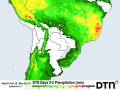
    Above-normal precipitation is forecast for large areas of the country next week. (DTN graphic)
    Posted by John Baranick , DTN Meteorologist

    After some drier weather in the last 10 days or so, the weather pattern is forecast to become much more active next week, especially in the Midwest.

  • Market Matters Blog

    MV Angela K cutting through the ice on Lake Pepin on her way to St. Paul, Minnesota, to open the Far Upper Mississippi River 2026 shipping season. (Photos courtesy of Captain Aaron Hundt)

    The 2026 shipping season began in the past week as the Upper Mississippi River is now open in addition to the Great Lakes.

  • Ag Policy Blog

    On a panel discussing "Food Security in a Strategic Age," Sharon Burke holds a corn cob that is produced today as an example of a future shrunken cob if agricultural research does not continue to provide innovations. Burke, chief engagement officer at the International Maize and Wheat Improvement Center, known by its Spanish acronym CIMMYT in Mexico, where Norman Borlaug conducted his wheat research that led to the Green Revolution. (Photo by Jerry Hagstrom/The Hagstrom Report)
    Posted by Jerry Hagstrom , DTN Political Correspondent

    The World Food Prize Borlaug Dialogues this October will focus on global food security, particularly in times of war, rather than on food production. The foundation on Wednesday named this year's World Food Prize laureate.

  • Ethanol Blog

    A group of 28 national and state agriculture groups asked Trump administration officials to take further action on the 45Z Clean Fuels Production tax credit. The credit is a key to producing sustainable aviation fuel using ag feedstocks. (DTN photo by Todd Neeley)

    Twenty-eight agricultural groups urged Trump administration officials to clarify the 45Z Clean Fuels Production tax credit rules to support struggling farmers and biofuel markets.

  • Canada Markets

    The soybean/corn price ratio is a good indicator of the relative profitability of the competing crops, as well as an indication of what to expect to be seeded come spring. This year, it is confirming the expected shift to soybeans so far, but keep an eye on it after USDA's Prospective Plantings report for indications about those flex acres. (DTN ProphetX chart)
    Posted by Mitch Miller , DTN Contributing Canadian Grains Analyst

    The soybean/corn price ratio certainly supports a shift in area from corn to soybean planting this spring, but it will need to be monitored for signs of that transition being too great.

  • Fundamentally Speaking

    Chart by Joel Karlin, DTN Contributing Analyst
    Posted by Joel Karlin , DTN Contributing Analyst

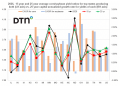
    Net fund position in corn with both futures and options vs. the price of spot corn in dollars per bushel.

  • Sort & Cull

    Traders helped drive the cattle contracts higher Monday, but they'll keep an eye out to see if fundamental support develops later in the week. (DTN chart by ProphetX)
    Posted by ShayLe Stewart , DTN Livestock Analyst

    Both the live cattle and feeder cattle contracts were able to close higher Monday afternoon, but with choppy boxed beef prices, historically slow throughput, and cash prices yet to be determined, the week still has some challenges ahead.

  • Technically Speaking

    This is a daily chart of May soybean futures showing the bear flag pattern. (DTN ProphetX chart)
    Posted by Dana Mantini , Senior Market Analyst

    The May soybean futures chart appears to be forming a bear flag pattern that typically indicates a downward resolution. However, chart patterns are certainly not always highly reliable and there are outside market forces controlling the narrative on grain and soy lately.

  • Editors' Notebook

    Posted by Greg D Horstmeier , DTN Editor-in-Chief

    March 24 is National Ag Day. Join DTN and Progressive Farmer in celebrating what farm and ranch families bring to our nation and the world.

  • An Urban's Rural View

    Though he hasn't smoked in decades, the author still has his cigarette lighter from his first ship, the USS Pivot (MSO-463). (DTN photo by Urban Lehner)
    Posted by Urban C Lehner , Editor Emeritus

    The U.S. Navy's minesweeping technology is much more sophisticated today than it was during the Vietnam era when the author was a minesweeping officer; but the Navy has a lot less of it and the Iranians will be attacking the Americans with drones.

  • South America Calling

    Soil moisture anomalies computed via satellite from NOAA depict below-normal levels just as safrinha corn planting is running slower than normal. (NOAA graphic)

    Safrinha corn planting is slightly behind schedule, a large concern with limited soil moisture and only about two months of the wet season left.

  • Minding Ag's Business

    Determine your price and time action points based on your operation's cost of production and cash-flow needs. (Photo by Michael Westhoff, Getty Images)
    Posted by Katie Micik Dehlinger , Progressive Farmer Editor-in-Chief

    Commodities brokers advise farmers to develop disciplined grain marketing plans based on production costs, stick to price targets, seek professional guidance and utilize futures and options for effective risk management.

  • MachineryLink

    The Space Weather Prediction Center has issued a Severe G4 geomagnetic storm watch, the result of a coronal mass ejection (CME) that left the sun on Jan. 18 that is anticipated to arrive at Earth as early as late Jan. 19 (EST) to early Jan. 20. (DTN image courtesy of NOAA)
    Posted by Dan Miller , Progressive Farmer Senior Editor

    A G4 geomagnetic storm may degrade satellite navigation for some hours and disrupt low-frequency radio navigation. But given this is January and not the middle of spring planting, this storm if it arrives will have negligible effect on U.S. farms.

P[L1] D[728x90] M[320x50] OOP[F] ADUNIT[] T[]
DIM[2x3] LBL[blogs-list] SEL[[data-native-ad-target=articleList]] IDX[4] TMPL[news-lg] T[]