



South America Calling
Brazilian Crop Outlook Clouded by Fertilizer, Credit and El Nino Risks
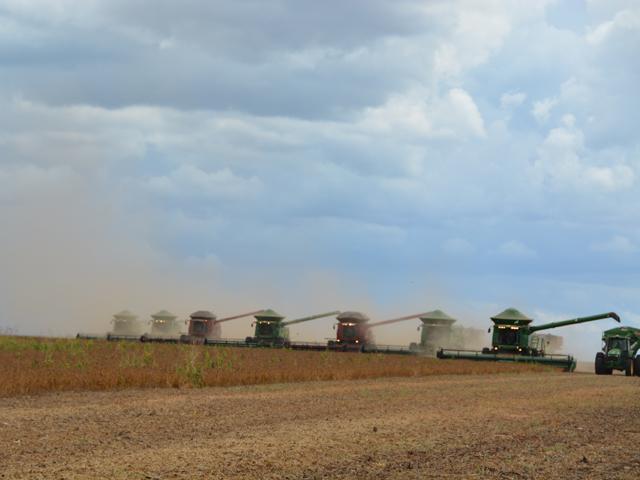
With a bevy of crop-production challenges heading Brazil's way, there are growing questions leading into Brazil's fall planting season over whether the country's farmers can continue to sustain their growth forecasts for corn and soybeans.
Purdue University's Center for Commercial Agriculture on Wednesday examined issues around Brazil's production forecasts for 2027. Like U.S. farmers, Brazilian farmers face low commodity prices, as well as high fertilizer and input costs. Brazilians also face tough credit conditions and the risk of a strong El Nino weather pattern.
In last week's World Agricultural Supply and Demand Estimates (WASDE) report, USDA projected Brazil's 2026-27 soybean production at 186 million metric tons (6.8 billion bushels), up 6 mmt from 2025-26. Corn production for 2026-27 is projected at 139 mmt (5.5 bb), up 1 mmt from 2025-26 as well.
As Purdue's analysis noted, "Lower Brazilian crop production would buck historical trends." Brazil annually has seen steady growth in corn and soybean production of about 6.5% for the past 15 years, Purdue stated.
Brazil's production expansion has relied heavily on converting more acres into corn and soybean crops. Purdue raises the issue of whether a series of shocks for this crop year, 2026-27, could slow that growth. Brazil is far more dependent on imports than U.S. farmers, especially when it comes to nitrogen and phosphate.
"Fertilizer costs are one of the reasons to question whether USDA's soybean and corn production outlook for Brazil will be realized," the Purdue article pointed out. "Prices have been decreasing from recent peaks, but they remain high enough to affect planting and input-use decisions."
As the conflict with Iran ends, fertilizer companies will be among those watching to see how fast traffic flows pick up for certain commodities through the Strait of Hormuz.
Dow Jones' MarketWatch on Wednesday also suggested that fertilizer "may take a back seat to oil and oil products when it comes to transiting Hormuz."
DTN and others have highlighted that the strait and region are not only critical for urea production, but also sulfur that is needed to produce phosphate fertilizer. In an interview last week with a Mosaic executive, he also raised the concern about fertilizer availability and pricing for Brazilian farmers.
See "Fertilizer Concerns Remain Over Strait" here: https://www.dtnpf.com/….
P[L1] D[0x0] M[300x250] OOP[F] ADUNIT[] T[]
INTEREST RATES, CREDIT PRESS BRAZILIAN FARMERS
Pointing to credit challenges in Brazil's farm sector, Reuters reported earlier this week that more farms in the country are being seized by creditors. Brazil's central bank is seeing more delinquent loans and defaults in rural areas, the article stated. Nearly 20% of farm loans now fall under "bad debt," up from just 5.5% of loans two years ago. That has led Brazilian lenders to become more aggressive in taking farmland and putting it up for auction.
Purdue's article backs this up, pointing to Brazilian farmers paying higher interest rates, with the country's benchmark interest rate at nearly 15% right now. Lenders have tightened their credit to farmers as a result. That has led farmers to find alternative financing sources to manage their operations.
EL NINO A WILDCARD
Another dynamic that could play heavily into Brazil's production is the forecast of a potentially strong El Nino.
The El Nino could have different effects across parts of the country. In central and northern Brazil, it could be drier, while southern parts of the country could see higher rainfall. Purdue noted, "The last El Nino event of comparable intensity occurred in 2015-16 when Brazil faced significant crop losses."
Brazilian climate and crop experts also held a webinar on the El Nino risks earlier this month. They expect to see irregular rains, prolonged dry spells and extreme temperatures in the northern and central parts of the country.
One expert, Francisco de Assis Diniz, a meteorologist at Brazil's National Institute for Meteorology, said there will be early rains that will "give a false impression that the rainy season has begun, leading the producer to plant too early. However, climate models indicate that October and November will be extremely dry and hot, causing significant losses and forcing expensive replanting."
AG INFRASTRUCTURE STILL NOT CATCHING UP
In a separate analysis, USDA's Foreign Agricultural Service (FAS) also has issued a report looking at Brazil's agricultural expansion and infrastructure. Poor infrastructure has driven up transportation costs for the agricultural sector as well.
"Inflation, fuel prices, and rising input costs pushed transportation expenses higher, steadily undermining the competitiveness of Brazilian producers. Combined with inadequate infrastructure, these pressures represent some of the most significant barriers to growth in Brazil's agricultural sector," FAS stated.
The report looks at the state of Brazilian highways, rail and ports.
Without more investment, Brazil's logistical problems could become a "binding constraint on agricultural growth by 2034."
AGAINST THE ODDS?
While a lot of issues lining up would suggest Brazil is due for a shock, Purdue's article also pointed out that corn and soybean production in the country has continued to grow over the past 15 years despite similar challenges. USDA's 180 mmt (6.6 bb) soybean crop for 2025-26 is still a record, even as farmers there continue to face tight margins and credit pressures.
A weather event such as El Nino is more likely to affect the country's crop production than a pullback in planted acres or inputs, Purdue stated. Even then, the article concluded: "However, the broad geographic scope of Brazilian production makes it less likely that adverse weather shocks occur across the entire corn and soybean growing area. Absent such a shock, initial 2027 USDA production forecasts for Brazil look like a reasonable extension of a durable trend, even as current economic and weather risks warrant close monitoring."
For more, see "Will Brazil's Corn and Soybean Production Continue to Grow in 2027?" here: https://ag.purdue.edu/….
And to read the Foreign Agricultural Service's report on Brazil, visit https://www.fas.usda.gov/….
Chris Clayton can be reached at Chris.Clayton@dtn.com
Follow him on social platform @ChrisClaytonDTN
(c) Copyright 2026 DTN, LLC. All rights reserved.
Comments
To comment, please Log In or Join our Community .