



An Urban's Rural View
Why Bringing Down Oil's Price Is so Hard
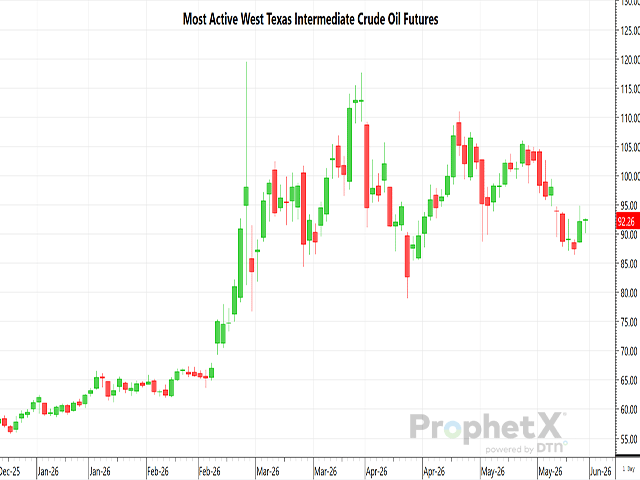
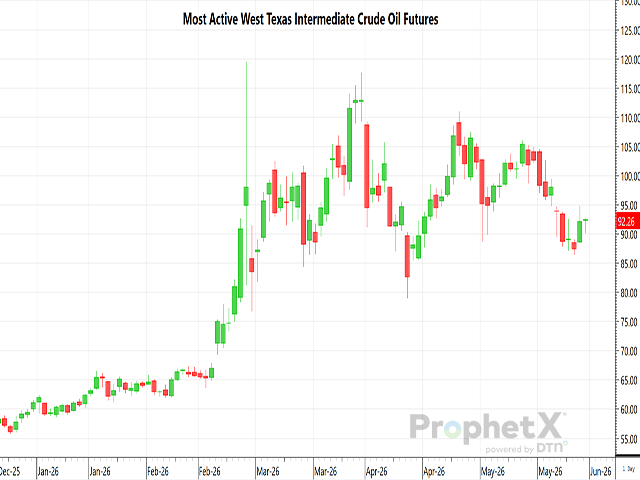
Between assurances from President Donald Trump that a peace agreement is all but wrapped up and renewed skirmishes, the price of oil rises and falls. Even at recent lows, crude's price is 40% higher than in late February when the Iran war began.
Someday -- tomorrow? next week? next month? -- the United States and Iran may announce an agreement to end the war. Odds are it will leave decisions on gnarly issues like Iran's uranium stockpile and the lifting of sanctions for later talks.
Still, an agreement could be good news for farmers, who've been squeezed by higher fertilizer and diesel prices, and drivers, who've been experiencing shell shock at the pump. I say "could" rather than "would" for two important reasons.
First, the Strait of Hormuz is Iran's main leverage in the continuing talks. No one should expect the Iranians to give it up entirely. Even if they agree to "open" the strait and promise not to charge tolls, they could maneuver to retain at least some control. And having demonstrated the ability to close the strait, they can always close it again.
Second, even if the Iranians don't play games with the opening, oil shortages are likely to continue. It will take weeks to sweep the mines. It will take months to resume production at shut-in oil wells. It will take years to repair the damage to Middle East refineries, pipelines and other oil and gas facility casualties of the war.
And all this assumes an agreement will be reached soon. It could take longer. The negotiations have been difficult, at least in part because each side is convinced it holds the cards and can wait the other out.
President Donald J. Trump's team thinks the pummeling we've given Iran's economy has left it in such catastrophic shape that the Iranians will have to sweeten their terms. The Iranians think Trump can't afford to go into the midterm elections with gas prices high. Which side has the greater tolerance for pain?
P[L1] D[0x0] M[300x250] OOP[F] ADUNIT[] T[]
By all accounts the president wants an end to the war. There have been reports that he's "bored" with it. Frustrated is perhaps more accurate. The war hurts him politically. It's beginning to feel like a quagmire, the kind of thing candidate Trump promised to keep the country out of.
It's unlike quagmires past, however. It's only lasted three months, and more than half of that period has been a ceasefire. Earlier quagmires went on for years and took thousands of American lives.
Still, this war qualifies for inclusion on a different dishonor roll. It's yet another demonstration of how difficult it can be for a great power to triumph over a seemingly much weaker power.
Among the other examples are the U.S. failure to defeat Vietnam, the Soviet Union's inability to subdue Afghanistan and the agonizing U.S. wars in Iraq and Afghanistan this century. And then there's Russia's invasion of Ukraine, which has now gone on longer than the Soviet Union's World War II.
A digression:
The Russians have been aiding Iran with intelligence and materiel. Trump's critics cite this as an example of how little the U.S. benefits from the president's bromance with Vladimir Putin.
The critics have a point, but if Trump were to push Putin, Putin could respond that he'll stop helping Iran when we stop helping Ukraine -- which we still are, though not anywhere near as much as in the past.
The Chinese, meanwhile, are aiding everyone, though some more than others. The drones that all of the parties in both wars -- the Russians, the Ukrainians, the Iranians and, yes, even the U.S. -- contain critical Chinese components.
End of digression.
If Trump tires of the ceasefire failing to produce a deal, he could renew the bombing. It's far from clear that would make the Iranians buckle, though. He could try to steal the Iranians' uranium -- or help the Israelis do it. But if that heist was easy to pull off, it would already have been tried.
Yet another military option is to try to open the Hormuz Strait by force, using U.S. Navy ships and planes to escort non-Iranian commercial shipping. This would involve bloodshed; success wouldn't be guaranteed.
If it did succeed, though, it would undermine Iran's negotiating leverage -- its ability to keep world oil prices high by keeping the strait bottled up. Iran would be unable to ship its oil, improving the odds that a starved-out Iran is forced to give up its nuclear ambitions.
For now, Iran has a chokehold on the strait -- and the effects are felt round the world.
Urban Lehner can be reached at urbanize@gmail.com
(c) Copyright 2026 DTN, LLC. All rights reserved.
Comments
To comment, please Log In or Join our Community .