


Ag Weather Forum
Spring Has Been a Good Season for Midwest Precipitation
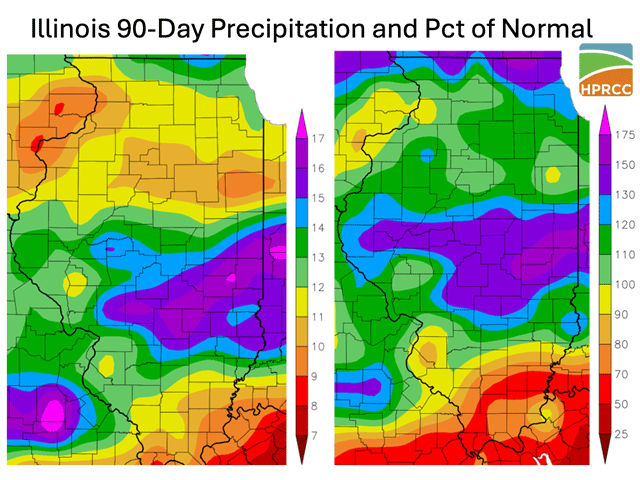
So far, the 2026 spring season shows a notably beneficial trend in precipitation for much of the Midwest. The region averaged 3.27 inches of precipitation, 127% of normal, in March. April was even wetter. Midwest April precipitation averaged 5.10 inches, 139% of normal. April 2026 was the Midwest region's third-wettest month of April on record. (Regional precipitation statistics are from the Midwest Regional Climate Center in West Lafayette, Indiana.)
Illinois is a good example of moisture received compared to normal. During the past 90 days, from mid-February through mid-May, almost the entire state has received 9 or more inches of precipitation. Those amounts are well-above normal, except for the far south near the Ohio River, where precipitation totals are mostly less than 50% of normal. Central Illinois totals in this time frame are generally 15-17 inches, as much as 150% of normal.
P[L1] D[0x0] M[300x250] OOP[F] ADUNIT[] T[]
Soil moisture assessments reflect the impact of this precipitation. The USDA Crop Moisture Index for the week of May 10-16 places most of the Midwest in the "neutral" category, with a corridor of "slightly wet" from central Missouri across south-central Illinois to central and southern Indiana. Specific moisture category breakouts show a more varied situation. Iowa and Minnesota both have more than 30% of topsoil rated short or very short for the week ending May 17, and Kentucky's topsoil moisture rates more than 60% short to very short. In contrast, the rest of the Midwest states -- Missouri, Illinois, Indiana, Wisconsin, Michigan and Ohio -- have less than 20% of topsoil with either short or very short ratings.
These reports all suggest favorable moisture for corn and soybeans not just now in the early growth stages, but also later this season, when crops may need a good dose of soil moisture in the event of a spell of hot and dry weather. And that has happened with pronounced effect, as we saw just last year in the 2025 crop season. Very warm and dry conditions in late summer and autumn left their mark on crop yields. The USDA annual crop summary for the 2025 crop year, released on Jan. 12, 2026, contained this observation: In October, during the harvest season, as much as 32% of the nation's corn production area and 39% of the soybeans were considered to be in drought. For both crops, those values had been as low as 3% in early August.
The next 10 days offer the potential for precipitation to focus on the Ohio Valley along with the Delta and Mid-South. As a result, the drier pockets of the Midwest appear to be in line to shrink as we approach the final stretch of May -- along with the spring season.
Bryce Anderson can be reached at bryce.anderson@dtn.com
(c) Copyright 2026 DTN, LLC. All rights reserved.
Comments
To comment, please Log In or Join our Community .