


Nebraska Forum: E15, Farm Bill, DEF
Senate Ag Chair Boozman Sees Path for E15 but Farm Bill Compromises Likely Needed
WEST POINT, Neb. (DTN) -- The chairman of the U.S. Senate Agriculture Committee said Friday he sees a pathway to pass year-round E15 and a new Farm Bill, but some provisions in the House bill involving pesticide rules and California's Proposition 12 would likely need to be dropped because of Democratic opposition.
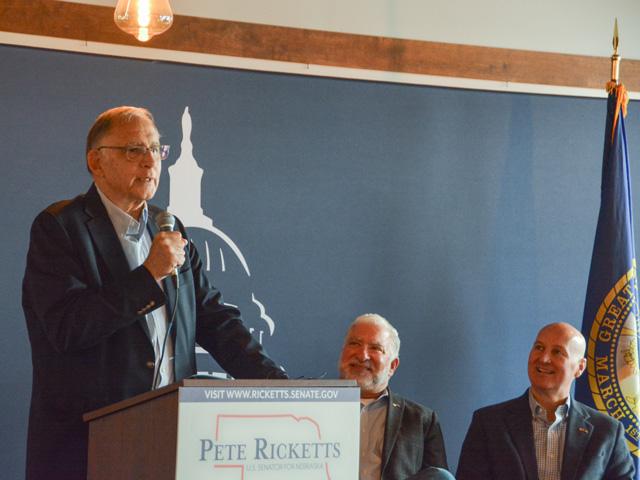
Sen. John Boozman, R-Ark., visited a Nebraska cattle feedyard and a major ethanol facility with Sen. Pete Ricketts, R-Neb., and held a forum with farmers while touring the area. Some of the biggest policy topics such as E15 and passing the Farm Bill have been front-and-center all year, but the conflict with Iran has elevated those issues.
Ricketts is up for reelection this fall against independent Dan Osborn, a labor-union leader who ran a strong race in 2024 against Sen. Deb Fischer, also a Republican. Ricketts doesn't serve on the Agriculture Committee, but he does serve with Boozman on the Senate Energy and Public Works Committee, which could play a pivotal role in whether year-round E15 legislation passes Congress this year.
IRAN INFLUENCES E15 DEBATE
Given low commodity prices and high input prices, Ricketts said passing E15 is one of the biggest things Congress can do to boost demand for commodities. The war in Iran -- which has pushed up average gas prices 70 cents in the past month -- could also be a driver to help advance the cause of year-round 15% ethanol. Ricketts said he had talked to Energy Secretary Chris Wright on this point, hitting home the focus on lowering fuel costs.
"If you are looking to be able to bring down the costs for consumers at the pump, you need to be pushing E15," Ricketts told a group of about 50 agricultural leaders from around the state.
Ricketts later noted the war in Iran highlights why the country doesn't want to be dependent on foreign sources of oil.
"We want to take this opportunity to really hammer home the point about ethanol -- that it is a part of American energy independence," he said.
Mark McHargue, president of the Nebraska Farm Bureau, asked about what it will take to actually get E15 across the finish line in Congress.
Boozman said he has to balance support for E15 with concerns he has heard from the one small oil refinery in his state that produces jet fuel. Boozman said major oil companies, or "Big Oil," had been largely agnostic about E15 until last fall, and some smaller refiners are worried policy changes could put them at a disadvantage.
"This is an opportunity for the big refineries to squeeze out the small refineries, so that's a problem," Boozman said.
Still, Boozman said he believes there's widespread support for passing E15 if lawmakers can get past some of those refiner concerns. Boozman later added, "We're going to get that done, and we've got an excellent chance to get that done in the near future."
WAR AND INPUT PRICES
McHargue asked how farmers could navigate the input prices that have gone up since the conflict began.
P[L1] D[0x0] M[300x250] OOP[F] ADUNIT[] T[]
"I've been getting a lot of calls in the last couple of days about fertilizer prices and diesel prices," he said.
Producers and others have to wonder whether there has been some price gouging with fertilizer prices during the past two weeks, McHargue told DTN after the forum. Last week, some farmers told him they couldn't get a price locked in for fertilizer, though he said it's unclear whether that reflects real shortages or just a "knee-jerk reaction."
The U.S. also doesn't rely as heavily on oil imports from the Middle East, but the conflict is still driving up diesel prices, McHargue said.
The fuel price moves are tough on disposable income right now, especially for people already facing tight budgets, Boozman said. "It's inflationary and it's really a problem, especially for us in rural America where we drive so much."
A similar scenario played out when Russia invaded Ukraine, Ricketts said. One of the problems right now, Ricketts said, is that countries such as Russia, Iran and China "are trying to destabilize the world." Ricketts added, "I don't see this getting a lot better before it gets worse."
CONTROVERSIAL PROVISIONS COULD SINK FARM BILL
On the Farm Bill, Boozman noted several major provisions were addressed in the One Big Beautiful Bill Act (OBBBA) last summer, including increased reference prices and protection levels under the Agricultural Risk Coverage/Price Loss Coverage (ARC/PLC) programs. Boozman said those changes would start paying out for farmers this coming fall.
"Nebraska is going to receive $500 million in the first year of that," Boozman said.
Still, Boozman pointed to the need to pass areas of the Farm Bill that were ineligible for inclusion in the OBBBA, such as higher loan limits for credit through Farm Service Agency (FSA) loans.
"We're going to pass a farm bill in the Senate. We've got to do that."
At the same time, Boozman said the Senate needs 60 votes to pass a new Farm Bill, and there are only 53 Republicans. Some provisions in the House bill would likely need to be scrapped or reworked, including language that would block states from passing livestock standards for meat sales, such as California's Proposition 12. The California law has effectively forced pork producers in other states to change production practices to sell into California. Opponents argue that such laws go beyond USDA requirements and increase costs for consumers. Still, Boozman said there's no Democratic support for that provision.
"Really, you are going to have to sell it, and nobody's being sold yet," he said.
A similar situation exists with a provision that would limit states from requiring tighter labeling laws for pesticides. Again, with California leading, pesticide manufacturers are being sued for following EPA labeling rules and not labeling, for instance, whether the herbicide glyphosate is a carcinogen.
These state issues could sink a bipartisan farm bill in the Senate, Boozman said.
"So, do you let all of the other stuff go down -- like getting higher loan limits in place?" Boozman said.
AG LABOR NEEDS
Ag labor was another area where Boozman and Ricketts said there could be some compromise, but the Trump administration would likely need to take a lead. Ricketts said it's unlikely any legislation will pass before the midterms. Boozman said agriculture likely needs to build a coalition with other industries, such as construction, to reform visa programs.
"A lot of people need labor that Americans just won't do," Boozman said.
DEF ENGINE FAILURES
McHargue also asked farmers in the crowd if they have had tractor or combine problems with system failures over diesel exhaust fluid (DEF) -- a federal emissions requirement that forces the engine to slow down if pollution controls aren't working. About half the crowd raised their hands.
"That was one of the main things that came up as we were driving around," Boozman said.
EPA Administrator Lee Zeldin is looking to change DEF regulations, but Ricketts noted those rules could change again in a new administration. Ricketts said the Environment and Public Works Committee just held a hearing about safety concerns related to DEF in cold weather. Engine failures in extreme cold, such as in Alaska, create real safety challenges, he said.
"So, what you really want to do is do it in statute in a bipartisan way because that's what gives you a little longevity," Ricketts said.
Boozman said farmers and others should be collecting and reporting problems with failures to EPA. "If you don't report it, then it didn't happen in Washington," he said.
In an interview, McHargue said the DEF issue started coming up more frequently when the Nebraska Farm Bureau began holding conversations over right-to-repair legislation.
Newer equipment has gotten better at reducing engine failures, but there are increasing problems with used equipment during the past five to 15 years, McHargue said. "When you look at equipment sales, there is a premium for pre-DEF equipment, both in trucks and the tractors and combines, so there's something there," McHargue said.
He added, "From a farm practicality standpoint, that's just kind of a big deal that if we can get something to mitigate some of those problems."
Also see "E15, Local Food Markets Spotlighted in Hearing as Senators Mull New Aid" here: https://www.dtnpf.com/….
Chris Clayton can be reached at Chris.Clayton@dtn.com
Follow him on social platform X @ChrisClaytonDTN
(c) Copyright 2026 DTN, LLC. All rights reserved.