


Searching for Profitable Ag Markets
E15, Local Food Markets Spotlighted in Hearing as Senators Mull New Aid
OMAHA (DTN) -- The chairman of the Senate Agriculture Committee said Tuesday he and another senator continue to work on a potential $15 billion aid package for farmers and are looking for a pathway to advance that proposal.
Sen. John Boozman, R-Ark., led a hearing focusing on how to boost domestic markets for U.S. farmers with leaders from several major farm groups testifying. Boozman and other senators said they recognize the financial straits facing farmers due to input prices that continue to rise because of the war in the Middle East.
"If you're putting something in the ground, you're probably losing money. It doesn't matter what you're planting or where you're planting it -- no row crop is currently profitable in my home state of Arkansas," Boozman said.
Boozman and Sen. John Hoeven, R-N.D., along with other committee members, are working on an additional financial aid package that would "lengthen and widen" the Farmer Bridge Assistance (FBA) created by the Trump administration, he said.
A lot of the topics most widely discussed during the hearing by senators and farmers were actually outside the jurisdiction of the Agriculture Committee:
-- Year-round E15, which nearly every senator said they support, falls under the purview of the Senate Environment and Public Works Committee. A special council in the House also is supposed to be drafting an E15 bill, but the group has already missed its own self-imposed deadlines for drafting and considering legislation.
-- The National Cotton Council sees its future tied to tax credits for companies producing or marketing products made with U.S. cotton. The "Buying American Cotton Act" (BACA) would need to clear the Senate Finance Committee to become a reality.
-- Labor and immigration reform. Farmers continue to face a labor shortage that has become exacerbated by workers now afraid of more aggressive immigration enforcement. Farmers and Democratic senators said even workers in the country legally are afraid to come to work. Those issues are under the purview of the Judiciary Committee.
Sen. Amy Klobuchar, D-Minn., the ranking member on the committee, noted there is bipartisan support for E15 legislation and suggested there may be a way to squeeze it into a farm bill.
"A bipartisan farm bill seems to be a vehicle we can get it done, but there may be others as well," she said.
Klobuchar also recommended expanding local food programs and investing more in organic agriculture. She criticized the Trump administration for canceling the nearly $900 million Local Food Purchasing Assistance (LFPA) Program last year, "and I hope we can reinstate this investment."
As if on cue, USDA on Tuesday announced $26.8 million in series of local and regional market food programs to "connect with new markets," after the criticism the department received for dismantling the much larger program exactly a year ago.
STRUCTURAL IMBALANCE
Zippy Duvall, president of the American Farm Bureau Federation (AFBF), noted farm income is now projected to fall about $50 billion in 2026. The conflict in Iran is also now driving up the costs of fuel and fertilizer, a situation AFBF has already been highlighting. While pointing to the need for a farm bill and aid, Duvall added there are larger problems in the market structure right now.
P[L1] D[0x0] M[300x250] OOP[F] ADUNIT[] T[]
"Aid should not be needed year-end, year-out. That's not normal volatility; it is a structural imbalance," Duvall said. He added, "We must be competitive in the export market, but we also need to expand our domestic demand and processing capacities to be truly resilient."
LOCAL MARKETS
Drawing back to local food programs, Duvall said federal purchasing is a $7 billion market. Policies that allow schools and food banks to source more directly from local farmers could boost demand, especially for fruit and vegetable farmers. That also ties back to a related program canceled last year by the Trump administration, the $660 million Local Foods for Schools (LFS) program.
Cathy Burns, CEO of the International Fresh Produce Association, also pointed out the new dietary guidelines and the "Make America Healthy Again" movement both call for Americans to eat more fruits and vegetables. "Ninety percent of Americans fall short of recommended intake levels," she said.
Systemic changes are needed to encourage Americans to eat more produce, including strengthening produce incentives in schools; reforming USDA procurement guidelines to focus on nutrition instead of just the lowest cost; and boosting produce in the Supplemental Nutrition Assistance Program (SNAP). All of those ideas, however, would cost more federal money, which was not addressed in the discussion.
"Our schools are the largest restaurant in the country and so we need to ensure that we are providing a variety of fruits and vegetables for our kids because we need to start those habits at a very young age," Burns said.
The $1 billion set aside for specialty crop growers from the FBA also is inadequate, Burns said, pressing that fruit and vegetable farmers need closer to $5 billion in aid right now.
"We are (one) third of the crop sales, but we are not getting (one) third of the economic assistance," Burns said.
Burns later said there are still questions about how USDA will distribute the FBA aid as well.
"Our growers are hurting just as much as my colleagues here and we just don't have the mechanism and construct to get that money out to our growers," Burns said.
YEAR-ROUND E15
As much discussion as there was around support for E15, it is almost mind-boggling that it seems so complicated to get it passed, especially given President Trump's support for it as well.
Sen. Joni Ernst, R-Iowa, said Congress has a "real opportunity" to help boost markets, suggesting E15 would be added to a five-year farm bill.
"Higher blends of ethanol can help keep gas prices affordable here at home," Ernst said.
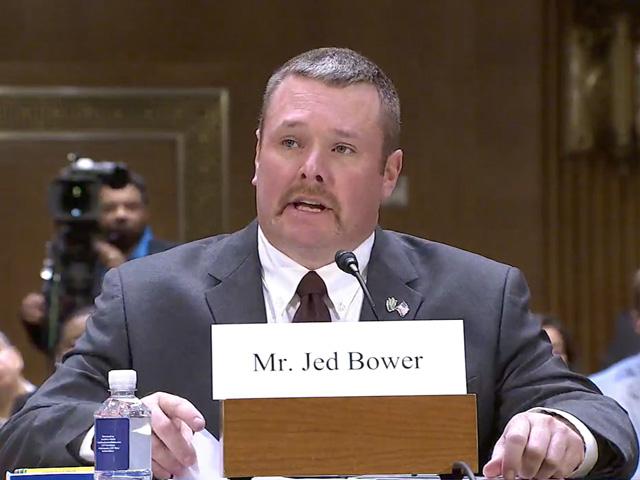
Jed Bower, an Ohio farmer and president of the National Corn Growers Association (NCGA) said E15 has the potential to lower gas prices by 25 cents a gallon. He also said every percentage point of ethanol added to the market equates to roughly 490 million bushels of corn demand. That would equate to more than 2.4 billion bushels at full 15% fuel usage.
"Farmers have waited far too long for this simple regulatory bill to pass," Bower said.
Later in the hearing, Bower added that E15 would strengthen domestic fuel supplies to rely less on foreign oil imports and it would boost profitability for corn farmers. "A lot of farmers are looking for a way to make a profit, and this is the light at the end of the tunnel," Bower said.
COTTON CHALLENGES
Nathan Reed, an Arkansas farmer and chairman of the National Cotton Council, pressed lawmakers to support the Buying American Cotton Act. The bill would generate a tax credit scaled to the level of U.S. cotton used or produced in the U.S. Reed pointed to Brazil taking over as the world's largest cotton exporter while the U.S. textile industry has all, but disappeared and local cotton gins also continue to close. Cotton farmers need a way to revive the domestic industry, he said.
"The American cotton farmer, we can produce the highest quality, most environmentally friendly, best cotton in the world. We can't produce it cheaper," Reed said.
Duvall noted the U.S. has lost 1,700 cotton gins since 1990, adding that's lost infrastructure and jobs that will not be replaced. "That bill will be a tremendous help, not only to cotton farmers, but it will be a big help to our rural communities," Duvall said.
OTHERS TESTIFYING
Scott Metzger, an Ohio farmer and president of the American Soybean Association (ASA), said his farmers are largely in the same boat as corn producers. The big item right now for soybean producers is for the Trump administration to finalize the Renewable Fuel Standard volume obligations for 2026 and 2027, which will boost blend volumes for biodiesel. Those final rules are currently at the Office of Management and Budget (OMB) waiting for approval.
Matt Perdue, president of the North Dakota Farmers Union, also called on Congress to provide meaningful antitrust relief and pointed to the input challenges farmers are facing. He noted fertilizer for an acre of wheat is normally 40% of production costs, but those costs are now going up 30%.
"You can't make it pencil out," Perdue said. "We have to look at market structure and the ways in which they create challenges for market participants."
Also see, "Farm Bureau Urges Trump to Protect Fertilizer Supply Chain," https://www.dtnpf.com/…
Chris Clayton can be reached at Chris.Clayton@dtn.com
Follow him on social platform X @ChrisClaytonDTN
(c) Copyright 2026 DTN, LLC. All rights reserved.