


Sort & Cull
Rising NWS Cases Raise Questions About Cattle Imports
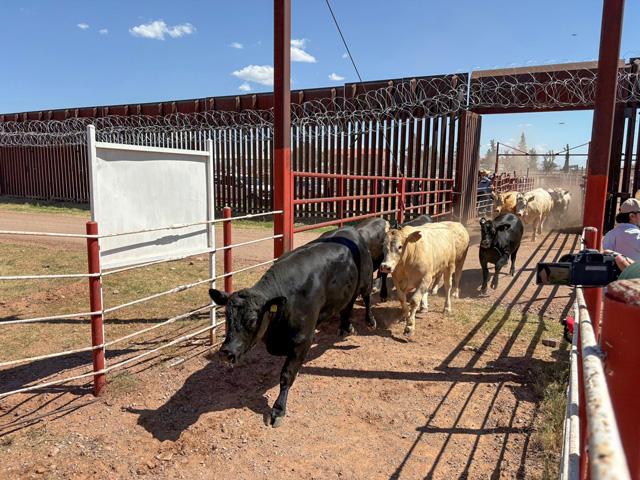
REDFIELD, Iowa (DTN) -- As USDA has phased in the reopening of U.S. ports of entry to Mexican cattle, New World screwworm (NWS) cases in the United States have continued to climb. That raises an important question for livestock producers: How many cases would it take for USDA to pause further reopenings?
The first port reopened Aug. 24 at Douglas, Arizona, followed by Santa Teresa, New Mexico, on Sept. 24 and Columbus, New Mexico, on Oct. 26. Nogales, Arizona, is scheduled to reopen Nov. 30.
The first U.S. NWS case was confirmed June 3 in Zavala County, Texas, less than 50 miles from the Mexican border. Since then, cases have steadily increased, particularly in the months surrounding the reopening of the ports.
According to the Animal and Plant Health Inspection Service's NWS dashboard, 180 animal cases have been reported in the United States since that first case in June. What concerns me, and other livestock owners, is how quickly those numbers have increased.
There were four domestic animal cases reported in August and three in September. That jumped to 35 in October and 92 in November alone. While cases were largely confined to Texas until mid-October, NWS has since been detected in New Mexico and, more recently, Arizona.
There have been over 53,000 total NWS cases in Mexico since the outbreak began and cases were reported in November 2024, with 1,707 cases currently considered active. Several of the active cases are along the U.S. border.
CATTLE IMPORTS CONTINUE AS CASES RISE
P[L1] D[0x0] M[300x250] OOP[F] ADUNIT[] T[]
Before the first port reopened, U.S. Secretary of Agriculture Brooke Rollins emphasized that the phased approach would allow USDA to monitor the screwworm situation as cattle imports resumed.
That is what makes the recent increase in cases worth watching. If USDA's phased reopening was designed in part to give animal-health officials an opportunity to assess conditions before opening additional crossings, what conditions would cause the agency to pause?
She said, "Protecting the United States from NWS and pushing this pest out of Mexico and back to the Darien Gap is a top priority at USDA and has the full attention of the Trump administration. The closure of the Southern ports of entry for the last year has been a tough but necessary action to control the spread of NWS in Mexico and protect the American livestock industry."
Despite the growing number of cases, Rollins has expressed confidence that USDA is gaining ground against NWS.
In late October, Rollins visited the Nogales, Arizona, port of entry, which is slated to open on Monday, Nov. 30. During that visit, she was quoted in a report by KGUN-9 in Tucson. "We're managing the New World screwworm," she said. "Got that under control -- we're not out of the woods yet. But we are to the point where we understand how to contain."
She was further quoted saying, "By the end of next year, we'll actually begin to push it back. So, we're going to be done with this, I believe, in a year to 18 months."
SOUTH TEXAS FACILITY CONSTRUCTION CONTINUES
The construction continues for the NWS production facility located at the Moore Air Base in Edinburg, Texas. Construction is expected to be complete in April 2027, at which time the initial production is expected to be 100 million sterile NWS flies per week. This will ramp up to 300 million flies per week when in full production. Meanwhile, sterile flies are being sourced from facilities in Panama and Mexico.
"Protecting U.S. livestock and wildlife from New World Screwworm is a national security priority, and this new facility will drastically boost the availability of sterile flies -- our most successful offensive capability to drive these serious pests away from our border," said Rollins in a USDA news release.
Those of us in the livestock industry appreciate the work being done to expand sterile-fly production and push NWS back toward the Darien Gap. At the same time, the continued rise in U.S. cases as additional ports reopen deserves close attention.
USDA chose a phased reopening for a reason. Livestock producers deserve to know what disease threshold would cause the agency to pause that process, and whether the recent increase in cases is approaching it.
**
Editor's Note:
For more DTN coverage of the New World screwworm threat and the response by the government and livestock industry, visit our Spotlight on New World Screwworm page at https://www.dtnpf.com/….
Jennifer Carrico can be reached at jennifer.carrico@dtn.com
Follow her on social platform X @JennCattleGal
(c) Copyright 2026 DTN, LLC. All rights reserved.
Comments
To comment, please Log In or Join our Community .