

Production Blog
Resist the Instant Urge to Replant Soybean Stands Bit by Cold
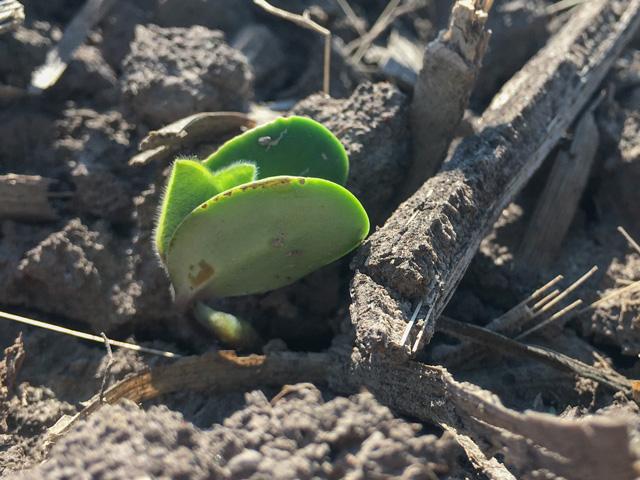
JEFFERSON CITY, Mo. (DTN) -- After contending with some frosts and freezes the past few days in parts of the Midwest, some emerged soybean stands may begin looking pretty ugly next week. But don't immediately throw the baby out with the bathwater: Leaving those beans may be the best decision for the bottom line.
"The soybean has a significant amount of phenotypic plasticity," said University of Wisconsin Extension agronomist Shawn Conley. "It's able to regrow, grow into areas and fill in gaps."
Once a soybean plant's unifoliate leaves unroll, freeze damage can occur more rapidly. However, if cold air kills the unifoliates -- but the cotyledons remain unharmed -- the plant can recover.
According to the University of Minnesota Extension, temperatures usually need to be at or below 28 to 30 degrees Fahrenheit for several hours to kill soybean tissue. Even if air temperatures hit 28 F, emerged soybeans may still not freeze. Wait three to five days before assessing stands, as it takes some time to tell if plants will recover from frost injury.
Replanting should be considered when stand loss leaves fewer than 50,000 to 60,000 evenly distributed plants per acre in southern regions, 75,000 plants per acre in northern regions, or when stand-loss patterns leave areas of more than 6 to 10 square feet without any plants.
P[L1] D[0x0] M[300x250] OOP[F] ADUNIT[] T[]
Because "replanting" is essentially "delayed planting," there are few instances when starting completely over is the best course of action, Conley noted. Yield penalties in soybeans can range from 1.4 to 2.8 bushels for every week that planting is delayed.
The soybean plants that survive will develop axillary branches that set additional pods. These branches allow the plants to close open spaces and can yield two or three times as much as plants that are crowded from normal planting populations.
"Unless there's some pretty significant damage, we really strongly encourage farmers to plant into an existing stand," Conley said. "If you've got a 35,000 to 40,000 plant stand out there, those 40,000 plants will have a higher yield potential because they were planted weeks earlier."
DTN Ag Meteorologist John Baranick said that while the cooler air mass that's been in place increased the chances this week and into next, there are three main factors required to get frosts in early May.
"A cold, dry airmass, clear skies and calm winds are usually required in combination to get temperatures to fall near and below freezing," he said. "It really comes down to cloud cover and winds. If skies are clear and winds are calm, then the temperature can drop well below the forecast. But if not, then the temperatures don't drop down that far.
"Fortunately for the Midwest, we've had a mix of clouds and some slightly elevated winds the past few mornings that should have helped keep any frosts or freezes to more spotty locations," he continued. "I am wondering about next Monday, May 11, as a day that also could see some frosts in the Midwest."
For help assessing frost or freeze injury to soybeans, see this guide from the University of Minnesota: https://extension.umn.edu/….
For guidance on soybean replant decisions, visit this publication from the Science for Success partnership, funded by the United Soybean Board through the soybean checkoff program: https://soybeanresearchinfo.com/….
Jason Jenkins can be reached at jason.jenkins@dtn.com
Follow him on social platform X @JasonJenkinsDTN
(c) Copyright 2026 DTN, LLC. All rights reserved.
Comments
To comment, please Log In or Join our Community .