


An Urban's Rural View
The Changes Warsh Wants at the Federal Reserve
The Federal Reserve is under new leadership. Kevin Warsh, Donald Trump's appointee to succeed Jerome Powell as chair, was confirmed by the Senate on May 13. He will preside over his first meeting of the Fed's interest-rate-setting Federal Open Market Committee on June 16 and 17.
Warsh takes the reins at the central bank aiming to make some changes. Pundits are predicting he won't be able to, and it's true he faces significant obstacles. Over time, though, he might well have some success.
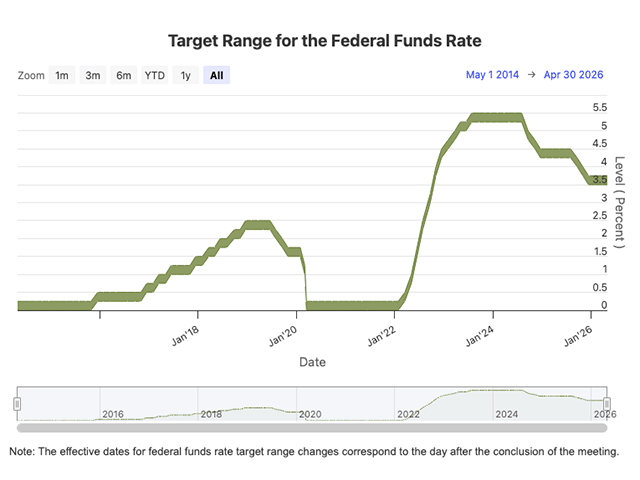
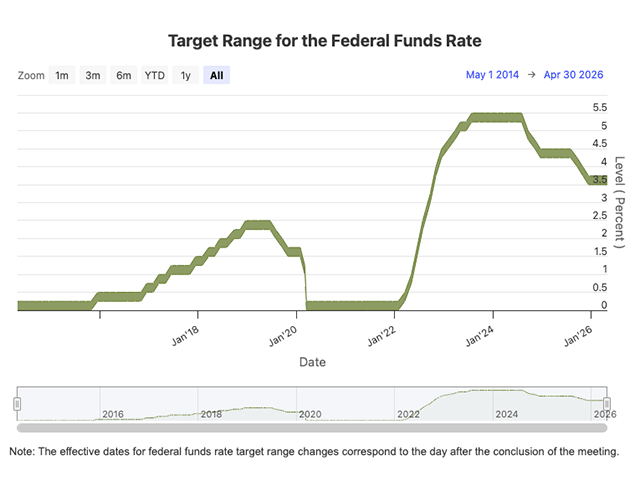
Farmers and other business borrowers are eager to see one of the changes. Warsh favors lower interest rates. Problem is, the FOMC has cooled on them. Though the committee's April policy statement retains a slight bias in favor of further cuts, it has in fact held rates unchanged in the 3.5% to 3.75% range for three consecutive meetings. (https://www.federalreserve.gov/…)
And now, after two months of reports suggesting the labor market is strong and a new report putting inflation above 4%, markets are betting the Fed's next move will be to raise rates, not lower them.
Even before those reports it wasn't hard to understand the lack of enthusiasm for cuts. Inflation has exceeded the Fed's 2% target for five years. Starting in September of 2024, the FOMC made several interest-rate cuts on the premise that inflation was coming down and on a path to 2%.
But in recent months inflation has been going the other way. In April, the consumer price index rose 3.8% from a year ago. In May, it rose 4.2%. It's not surprising sentiment on the committee is shifting toward the possibility of rate increases.
P[L1] D[0x0] M[300x250] OOP[F] ADUNIT[] T[]
According to the committee's April meeting minutes, "A majority of participants highlighted, however, that some policy firming would likely become appropriate if inflation were to continue to run persistently above 2%." (https://www.federalreserve.gov/…)
Faced with these facts, Warsh will be hard pressed to persuade the other 11 members of the FOMC to vote for lower rates -- at least as long as the Strait of Hormuz remains closed and the inflation rate remains uncomfortably high.
Some committee members worry that consumers are beginning to expect higher inflation. That could keep the inflation rate elevated even if energy prices fall. Inflationary expectations have a tendency to become self-fulfilling prophecies. Workers demand bigger raises; employers raise product prices to maintain profit margins.
Warsh believes AI will make American workers more productive, which will ease inflation. Maybe someday, his critics respond, but the billions being invested in AI right now are heating up the economy and keeping unemployment low -- undercutting the argument for lower rates.
Warsh believes the FOMC looks at the wrong measure of inflation. Rather than excluding volatile food and energy prices in search of "core inflation," Warsh favors so-called "trimmed" measures, which discard the biggest price movers both up and down. One of these trimmed gauges, issued by the Federal Reserve Bank of Dallas, puts inflation fairly close to the Fed's 2% target. (https://www.dallasfed.org/…)
The Dallas Fed builds its measure off of the government's Personal Consumption Expenditures index, the FOMC's preferred measure. The PCE said prices in April were 3.8% higher than a year earlier. Subtracting food and energy, they were up 3.3%. The Dallas Fed's trimmed PCE was up only 2.3%.
Many economists have problems with trimmed measures and some roll their eyes at Warsh picking a politically convenient one. Warsh seems unlikely to convince his fellow FOMC members to switch. He might, though, have some luck getting them to think about alternatives to the PCE and the CPI. That will take time, but who knows? The result of that exercise could be support for lower rates.
Time could be on Warsh's side in another way. Top administration economic officials believe energy prices will soon come down, lowering the inflation rate and making interest-rate cuts possible later this year. The hitch: The officials may be overly optimistic. It could take longer for energy prices to come down than they think.
Warsh wants the Fed to be "quieter," and that's a change he may be able to start making right away. His quieter Fed would make fewer speeches, stop issuing forward guidance and get rid of the "dot plot," in which FOMC members give forecasts for economic growth, inflation and interest rates.
Warsh is a known commodity on Wall Street. Early in his career he worked as an investment banker. As a Fed member during the 2008 financial crisis, he was the Fed's ambassador to the world of high finance. Wall Street favored his appointment.
A quieter Fed, though, could make Wall Street squirm. The less the Fed says, the more the street will have to guess its intentions. That's a recipe for unwelcome volatility in financial markets.
Urban Lehner can be reached at urbanize@gmail.com
(c) Copyright 2026 DTN, LLC. All rights reserved.
Comments
To comment, please Log In or Join our Community .