

Ag Policy Blog
5 Provisions in Senate Farm Bill, Including Precision Ag, Fertilizer Storage, Virtual Fencing

Farmers could gain access to USDA guaranteed loans for precision-ag tools, direct loans to build on-farm fertilizer storage and conservation aid to buy virtual fencing for livestock after natural disasters.
Those are just a few of the dozens of policy changes in the Senate version of the farm bill. While the House and Senate proposals have been described as "skinny" farm bills, each still runs more than 900 pages and includes dozens of policy changes affecting agriculture.
Here are a few provisions in the Senate bill that farmers might want to watch going forward.
1. PRECISION AG LOANS
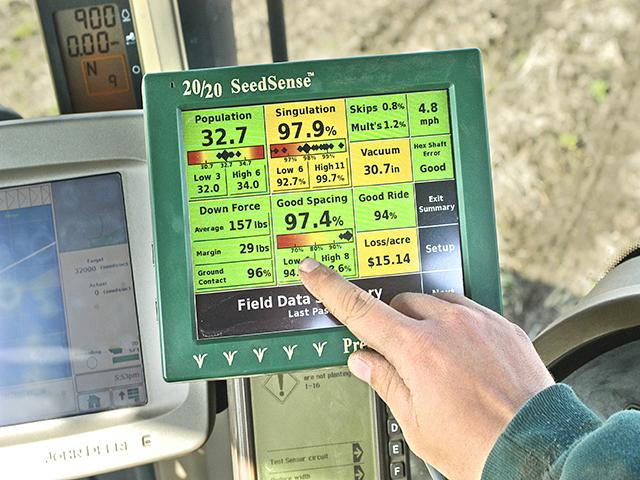
Farmers would be able to use the USDA Conservation Loan program to buy precision agriculture equipment. Under the bill, farmers could get a Farm Service Agency guaranteed loan through a lender for up to $2.3 million to buy products such as GPS guidance systems, auto steer, satellite imagery, yield monitors, soil mapping, sensors for crop, soil or livestock conditions, network connectivity, and variable rate technology for applying input, as well as other technologies approved by USDA that reduce input costs or improve efficiency of crop and livestock production.
USDA already offers conservation loans for a range of conservation practices approved by the Natural Resources Conservation Service. This provision comes from the Producing Responsible Energy and Conservation Incentive and Solutions for the Environment (PRECISE) Act to spur more adoption of precision technology, and would ideally help more smaller farm operations buy such equipment.
2. STORAGE LOANS FOR FERTILIZER
P[L1] D[0x0] M[300x250] OOP[F] ADUNIT[] T[]
Fertilizer options are expanded for Farm Storage Facility Loans (FSFL). Farmers would be able to borrow up to $500,000 through a low-interest FSA loan under the FSFL to build dry bins, fertilizer blenders, liquid tanks, anhydrous ammonia pressure vessels, as well as foundations, plumbing, pipes and other equipment needed to store fertilizer products.
3. VIRTUAL FENCING OPTION
Livestock producers could tap into the Emergency Conservation Program (ECP) to cover up to 75% of the costs for new and emerging technologies such as virtual fencing under certain circumstances.
As wildfires have increased in recent years, livestock producers have lost miles of fencing to the destruction. Supporters argue virtual fencing could help producers keep livestock contained after wildfires or other disasters destroy miles of permanent fence.
One caveat is that the use of electronic fencing technology cannot increase the costs of repair or replacement of current permanent fencing. Multiple senators had introduced a bipartisan bill, the Fencing Eligibility for New Conservation Equipment (FENCE) Act, to include virtual fencing under the ECP program.
4. SALE BARNS AND PACKERS
Sale barn owners would be allowed to own an interest in a meatpacking business. Livestock auction owners for cattle and sheep would be allowed to take ownership in a meatpacking processor that slaughters fewer than 2,000 head a day, or 700,000 head annually. For hogs, it would be capped at 10,000 head a day, or 3 million head a year.
In the case of a marketing agency that consigns to sell livestock, the agency must disclose on the account of sale the name of the packer and the relationship between the marketer and the packer.
In another meat provision, the bill would allow state-inspected meat and poultry products to be sold over the internet for interstate commerce as well.
5. STUDIES ON FERTILIZER AND PACKERS
Despite the focus from crop farmers on fertilizer consolidation and livestock producers on meatpacker ownership, the Senate farm bill doesn't mandate any type of reforms in either industry. Instead, the bill calls for new studies on the topics.
USDA is already in the process of hiring a crop-input economist, but the legislation would officially establish that position. Coupled with that, USDA has one year after the bill becomes law to issue a report on the fertilizer industry, looking at concentration and changes over the past 25 years in the U.S. market, importation of fertilizer, foreign companies and their control of product, and the impacts of anti-dumping and countervailing duties on the industry.
For meatpackers, the Office of the Chief Economist will contract with an "independent, nonpartisan research institute," or a college or university, that will examine production trends and marketing practices used by the livestock and meat industries, and the possible impacts of those practices. The report will be issued no later than two years after the act is signed into law.
Also see "Farm Bill Draft Updates Farm Programs, Leaves Out Prop 12, E15" here: https://www.dtnpf.com/….
Chris Clayton can be reached at Chris.Clayton@dtn.com
Follow him on social platform X @ChrisClaytonDTN
(c) Copyright 2026 DTN, LLC. All rights reserved.
Comments
To comment, please Log In or Join our Community .