


Ag Policy Blog
Senate Ag Committee Farm Bill Expected in June; Won't Include Prop 12 Language
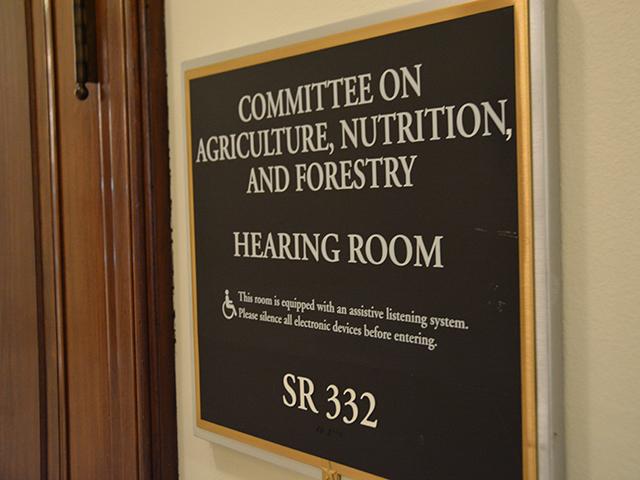
WASHINGTON (DTN) -- The chairman of the U.S. Senate Agriculture Committee said he expects to release a draft of the farm bill in early June and hold a committee markup on the bill later in the month.
The Senate Agriculture Committee held a closed-door, bipartisan, members-only meeting on the farm bill Wednesday afternoon.
Both Republican and Democratic aides said the base bill will not contain a provision to preempt states from labeling chemicals like glyphosate, nor will it include a provision negating California's Proposition 12, a law requiring pork, eggs and veal sold in the state to come from animals raised under certain conditions. The provisions will not be included because the Senate will need a bipartisan 60 votes to pass its bill.
The House-passed farm bill initially included language regarding pesticides, but it was stripped out of the bill by an amendment vote on the House floor.
The House bill does include language that would preempt state laws such as Proposition 12, dubbed by backers as the "Save Our Bacon Act." That provision blocks states and local governments from preventing the sale of agricultural commodities approved by USDA standards. The provision has been a priority for livestock groups, especially the National Pork Producers Council (NPPC), which has been pressing to overturn California's law since it was first passed by voters in 2018. At the same time, opponents say the House bill's provision would go way beyond Prop 12 and overturn more than 500 state or local laws nationwide.
After the meeting that lasted for more than an hour, Senate Agriculture Committee Chairman John Boozman, R-Ark., told DTN he held the meeting so members could "tell us where they're at. It was really productive." Boozman said he plans to release a draft bill in early June and hold a markup on the bill later in the month.
Boozman acknowledged there is "lots of concern" about the provision in the One Big Beautiful Bill Act (OBBBA) that will require the states to pay a portion of the costs of the Supplemental Nutrition Assistance Program (SNAP) depending on the state's payment error rate. Sen. Amy Klobuchar, D-Minn., the committee ranking member, has complained bitterly that to get the OBBBA passed, Republicans added a provision that gives states with the highest error rates more time before the provision goes into effect while states with mid-level error rates, including Minnesota, will have to absorb the costs next year.
Klobuchar told DTN in an email, "This was a constructive meeting where members on both sides of the aisle raised their priorities for a bipartisan farm bill, including addressing the SNAP cost shift."
P[L1] D[0x0] M[300x250] OOP[F] ADUNIT[] T[]
SNAP "is a big issue," a senior Senate Agriculture Committee majority staff member said after a half-hour staff meeting that followed the member meeting.
More than 100 measures proposed by members of both parties will be included in the bill, the senior Republican aide said.
Klobuchar raised the issue of whether the bill will make changes to the law scheduled to go into effect on Nov. 12 that would ban most psychoactive hemp-derived cannabinoids, a Republican aide said.
DEMS ASK VADEN DETAILED QUESTIONS ABOUT FNS REORGANIZATION
Klobuchar and 25 other Democratic senators this week also sent Agriculture Deputy Secretary Stephen Vaden a letter asking him a series of detailed questions about the Trump administration's plans to reorganize the Food and Nutrition Service.
The senators asked that their letter be answered by June 5.
In the letter, the senators noted that USDA manages 16 nutrition programs and said, "Unfortunately, this administration has engaged in repeated efforts to undermine these crucial programs: cancelling over 90 million pounds of food ordered for food banks and schools; enacting the deepest cuts to SNAP in history; refusing to comply with court orders to fund SNAP benefits during the government shutdown; and terminating a long-standing food insecurity survey that has measured hunger in America since the 1990s. At the same time, the USDA has greatly reduced the capacity of the Food and Nutrition Service to administer nutrition assistance programs, and almost 30% of FNS staff have left the agency as a result of last year's Deferred Resignation Program.
"USDA's reorganization announcement on April 30 would further break apart this already hobbled agency. The USDA's plan would close five of the seven regional offices and have staff relocate to different offices based on programmatic work, which would appear to reduce alignment and efficiencies among the nutrition assistance programs."
Among the questions the senators asked Vaden to answer are whether a cost-benefit analysis has been conducted, how many Washington-based employees will leave the agency rather than accept relocation, and how USDA will manage the incorporation of new nutrition standards into nutrition programs "in the midst of a major reorganization."
DTN Ag Policy Editor Chris Clayton contributed to this report.
Jerry Hagstrom can be reached at jhagstrom@nationaljournal.com
Follow him on social platform X @hagstromreport
(c) Copyright 2026 DTN, LLC. All rights reserved.
Comments
To comment, please Log In or Join our Community .