



An Urban's Rural View
Could the Pro-meat and Dairy Dietary Guidelines Be Overturned?
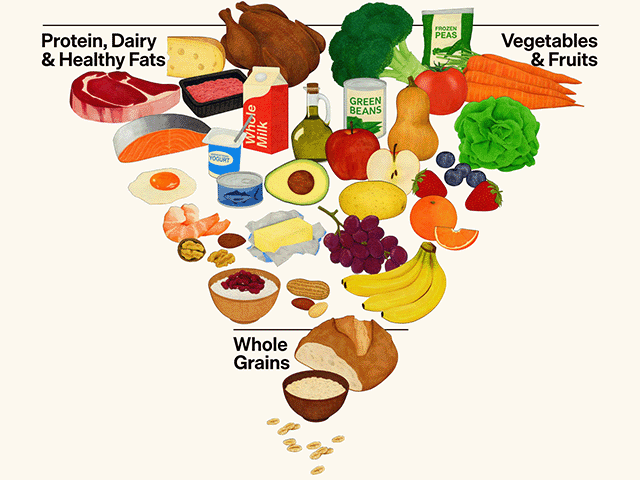
A nonprofit group that advocates for veganism and against animal testing is challenging the Trump administration's Dietary Guidelines for Americans in court.
Whether or not they win their case, their lawsuit tells a thought-provoking story.
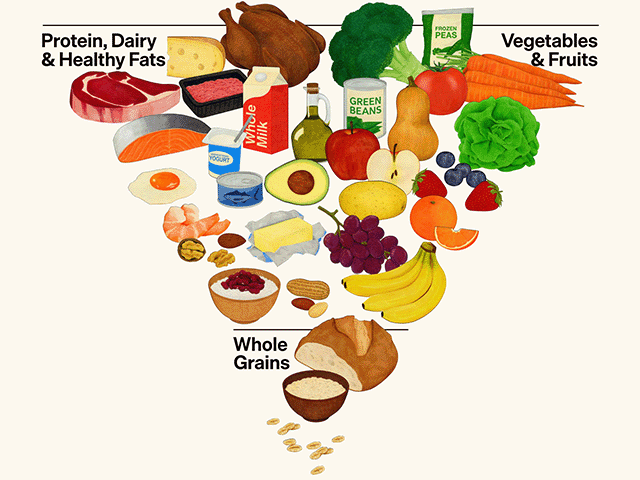
The group, Physicians Committee for Responsible Medicine, deplores the new guidelines for the same reason livestock and dairy folks love them: They put meat and whole milk at the top of the food pyramid and suggest Americans cook with butter and beef tallow.
That overturned the advice in earlier versions of the Dietary Guidelines, which Uncle Sam puts out every five years. (https://www.dtnpf.com/…) It defied conventional medical wisdom, which holds saturated fats to be bad for heart health.
It was, however, consistent with the views of Secretary of Health and Human Services Robert F. Kennedy Jr., who says he subsists on steak and sauerkraut. Kennedy believes saturated fats are healthy.
The law says the guidelines "shall be based on the preponderance of the scientific and medical knowledge which is current at the time the report is prepared." (https://www.govinfo.gov/…) To review the evidence, USDA and HHS, the agencies responsible for the guidelines, set up an advisory committee.
The committee for the latest guidelines met through much of 2023 and 2024 and made recommendations. The Trump administration, which inherited the recommendations, didn't like them. They didn't favor steak and whole milk.
P[L1] D[0x0] M[300x250] OOP[F] ADUNIT[] T[]
So the administration appointed what the lawsuit calls a "secret panel" of nine advisors of its own. Eight of these nine, the lawsuit says, had financial ties to the meat, dairy or "fad diet" industries.
The Federal Advisory Committee Act requires advisory committees to hold open meetings, notify the public of those meetings and allow public participation in them. In addition, FACA says advisory committees should keep minutes of their meetings and make the minutes and other records available for public inspection. And it says advisory committees should be fairly balanced in the viewpoints represented.
The nine-person panel that provided the evidence for the Trump administration's guidelines was an advisory committee, the lawsuit contends, yet none of the act's procedural requirements were observed. No notice, no public meetings, no availability of records--and not fairly balanced in the viewpoints represented.
The Administrative Procedure Act gives federal courts the power to overturn a government agency's action if procedures specified by law aren't followed. Among the remedies the Physicians Committee lawsuit asks the court to impose is to order the government to withdraw the Dietary Guidelines and publish new ones under a process that complies with the Federal Advisory Committee Act.
Will this court do that? If it's convinced that the nine-person panel was legally an advisory committee, it might. We can expect the government to argue that it wasn't an advisory committee. And that officials are free to seek outside advice without establishing an advisory committee, especially when they already have in hand the work of a properly established advisory committee that followed all the procedures and represented a balanced diversity of views.
Yet even if it's unsuccessful, the lawsuit has raised some interesting questions of public policy. Conventional medical experts would argue that the recommendation for more steak and whole milk isn't based on the preponderance of scientific evidence, as the statute requires. So, who decides what the preponderance of the evidence says?
Arguably it's the properly established advisory committee where experts with different views review the evidence and debate it. But the administration ignored many of the advisory committee's recommendations.
Are officials free to substitute their own reading of the preponderance of the evidence? Or hand-pick a group of advisors they know will support their reading because they represent special interests on one side of the argument? Are they free to embrace the views of social-media advocates rather than experts?
And then there's the question of how fastidiously we, the voters, want the government to toe the procedural line. For even if the panel wasn't legally an advisory committee, it sure smells like one. If the administration wins the court case, it will essentially be because it found a loophole and dodged the law. Do we want officials to be doing that?
Cynics will say officials have always found ways to do as they wish regardless of what the law says. Maybe, but in recent years it's become more frequent and more blatant.
One of this country's economic strengths is the predictability that derives from rule of law. Risks can be calculated, chances taken, because investors know laws will be followed.
At times Americans complain about the procedural delays that observance of laws entails. They applaud results they like. Their attitude is often, "Who cares how the results were produced?"
Yet the more frequently officials ignore the procedural niceties and sidestep laws, the more they slowly but surely undermine that great strength of predictability. If we lose it, Americans won't like the consequences.
Urban Lehner can be reached at urbanize@gmail.com
(c) Copyright 2026 DTN, LLC. All rights reserved.
Comments
To comment, please Log In or Join our Community .