



An Urban's Rural View
Yes, We Have a Lot of Oil. Opening the Hormuz Strait Still Matters
Two hundred dollars a barrel. Now there's an eye-catching number. Indeed, it grabs the eye and refuses to let go. Heaven help us -- farmers, drivers, consumers, all of us -- if it ever happens.
Alas, a lot of people are talking about it, and not just the Iranians, who have a vested interest in scaring us. See for yourself: Google "$200 oil." You'll find more than two dozen pages of links and a multitude of commentators speculating.
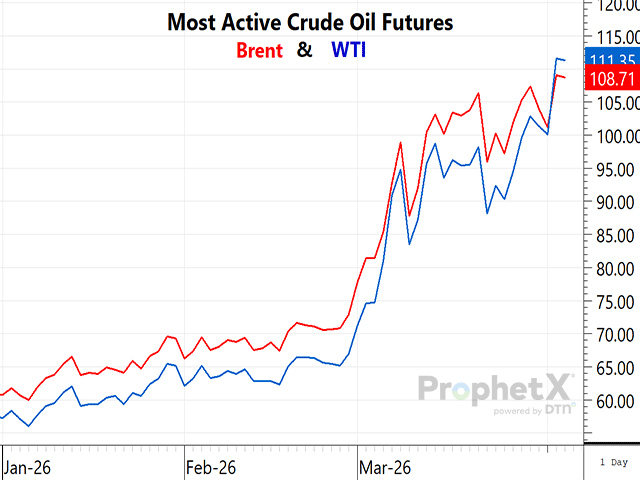
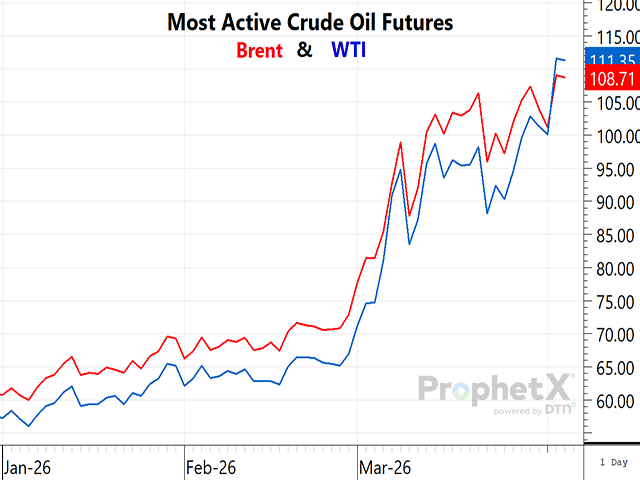
So far, it's just talk. Oil's price has gone up $30 to $40 since the war began, but at $100 to $110 a barrel, it's a long way from $200.
Could $200 oil become more than just talk?
Underlying the talk is Iran's continuing control of the Strait of Hormuz. The United States has killed many of Iran's leaders, destroyed many if not most of its conventional military assets and set back its quest for nuclear weapons. Impressive as that is, we have not loosened Iran's control of the strait.
If we didn't know it already, we know now that air power alone can't open the Strait of Hormuz. Even bombing power plants and bridges will not likely do it.
There are two options that might work. The U.S. Navy could escort tankers, putting $2 billion destroyers at risk of being taken out by $35,000 drones. Or we could land troops who would find and neutralize the Islamic Revolutionary Guard Corps' hidden small boats, submarines, missile launchers, missiles and drones, likely under heavy fire.
It's easy to understand why a president with a low approval rating waging an unpopular war might not be eager to do either. It's hardly shocking that President Donald J. Trump has been dismissing the strait's importance.
P[L1] D[0x0] M[300x250] OOP[F] ADUNIT[] T[]
In recent days Trump told the world the Strait of Hormuz is their problem. "The United States imports almost no oil through the Hormuz Strait and won't be taking any in the future. We don't need it," he said. Countries that need oil should either buy it from the U.S. -- "We have plenty" -- or open the Hormuz strait themselves. "Go to the strait and just take it, protect it, use it for yourselves."
Trump doubtless knows this is impossible. The military strength of most other countries is insignificant compared to ours. If forcing open the strait would cost a superpower like the U.S. more blood and treasure than it makes sense to give, you can be sure no other country will try it.
But can the U.S. really just declare victory and go home? Would a strait under Iran's permanent control really be somebody else's problem, not ours?
Maybe, but consider:
-- U.S. dependence on Persian Gulf oil has indeed fallen dramatically but it's not true that "We don't need it." According to Shale Magazine, 7% of the crude oil the U.S. consumes comes from the gulf. (https://shalemag.com/…)
California, which lacks pipelines from big North American oil wells, is particularly dependent. Trump might not mind seeing a blue state suffer from the strait's closure, but he has to worry about losing some or all of the seven California seats Republicans hold in the House of Representatives.
-- A closed strait will keep oil's price high, though maybe not as high as $200, and that could throw the rest of the world into recession. U.S. exports would suffer.
-- Perhaps most importantly, U.S. oil prices would also remain elevated. The oil market is a world market; Brent crude and West Texas Crude don't diverge greatly in price. A country like the U.S. that both exports and imports oil is sensitive to the world price. The president is right, we have plenty of oil, but gas at the pump has still gone up more than a buck a gallon since the war began.
So, is $200 oil really possible? Maybe. Oil's price has soared even though we don't yet have real shortages. Once the ships that were already at sea before the war's outbreak deliver, oil will start to become scarce. The price will go up still more.
On top of that, two or three months of a closed strait would exhaust the reserves some countries are drawing on. Plus, damage to oil infrastructure in the gulf countries, Iran included, will mean less production until repairs can be made, some of which may take years.
Still, $200 is a worst-case scenario. My guess is we're in for something less drastic though still unpleasant -- a lengthy period in which oil prices remain elevated.
Here's how it might go: Other countries can't force the strait open, so they negotiate with Iran. Tankers sail again -- but they pay heavy tolls, to Iran and perhaps also to Oman, which borders the other side of the strait.
Moreover, because Iran retains the ability to shut the strait down if it chooses, markets have to price in the risk of that happening.
All this keeps oil prices high, even if not as high as $200.
Of course, Trump could bring prices down eventually by launching -- and winning -- a ground war with Iran. The way he's talking at the moment, though, that doesn't seem likely.
Urban Lehner can be reached at urbanize@gmail.com
(c) Copyright 2026 DTN, LLC. All rights reserved.
Comments
To comment, please Log In or Join our Community .