


Ag Weather Forum
Drought-Hit Western Plains Look to El Nino for Improved Winter Moisture
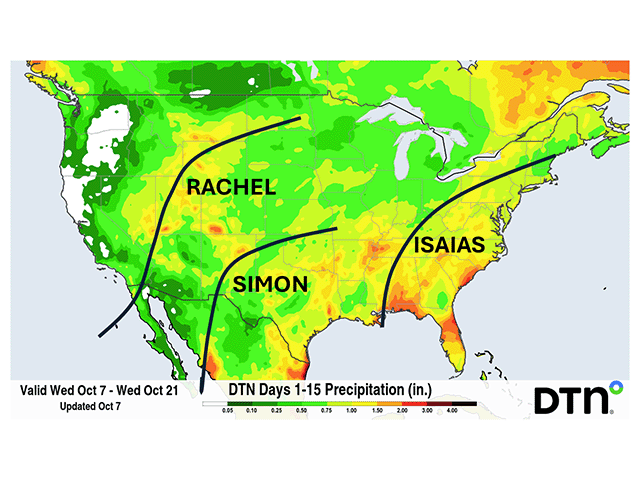
One of the key topics that farmers and ranchers in the western U.S. Plains will be watching through the next six months is whether precipitation the rest of this fall and through the winter will offer some easing of drought conditions and bring some recharge to the region's rivers and streams. The western Plains are still dealing with the impact of a large-scale snow drought during the 2025-26 winter season. This past spring and summer saw the impact of that lack of winter moisture, with chronic dryness, devastating range fires and limited supplies of water for crop irrigation.
A review of the array of dams and reservoirs on the North Platte River, which runs mainly through Wyoming and western Nebraska, offers a useful illustration of the region's moisture needs. The North Platte waters come mainly from melting snow in the Rocky Mountains, and that snowmelt was very low this year. The reservoir system's managing agency, the U.S. Bureau of Reclamation, called for April through July total runoff of only 183,000-acre feet this year, just 21% of the 30-year average.
P[L1] D[0x0] M[300x250] OOP[F] ADUNIT[] T[]
That low runoff kept irrigation-supply reservoirs at meager levels throughout the entire crop season. According to the open water-data platform Reservoirs.EARTH, the large irrigation supply reservoirs on the North Platte River, Seminoe and Pathfinder, held 412,000 acre-feet of water as of Sept. 27, 2026. That level is almost 270,000 acre-feet less than the late-September volume of 690,000 acre-feet a year ago. Reservoirs.EARTH has monitored the North Platte reservoirs since 2021, and the Pathfinder's volume is the lowest at this point in that period.
University of Nebraska Extension Educator Gary Stone of Scottsbluff, Nebraska, noted that even an average snowmelt runoff year would be welcome. "The 'average' 30-year record of runoff/snowpack snowmelt is 891,000 acre-feet," Stone said in an email. "An 'average' or above average would be great and help fill the reservoir."
So far this fall season, there has been very little precipitation in north-central Colorado, the headwaters area of the North Platte River. Jackson County, Colorado, which contains the North Platte's headwater streams, has moderate to extreme drought in effect, according to the U.S. Drought Monitor at the end of September. Bands of heavy rain in the southwestern and central Plains during the past two weeks largely bypassed the central and northern Rockies, including the North Platte headwaters area.
The skimpy water supply in the North Platte River basin places a high level of importance on prospects for 2026-27 winter precipitation to bring heavier amounts than last winter. Forecasts related to the strong El Nino in the Pacific Ocean certainly lean in that direction. During the balance of this autumn and through the first one-third of 2027, DTN's long-range forecasts call for mostly above-normal precipitation, suggesting some improvement in the runoff for not only the North Platte, but for other rivers and streams which depend on the Rockies headwaters for their sustenance. Precipitation amounts, and notably, the snowfall component, will be closely watched as the next six months unfold.
Bryce Anderson can be reached at bryce.anderson@dtn.com
(c) Copyright 2026 DTN, LLC. All rights reserved.
Comments
To comment, please Log In or Join our Community .