


Ag Weather Forum
La Nina Brings a Dry Start to 2026 in Southern Plains Wheat Areas
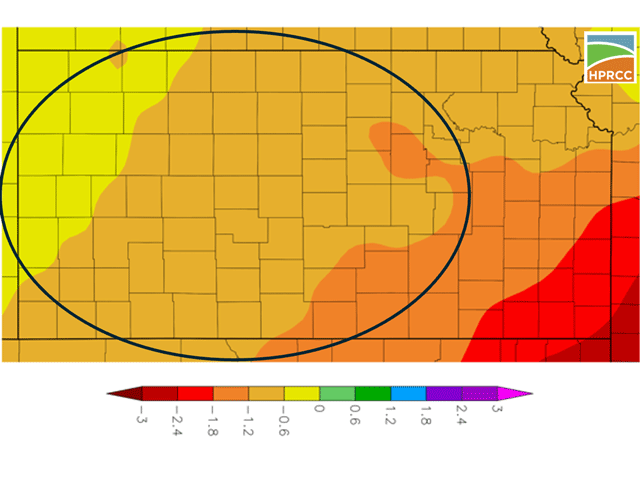
One of the defining characteristics of a La Nina cool-water phase in the Pacific Ocean is its influence on dry conditions in the winter wheat areas of the U.S. Southern Plains. And as January 2026 gets underway, most hard red winter wheat areas are starting the new year on a very dry note after a parched month of December 2025.
December dryness was significant in the Southern Plains wheat country. Kansas totals included: Goodland 0.11 inch, 9.36 inches below normal; Wichita 0.02 inch, 1.20 inches below normal; Dodge City 0.03 inch, 0.93 inch below normal; Garden City had a trace, 0.56 inch below normal; Medicine Lodge zero inches, tying a record for dryness and 1.09 inches below normal. In Oklahoma: Guymon had 0.11 inch, 0.58 inch below normal; Oklahoma City 0.09 inch, 1.70 inches below normal. And in Texas: Amarillo logged 0.05 inch, 0.66 inch below normal; Lubbock 0.01 inch, 0.74 inch below normal; and Childress had 0.08 inch, 0.74 inch below normal. In terms of percentages relative to normal, the deficits are mainly 75% to more than 90% below normal.
P[L1] D[0x0] M[300x250] OOP[F] ADUNIT[] T[]
La Nina conditions are certainly present in the equatorial Pacific Ocean from the South America coast west to the International Date Line. The latest El Nino/La Nina advisory from the NOAA Climate Prediction Center (CPC) noted that "In the last four weeks, equatorial SSTs (sea surface temperatures) were below average across the east-central and eastern Pacific." Values were mainly 0.5-1.5 degrees Celsius below average, or 0.9-2.7 degrees Fahrenheit below average.
For the Southern Plains, the main impact from La Nina is in its influence on the jet stream track over North America. A La Nina-influenced jet stream shows a primary track from Western Canada southeast to the Ohio Valley, then back to the northeast over the northeastern U.S. and into the Canadian Maritimes. This storm track setup bypasses the Southern Plains and leads to dry conditions over the region. The results are evident in the December precipitation reports.
Along with the dry pattern, a lengthy period of warmer weather has been unfavorable for maintaining dormancy in the Southern Plains hard red winter wheat crop. "Warmer air recently has reduced winter hardiness for winter wheat, which is now at risk for a shot of colder air that inevitably will return at some point this month," wrote DTN Ag Meteorologist John Baranick on Jan. 5. "Snow falling later this week will help to protect wheat from damage in the short-term, but there is a much larger long-term risk now."
A combination of rain and light snow is forecast to move through the Southern Plains during this week. Precipitation amounts have a range of 0.20 to 0.70 inch with snowfall of mostly 1-2 inches. The balance of the next 14 days features warm and, again, dry conditions. La Nina is predicted to remain through the rest of this winter season, and this event is looking robust in the early going of 2026.
Bryce Anderson can be reached at bryce.anderson@dtn.com
(c) Copyright 2026 DTN, LLC. All rights reserved.
Comments
To comment, please Log In or Join our Community .