


Ag Policy Blog
MAHA Groups Push USDA to Overhaul School Lunches, But Costs Loom Large
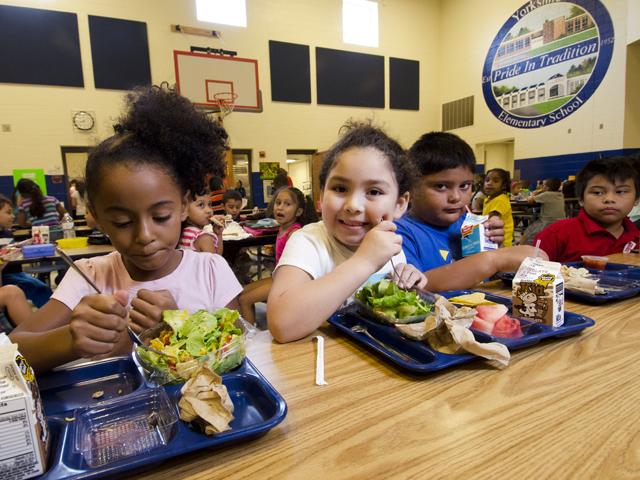
Leaders who associate themselves with the Make America Healthy Again (MAHA) movement want USDA to improve the quality of school meals, including the sourcing of meat and dairy served in schools.
This is a significant turn for these MAHA groups because what they are asking for would likely come with significant government costs as well.
In a letter to Agriculture Secretary Brooke Rollins on Monday, "MAHA-aligned moms, livestock producers and nutrition and agriculture organizations" called on USDA to improve the quality of food served in schools before making any changes to increase protein requirements.
The Trump administration issued new dietary guidelines at the beginning of the year with a theme to "eat real food." Specifically, the new guidelines call for increasing protein intake -- meat, poultry, eggs, dairy, beans and nuts -- along with more fruits and vegetables. The new guidelines also call for reducing consumption of highly-processed foods, as well as refined carbohydrates -- pasta, white bread, white rice and most packaged baked goods.
USDA is expected to take the new dietary guidelines and apply them to its nutrition programs, especially the National School Lunch Program. Schools are required to following the dietary guidelines.
This is where the rubber hits the road because implementing the new dietary guidelines could prove costly.
Schools are already under pressure. Nationally, there are 30 million students eating school lunches daily. Roughly 74% of kids are on free or reduced lunches, which means schools and states are ultimately reimbursed by USDA for those lunches. The other 26% of students' lunches are fully paid by parents.
P[L1] D[0x0] M[300x250] OOP[F] ADUNIT[] T[]
USDA spent $17.2 billion in cash payments to states in FY 2025, which was about $1 billion more than a year earlier. During the pandemic, USDA allowed schools to offer free meals to all students. That pushed USDA's payments to states to just under $22 billion in FY 2022.
The School Nutrition Association (SNA) released a study in early January looking at school nutrition trends. Out of 1,240 school meal program directors, 99% reported needing more funding and 70% of those directors said the federal reimbursement rate is insufficient.
To produce more "real food" and reduce reliance on ultra-processed foods, SNA cited that 94% of schools will need more staff, more equipment and infrastructure and more training.
In mid-March, the publication Civil Eats reported on SNA's legislative conference. School lunch directors talked about the work they are already doing to try to make lunches healthier. "We just need more money to continue to offer fresh fruits and vegetables," an Alabama school nutrition director said.
Some of that buying power was lost last year when USDA canceled the Local Food Purchase Assistance Program (LFPA) and the Local Foods for Schools (LFS) program. USDA canceled $1.13 billion in contracts to states, disrupting markets for more than 10,000 farmers who were selling their commodities to schools and food banks. At the time, Rollins called the programs "non-essential" though she also said in interviews that every American needs access to healthy foods.
Now MAHA groups are pressing USDA to improve the quality of the food being distributed to schools. In their letter, the groups recommended USDA maintain the current meat/alternative requirements for lunches while conducting a comprehensive review of sourcing, production and processing standards.
"Analyses of school meal programs have long shown that protein adequacy is not the nutritional gap facing children. The more urgent public health priority is increasing dietary fiber and overall food quality. In practice, the primary protein items served in schools are highly processed products such as hot dogs, chicken nuggets, and other breaded chicken products, burgers, mozzarella sticks, pizza, and deli-style cold cuts, which are typically supplied through industrial production systems," the MAHA letter stated.
"These processed animal products often contain additive-heavy formulations, including preservatives such as nitrites and nitrates, which health authorities have associated with increased colorectal cancer risk in processed meats, as well as other processing agents such as sodium phosphates that raise broader nutritional concerns and kidney damage."
The MAHA groups added, "Beyond the concerns with processed meat, the majority of all animal proteins served in schools are sourced from industrial supply chains that rely on routine antibiotic use, growth-promoting drugs including ractopamine, and feed grown with significant pesticide inputs."
Along with that, the MAHA groups' letter to Rollins called for ensuring adequate dietary fiber and overall nutrition balance. "Maintaining balanced meal patterns that emphasize fiber-rich foods like whole grains, fruits, vegetables, and pulses is therefore central to a prevention-first approach. The current child nutrition meal patterns do not include a fiber standard, which should be prioritized."
MAHA group also pressed for better guardrails on processing, pharmaceutical use, and food additives as well.
The groups also called for expanding farm-to-school programs and regional supply chains -- essentially similar to reinstating Local Food for Schools or comparable programs.
"Prioritizing support for farm-to-school initiatives and strengthening regional procurement pathways directly connects child health with farmer well-being at a critical time when both are under strain," the groups wrote. "Children are experiencing rising rates of chronic disease, while farmers face mounting economic pressure and consolidation within agricultural markets. When schools invest in higher-quality, locally sourced food, they improve children's health while creating stable demand that strengthens farm viability. In this way, child health and farmer wellbeing are mutually reinforcing goals."
Groups signing the letter included: American Grassfed, Alliance for Natural Health, American Regeneration, Children's Health Defense, Competitive Markets Action, Farm Action, Farm and Ranch Freedom Alliance, Global Wellness Forum, Heartland Heritage Alliance, Moms Across America, United We Eat and the Weston A. Price Foundation.
All of this expectation comes as USDA is increasing farmer ad-hoc programs while trying to squeeze cost savings somewhere in the budget.
USDA's proposed budget for FY 2027 will be released in the coming weeks. That proposal could signal how USDA plans to implement the new dietary guidelines for school programs.
Chris Clayton can be reached at Chris.Clayton@dtn.com
Follow him on social platform X @ChrisClaytonDTN
(c) Copyright 2026 DTN, LLC. All rights reserved.
Comments
To comment, please Log In or Join our Community .