


Grazing Too Early Limits Forage Growth
MU Extension: Grazing Too Soon Sets Pastures Up for Yearlong Failure
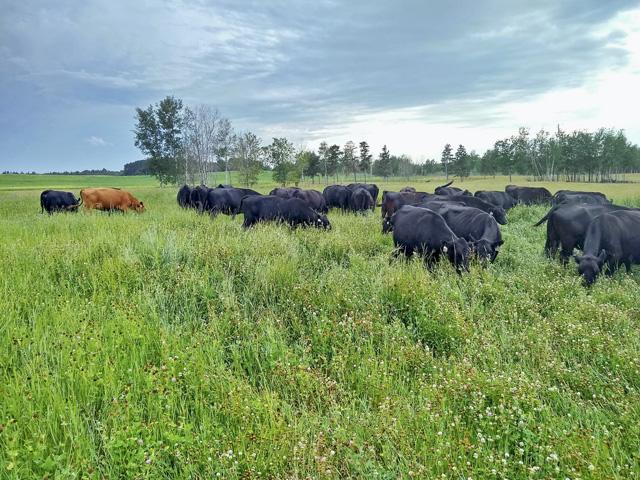
OMAHA (DTN) -- With the calendar changing over to March and green grass coming soon, many cow-calf producers can't wait for the approaching grazing season. Months of feeding expensive hay has producers anxious for green grass.
However, it would be wise to continue to wait for more grass growth as grazing too soon lessens the amount of overall forage, according to Extension specialists. This is especially true with some areas in various drought designations.
DON'T TURN COWS OUT TO GRASS TOO SOON
University of Missouri Extension state grazing specialist Harley Naumann said in a press release late-winter grazing pressure on cool-season pastures can compromise spring regrowth (https://extension.missouri.edu/…). It is important to not begin grazing too early, he said.
Turning cattle into green pastures too soon can result in less forage all season, compromise carbohydrate reserves in root systems and weaken forage plants.
"When combined with the ever-present potential for drought, pastures can quickly be set up for failure," Naumann said. "While we may be tired of feeding hay, avoid the temptation and delay turnout for the sake of pasture health and productivity."
Naumann recommended cattle producers use late winter to inspect fences, water systems and paddock layouts instead of grazing. Of all the complex management considerations, this may be the most important for pasture productivity, he said.
This also requires planning to monitor residuals according to targeted forage utilization to avoid the common mistake of "rotational overgrazing." You should adjust your plan as needed, he said.
P[L1] D[0x0] M[300x250] OOP[F] ADUNIT[] T[]
Naumann said late winter is also a smart time to take inventory of the forage base. Many farms exit winter with tighter hay and stockpiled forage reserves than planned, Naumann said.
"The saying 'It takes grass to grow grass,' couldn't be truer," he said.
Overgrazing winter-stockpiled grass can weaken the forage stand. Forage budgeting, identifying early deficits and developing contingency strategies such as early weaning, supplementation or alternative forages should also be part of the plan.
LATE WINTER A GOOD TIME FOR FROST SEEDING
If grass stands need improvement, late winter is a good time for frost-seeding some forages, including some legumes, according to Naumann.
Cool-season grass pastures are typically not short on protein and energy during the spring, so consider complementing the forage system with a warm-season legume to increase nutritive value during the summer months, he said. In Missouri, annual lespedeza can be frost-seeded this time of year. Long-term benefits include improved forage quality and nitrogen fixation.
Naumann said as spring approaches, patience and planning now can pay dividends all grazing season long. Delay turnout, protect forage recovery and make thoughtful adjustments to grazing plans for healthier pastures and more resilient forage systems.
"A few proactive decisions in late winter often make the difference between merely getting by and setting pastures up for long-term success," Naumann said.
DROUGHT A MAJOR PROBLEM
DTN Ag Meteorologist John Baranick said drought is a major problem for much of the U.S. heading into spring. Though the weather pattern usually becomes more active as the season changes, extremely large deficits have built up over the winter season that will take a lot of precipitation to undo.
Baranick said the Drought Monitor map shows large areas of the country are under some form of long-standing drought (https://droughtmonitor.unl.edu/…). From the Pacific Northwest to the Four Corners region, across the Southern Plains and Southeast and up through the Northeast, precipitation has not kept up with normal despite some rather big winter system of late.
"That includes the widespread ice and snowstorm across the South in late January, the record-breaking snow in the Carolinas a couple of days later, and the massive nor'easter that just hit the Northeast this past weekend," Baranick said.
Some areas have seen some drought improvement, particularly in the Northwest and around Arizona, as well as across small parts of Louisiana, Mississippi and Alabama over the winter season. Areas around Nebraska and across the Midwest from Missouri up through northwest Ohio have been in drought as well, leaving mostly pockets of non-drought conditions across California, North Dakota and the Upper Ohio River Bassin as the only areas without true drought.
"That leaves drought as a major concern heading into the spring planting season," he said.
See, "Early March Forecast Favors Drought Reduction for Central US," https://www.dtnpf.com/…
Also see, "Rainfall Deficits May Be Too Large to Overcome in Busy Early March Pattern," https://www.dtnpf.com/…
Russ Quinn can be reached at Russ.Quinn@dtn.com
Follow him on social platform X @RussQuinnDTN
(c) Copyright 2026 DTN, LLC. All rights reserved.

