


Greer: Canada, Mexico Deals Come First
USTR Pursues Separate Deals With Canada, Mexico as Full USMCA Renewal Stalls
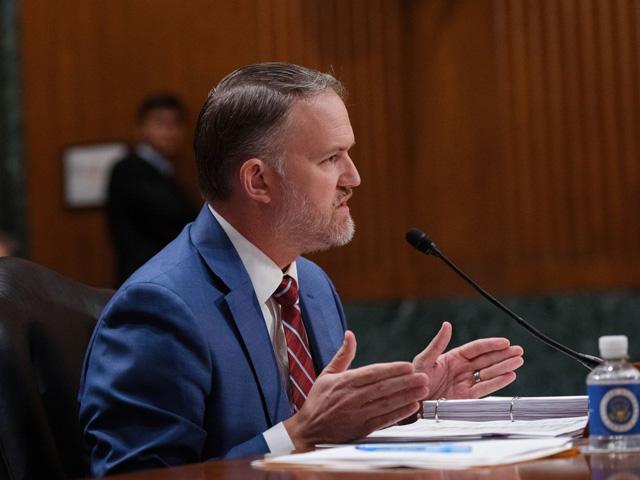
WASHINGTON (DTN) -- The U.S. Trade Representative (USTR) is seeking individual agreements with Mexico and Canada by the end of the year, while broader U.S.-Mexico-Canada Agreement (USMCA) issues are expected to take longer to resolve, Ambassador Jamieson Greer told senators on Wednesday.
Issues such as "rules of origin," labor and environmental provisions could be addressed in 2027, with the goal of incentivizing production in North America rather than in regions with excess capacity or nonmarket practices.
"I would love to have between now and the end of the year at least some arrangements -- one with Canada, one with Mexico," Greer said at Wednesday's Senate Finance Committee hearing.
On July 1, the U.S. entered a 10-year process of annual USMCA reviews and renegotiation rather than automatically renewing the agreement. Separate agreements with each country have sidestepped agriculture groups' calls for a trilateral renewal of the USMCA.
The administration is focusing on trade authorities within its control, while Congress maintains a role when changes to U.S. law are required.
"The president is going to have a hard time agreeing to renewal or even revisions if Mexico isn't playing ball in all areas," Greer said. "There are some issues in USMCA which take a longer time to address."
Those irritants include sugar, tomatoes and antidumping duties and seasonal produce imports; while non-trade barriers include third-country competition, sanitary and phytosanitary (SPS) barriers -- obstacles the administration wants to solve first before trilateral discussions.
"We want to make sure that any beneficiary ... trade between our countries benefits our countries and not a third country like Vietnam or China," he said.
STRATEGY FORWARD: WIN FIRST, RENEW SECOND
The Farm Bureau state presidents spoke with USTR Ambassador Jamieson Greer earlier in July.
"We know the president's style of negotiation, and that's to walk away," Kansas Farm Bureau President Glenn Brunkow told DTN. Brunkow said he hopes the strategy is intended to create leverage and ultimately bring Canada back to the negotiating table. "We're hopeful that that's what's going on."
He said much of Kansas' corn, soybeans, wheat and cattle production is exported across the continent.
Leverage and walking away were key themes this week after President Donald Trump announced 50% tariffs on Canadian goods. For more on that, see "Trump Adds 50% Tariffs on Canadian Goods" here: https://www.dtnpf.com/….
P[L1] D[0x0] M[300x250] OOP[F] ADUNIT[] T[]
Sen. Michael Bennet, D-Colo., offered the sharpest criticism of Greer at the hearing.
"A partisan discussion about (former President Joe) Biden versus Trump. That's not what our farmers and ranchers are looking for," Bennet said. "They're not looking for another direct payment from this administration to try to make up for the screwed-up trade policies that it's followed with respect to agriculture."
Bennet argued that ignoring farmers' calls for trilateral U.S.-Mexico-Canada Agreement discussions is a "punishment against our farmers and ranchers."
Daniel B. Pickard, head of Buchanan Ingersoll & Rooney's International Trade and National Security practice and lead counsel for Strawberry Growers for Fair Trade, said it's clear the White House is not pleased with the USMCA as it is.
"There are a lot of concerns regarding Mexican ag, especially when it comes to seasonal and perishable products and the effects that that has had on U.S. farmers," he said.
Pickard explained there are a few potential paths emerging and undetermined once a bilateral agreement is signed with Mexico.
If the U.S. reaches an agreement with Mexico but not Canada, the U.S. could have different trade obligations with each country, therefore implementing this agreement would require changes to U.S. law or the existing USMCA framework. Congress likely would have to get involved.
If the U.S. reaches an agreement with Mexico but makes no new commitments or concessions, the administration could potentially reach an executive agreement without congressional approval, since no changes to U.S. policy or law would be required.
U.S. trade officials are in Mexico this week for a third round of negotiations.
Democratic members of Congress believe tariff and trade authority must be approved by Congress itself, while some Republicans are hoping the issue eventually comes to their plate as well.
But the opportunity has not presented itself. Sen. Ron Wyden, D-Ore., introduced the Congressional Trade Powers Act of 2026 on Wednesday. The bill would limit the president's ability to impose tariffs by requiring congressional approval, create a bicameral committee to review presidential trade proposals and increase oversight of the USTR.
Outside of USMCA negotiations, other antidumping priorities involving tomatoes and strawberries could be addressed. Pickard said antidumping payments could come as soon as next month, potentially inspiring other commodities to solve their trade issues with Mexico in similar ways.
WHAT FARMERS ARE DOING ABOUT IT
New Jersey Farm Bureau President Allen Carter Jr. participated in meetings with USTR Ambassador Jamieson Greer.
Carter said Greer urged Farm Bureau leaders to publicly support the USMCA and make their views known to the administration if they want the agreement preserved.
Carter said Greer also discussed his responsibility to bring farmers' priorities to the president.
Carter knows the challenges of competing with imports. Regarding products coming from Mexico into New Jersey, he said, "It hurts because you know they're selling for pennies on the dollars of what New Jersey guys need to get for it."
New Jersey is a leading producer of blueberries, tomatoes, bell peppers, turfgrass and nursery crops.
One trade expert and negotiator in Washington who spoke to DTN said the U.S. Trade Representative's office is "running so thin."
Commodities with long-time trade irritants in USMCA are getting the relief they want, but it's dragging other commodities alongside, unwillingly.
They said the strategy of placing hundreds of products on tariff lists without adequate research is not working. When groups raise concerns, they only hope those concerns are heard. "That's what you get when you negotiate 60 deals around the world," the trade expert said.
Sen. Whitehouse, D-R.I., told Greer at the hearing: "I would urge you, and I think it's in your interest as an administration, to try to help reduce the burden on American consumers by reducing the level of inordinate tariff assessments. So good luck with that."
Watch USTR Ambassador Greer's Testimony here: https://www.c-span.org/….
Also see "Sen. Wyden Introduces Bill to Reassert Congressional Authority Over International Trade" here: https://www.finance.senate.gov/….
Jake Zajkowski can be reached at jake.zajkowski@dtn.com
Follow him on social platform X @jzajkow
(c) Copyright 2026 DTN, LLC. All rights reserved.

