



An Urban's Rural View
Ag's Case of Nerves Over USMCA
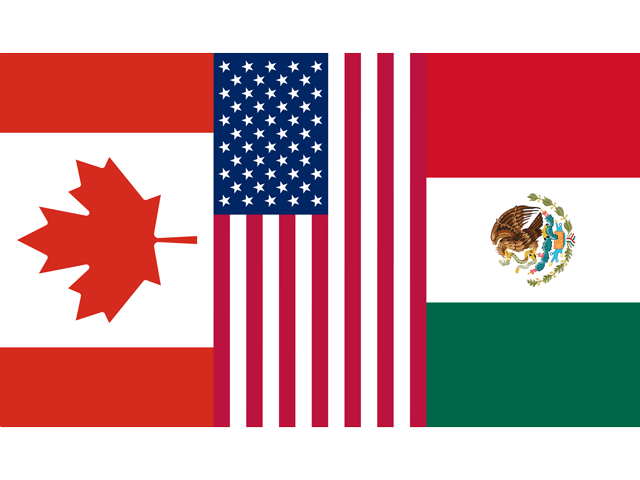
Even if President Donald J. Trump was indulging in negotiating talk when he said he is "not looking to renew" the United States-Mexico-Canada Agreement, the remark gave U.S. agriculture a case of nerves. And now he has officially decided against renewal, putting the free-trade agreement on a path to expire in 10 years.
The USMCA, which replaced the North American Free Trade Agreement in 2020 during Trump's first term, will now be subject to annual reviews for those 10 years. Those reviews are opportunities for renegotiating the agreement and not renewing does give the U.S. bargaining leverage. If a full renewal isn't agreed during that time, the deal will expire.
So far, as DTN Ag Policy Editor Jake Zajkowski reported, administration negotiators are holding separate bilateral talks with Canada and Mexico over "irritants" rather than doing a full-on renegotiation of the tripartite deal. (https://www.dtnpf.com/…)
Mexico and Canada are American agriculture's biggest export markets, and not just because sales to China have shrunk. U.S. ag exports to the two countries have risen 47% under USMCA. According to House Agriculture Committee Chair Glenn Thompson, ag and seafood exports to the two countries contribute $149 billion to the U.S. economy and support half a million jobs.
No wonder many U.S. commodity groups are among the 350 in the three countries pushing for a full 16-year renewal of USMCA. Jamie Beyer, a Minnesota soybean grower and member of ASA's executive committee, told the House Agriculture Committee earlier this year, "Failure to renew USMCA would be catastrophic."
P[L1] D[0x0] M[300x250] OOP[F] ADUNIT[] T[]
Knowing what the trade deal means to ag exporters, the president can't be serious about letting it lapse, can he? Actually, he can.
No doubt Trump is still eager to keep farmers and ranchers on his side, but when he thinks about the deal agriculture isn't top of mind. Bringing manufacturing back to the U.S. is a priority with him. That so many manufacturers serve the U.S. from Canada and Mexico irks him. As someone put it at a conference recently, Trump sees USMCA as a "car deal."
The U.S. trade deficits with Canada and Mexico offend another of Trump's sensibilities, his loathing of trade deficits. Many economists say trade deficits don't matter. The president hates them. In 2025, the U.S. ran trades deficit of $196.9 billion with Mexico and $46.4 billion with Canada.
President Trump says the U.S. doesn't need anything Canada or Mexico produces. It's easy to cite examples to the contrary. Many farmers rely on potash and according to the Fertilizer Institute 85% of U.S. potash is imported from Canada. Consumers want berries and avocados year-round and without Mexico the supply would be greatly reduced.
Not everyone in U.S. agriculture loves USMCA as it is. Mexico has much lower labor costs and specialty-crop production is labor intensive. Some crop producers in Florida and Georgia complain Mexico dumps products in the U.S. when they're harvesting, driving down prices.
U.S. dairy farmers are also unhappy. Instead of scrapping its supply management system, they maintain, Canada created import quotas for U.S. milk but gave them to Canadian competitors, who often let them lapse. They also charge Canada with evading USMCA-imposed caps on its exports of certain milk-solid products by gaming tariff categories.
In 2025, the U.S. ran big trade deficits in agricultural products with both countries. Still, even the specialty-crop producers aren't advocating terminating USMCA. Farm groups know that if USMCA goes away a wave of tit-for-tat tariffs will follow and U.S. exports will suffer. The only major ag group that seems to support non-renewal is R-CALF.
For the rest of agriculture, the mantra is fix it, don't scrap it. People in agriculture know that for better or worse, Canada and Mexico are not only their biggest markets. They're their most reliable trade partners.
China, by contrast, is actively striving to reduce its dependence on the U.S. for agriculture and food products.
If President Trump seriously intends to abandon USMCA, farmers and ranchers will have to hope that some administration during the next 10 years decides to negotiate for renewal. If Trump is just indulging in negotiating talk -- if what he really wants is changes in the agreement -- well, many in agriculture want changes, too.
Urban Lehner can be reached at urbanize@gmail.com
(c) Copyright 2026 DTN, LLC. All rights reserved.

