


Ask the Mechanic
Good in the Clutch
READER: I have a Ford 1710 utility tractor. My problem is the PTO (mower) will not engage (grinds) with the engine running unless I shut down the tractor, engage the PTO, then start the tractor back up. I can shift the transmission with the tractor running with no problem when the clutch is depressed, but I cannot engage the PTO with the engine running and the clutch pushed all the way down. In other words, the PTO runs whenever the engine runs if it is engaged. I bought the tractor in an online auction, and the son of the owner told me the tractor had "live" PTO, but apparently it doesn't. Do you have any ideas on this problem?
P[L1] D[0x0] M[300x250] OOP[F] ADUNIT[] T[]
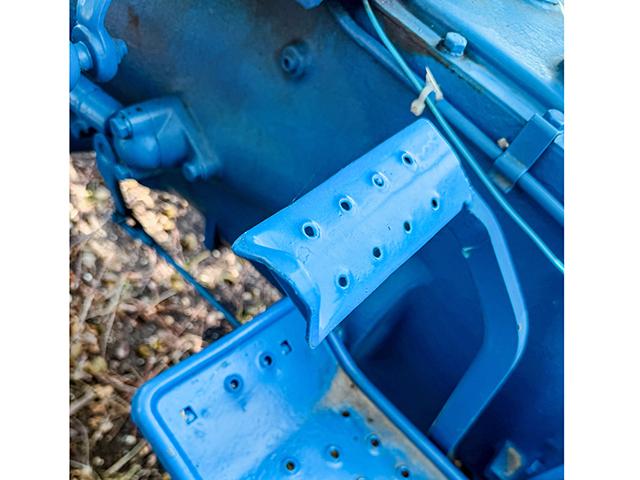
STEVE: It sounds like your PTO is too "live." Your problem is with the two-stage/phase clutch on your tractor. Your 1710 Ford tractor has two different clutches: one to drive the tractor and another to operate the PTO. With the engine running, the PTO should engage when the clutch pedal (see photo accompanying this article) is fully depressed. As the clutch is slowly released, the PTO will begin turning, and when the clutch pedal reaches about halfway up, the tractor will begin moving if it is in gear. As the clutch pedal reaches all the way up, both clutches are fully engaged. When you decide to slow or stop the tractor's motion and leave the PTO clutch running, you can accomplish this by partially depressing the clutch about halfway down. At this point, the tractor's motion will slowly stop, but the PTO will keep running. If you want to stop the PTO, just push down the clutch pedal all the way. This clutch arrangement allows the tractor's operator to slow down or completely stop when needed while leaving the PTO at full operating speed under power. This clutch feature comes in handy when the tractor needs to slow down for a large clump of grass when mowing or slowing down for a big windrow when pulling a PTO-driven square baler or tiller.
The PTO clutch adjustment is very sensitive to proper adjustment. But, first it is important to check clutch-free travel. That measurement is 3/4 to 1 3/16 inches. Then, when driving, the traction clutch should release around halfway down the pedal's travel. With these measurements in place, next, you need to remove the rubber plug in the clutch housing to access the PTO clutch adjustment. There are three fingers on the PTO clutch accessed through the hole. The clearance of the fingers should be .090 to .120. You will need to manually roll the engine over to adjust all three. If your PTO clutch is not stuck, you should be good to go. If the clutch is stuck, you will need to split the tractor to access the PTO clutch. The two-stage/phase clutch arrangement is popular with many brands of tractors.
Note: The reader replied that his two-stage clutch was out of adjustment, and now he is happy up there in Cleveland, North Dakota, enjoying all this cool weather that we did not have down here in Texas this summer.
**
-- Email Steve Thompson care of askthemechaniccolumn@gmail.com, and be sure to include your contact information and phone number.
[PF_1126]