


Ag Leaders Look Beyond Election Results
Ag Leaders, Rural Bankers Face Washington Reset After Election
MINNEAPOLIS (DTN) -- Agriculture faces a new round of relationship-building in Washington following Tuesday's election, with cattle producers preparing to introduce their priorities to incoming lawmakers as farm leaders assess the outlook for lending, trade, energy and food policy.
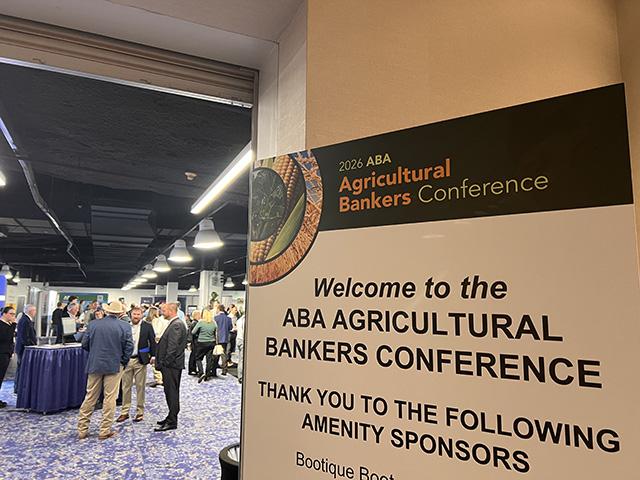
Groups representing commodity industries and other thought leaders in the industry offered their takes on the election and farm policy at the American Bankers Association's annual Agricultural Bankers Conference in Minneapolis.
Gene Copenhaver, president of the National Cattlemen's Beef Association (NCBA) and a Virginia cattle producer, said the industry lost some allies in the election and now must build ties with new members of Congress.
"We need to reset and be ready to educate a lot of new people that's going to be on the Hill," Copenhaver said in an interview Thursday.
"We've lost some people that were very friendly to our industry," he said. "But at the same time, we want to make new friendships and new networking."
Cattle producers have been loyal supporters of President Donald Trump but became frustrated over the president's plan to expand beef imports. Copenhaver said the plan to bring in 300,000 metric tons of beef under a lower tariff hasn't lowered hamburger prices, but it did affect cattle prices.
"It has not helped our cattle producers want to expand the herd," Copenhaver said.
In an interview Wednesday, David Kohl, an agricultural economist and professor emeritus at Virginia Tech University, cautioned against expecting an abrupt shift in policy. He pointed to tariffs, energy supplies and the balance of power in Washington as issues farmers should watch.
"I really don't see a knee-jerk reaction," Kohl said.
NEW LAWMAKERS AND FARM BILL PRIORITIES
Copenhaver said NCBA's Washington staff already is working to make contacts with incoming lawmakers and explain the needs of the cattle and beef industries.
Asked about farm bill priorities, Copenhaver said raising Farm Service Agency (FSA) lending limits would help young and beginning farmers. He described the lending provisions in what he called "Farm Bill 2.0" as an important tool for bringing the next generation into agriculture.
"I've been preaching for a year that I've been president of NCBA about our next generation," he said. "We need tools for them to come on."
Copenhaver, who said he worked as an agricultural lender for 38 years, drew on that experience to emphasize the role of credit in keeping established farm families in business and helping new producers get started.
P[L1] D[0x0] M[300x250] OOP[F] ADUNIT[] T[]
"I also got to put a lot of first-generation, especially cattlemen, in business that are still in business and doing well," he said.
"I think there's room for them, but they got to have some tools to do that," Copenhaver said. "And the ag lending community is a big part of that."
AG BANKERS PERSPECTIVE
Rob Nichols, president and CEO of the American Bankers Association, said ABA made a decision after the 2024 election to continue engaging Democrats despite them being in the minority. Staff continued to meet with Democratic leaders on the House and Senate Agriculture Committees as a result.
"We're going to be OK," Nichols told agricultural lenders.
At the same time, ABA staff and others noted there will be more than 100 new members of Congress in January who will need some education about farm policy and the role of agricultural bankers working with farmers.
When it comes to agriculture, the ABA wants to build upon a provision passed last year in the One Big Beautiful Bill Act, the Access to Credit in the Rural Economy (ACRE) Act. The OBBBA gave rural bankers a 25% exclusion of interest income received on a qualified farm or home real estate loan. ABA wants to see the ACRE provision expanded to provisions in the original legislation. ABA staff said that if the new Congress wants to tackle affordability, the ACRE act would lower interest rates for farm and home buyers in rural America.
TRADE AND ENERGY
Kohl questioned what comes next on tariffs, saying trade relationships with Canada and Mexico warrant particular attention.
"It'll be interesting to see what they do on the tariffs," he said. "But we've already done damage on the tariffs."
Kohl said farmers also should watch U.S. policy toward the Middle East and the Russia-Ukraine war because energy risks extend beyond the price of crude oil.
"Sometimes it's about the refinery capacity," he said.
Damage to refining infrastructure takes time to repair, he said, creating concerns that can persist beyond movements in oil prices. He expects more movement toward renewable energy and conservation, although he cautioned that policy changes would take time.
Asked about the difficulty of advancing biofuels policy, Kohl pointed to checks and balances as a reason to expect gradual movement.
"That's why you aren't going to see rapid movement, because there's checks and balances," he said.
FOOD POLICY AND LITIGATION
Luther Markwart, retiring CEO of the American Sugarbeet Growers Association, suggested the election results also could rein in Health and Human Services Secretary Robert F. Kennedy Jr., who has called sugar a "poison."
Markwart raised concerns about Kennedy's focus on ultra-processed foods, saying their potential definition and regulation could expose the food industry to litigation. He compared the situation to litigation involving glyphosate in the pesticide industry.
"As long as Kennedy is at HHS, there are a number of things he is doing that would affect the industry," Markwart said.
EXECUTIVE POWER AND 2028
Looking beyond immediate farm policy, Kohl called for reducing executive power and changing a presidential primary system that he believes favors political extremes.
"We've got to reduce the executive power across the board," Kohl said. "There's too much executive power, and our primary system's broke. It's basically for the extremes, powered by money."
Kohl said that structure makes it difficult for candidates in the political middle to advance.
"People want somebody from the middle, but the middle has a difficult time getting through," he said.
Kohl also sees generational change reshaping politics, agriculture and rural communities as younger people gain influence.
"Us baby boomers, we've had our time," he said. "So, it's going to be interesting to see the new wave of people coming on and how that influences the political environment and how it influences agriculture and rural areas."
Chris Clayton can be reached at Chris.Clayton@dtn.com
Follow him on social platform X @ChrisClaytonDTN
(c) Copyright 2026 DTN, LLC. All rights reserved.