



Corn Farmers, Biofuel Groups Furious
E15 Punt Sparks Anger as New House Council Reopens RFS Debate
OMAHA (DTN) -- The president of the National Corn Growers Association vented farmers' frustrations Thursday after learning House leadership not only prevented year-round E15 from being included in a must-pass funding bill, but instead created a council of House members charged with reexamining the Renewable Fuels Standard and helping oil refiners.
"Corn growers are disgusted, disappointed and disillusioned that after spending years of calling for passage of E15, Congress has again punted, and it has done so in a spectacularly weak and offensive way," said Jed Bower, president of NCGA and an Ohio farmer.
Rather than approve year-round E15 for fuel retailers, the House included language in an appropriations bill to create the E15 Rural Domestic Energy Council, which will be appointed by House Speaker Mike Johnson, R-La., "to develop legislative solutions to address the crisis facing our nation's farmers and refiners."
The bill requires the council to examine not only E15 expansion, but also mandates it to "investigate topics including, but not limited to," E15, U.S. refinery capacity, the Renewable Fuels Standard, EPA's Renewable Identification Numbers, "access to markets, and federal regulations that hinder American energy dominance."
The council will develop bills and submit them to Congress no later than Feb. 15 with the House expected to consider such legislation no later than Feb. 25.
"Bizarrely," is how Bower described the new council, created to reset the "beginning stages" of a bill that had already reached agreement between biofuel groups and the petroleum industry.
Geoff Cooper, president of the Renewable Fuels Association, said the E15 bill was already a compromise between farmers, refiners, fuel retailers and others. Cooper said a small group of midsized refiners were able to influence lawmakers to block the E15 fix.
"The current appropriations process was undoubtedly Congress' best opportunity to open a critical new market for hard-hit farmers and deliver lower gas prices to American families," Cooper said. "It is unfathomable to us that just a handful of midsized oil refiners, including foreign-owned companies, were apparently able to blow the whole thing up."
Growth Energy called the council, a "disgrace," saying it was meant to create another bill that would help the petroleum industry instead of agriculture.
"Congress picked foreign refiners over American farmers and drivers today. What a travesty," said Emily Skor, CEO of Growth Energy. "E15 delivers cost savings for consumers and generates long-term demand for American agriculture. These have been the facts during the 12-year-long debate over the simple act of allowing consumers the choice to buy a better value fuel year-round. Failure to act will now lead to farmers missing out on a critical market during the worst farm crisis in 40 years."
HOUSE HEARING
The House Rules Committee on Thursday held an "emergency session" to hear testimony for the E15 bill, H.R. 1346, the "Nationwide Consumer and Fuel Retailer Choice Act." The committee, though, took no action to advance the bill. The hearing essentially gave a handful of lawmakers a chance to testify about the bill and raise complaints about how the issue has been handled.
P[L1] D[0x0] M[300x250] OOP[F] ADUNIT[] T[]
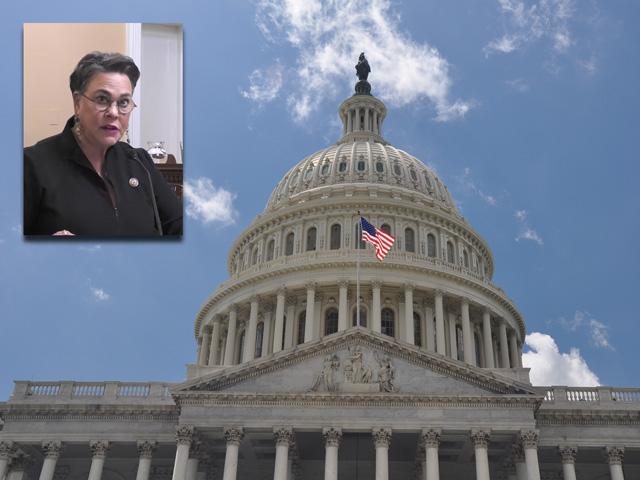
Rep. Harriet Hageman, R-Wyo., tied passage of E15 to the need for relief for small petroleum refiners from blend requirements under the Renewable Fuels Standard. Hageman criticized the effort to push E15 through the appropriations bill rather than through the committee process. She also said she was surprised she was never consulted, even though Hageman represents several small refiners in her state.
Harriet said any changes in the definition of small refineries "will structurally disadvantage refineries in Wyoming and across the country." She added, "Second, we do not need to destroy small refineries in the pursuit of E15."
Small refiners are frequently battling EPA over the Renewable Fuel Standard and its annual blend obligations. Refiners file dozens of exemption requests every year to reduce their blend requirements. Smaller and midsized refiners also have frequently sued EPA if they do not receive a waiver.
Hageman thanked leadership for creating the council to look at rural domestic energy and "to have a more appropriate discussion over the E15 proposal," Hageman said. "I really do look forward to the robust discussion on these incredibly important issues and I am cautiously optimistic that we are going to be able to find a solution to address this matter."
COUNCIL MAKEUP QUESTIONED
Rep. Jim McGovern, D-Mass., ranking member of the Rules Committee, and an Agriculture Committee member, also questioned how the rural energy council will be made up. Lawmakers said they expected it would be bipartisan, but Rep. Randy Feenstra, R-Iowa, also said he and Rep. Stephanie Bice, R-Okla., will serve as co-chairs of the new council.
"We're still addressing the details on this, but I anticipate it would be bipartisan," said Rep. Gary Palmer, R-Ala., a member of the House Energy and Commerce Committee.
Rep. Greg Landsman, D-Ohio, another member of the House Energy and Commerce Committee, pointed out the E15 bill nearly passed at the end of 2024 before Tesla CEO Elon Musk pressed House leaders to cut provisions from a funding bill. Landsman also pointed out E15 has bipartisan support.
"It is a retailer choice bill and at a time when our farmers and our constituents really need us to act in a way that is going to help them," Landsman said. He added, "Again, this is a really big deal for farmers who have been hit and it is a very big deal for consumers."
McGovern pointed out the NCGA news release expressing a great deal of frustration over the issue, "because they are like, 'You are just kicking the can down the road,'" McGovern said.
McGovern questioned why E15 legislation hasn't been able to advance when it seems to have bipartisan support. "It seems like we could have found a way to move much quicker on something that has bipartisan support, but that's just me," McGovern said.
NEED FOR MARKET
Rep. Adrian Smith, R-Neb., was among the lawmakers pointing out farmers need reliable markets and access. The E15 bill expands market access and lowers prices at the pump for consumers. Smith said there was already a lot of agreement among stakeholders on the E15 bill, but still said he is "encouraged" by the creation of the council. Still, Smith added, "Let me be very clear, this council is not a substitute for action, and I refuse to let it be utilized as a delay tactic. It is a results-driven commitment."
Without an E15 fix, Smith said fuel retailers and the biofuel industry would continue to face yearly uncertainty and a patchwork of regulations across different states.
Rep. Mariannette Miller-Meeks, R-Iowa, gave emotional testimony about the issue, citing "the existential crisis" facing farmers trying to make a living right now.
"Farmers are rugged individuals ... They are not asking for bailouts. They are not asking for handouts. What they want is to be able to have a market for their product," Miller-Meeks said. She added corn farmers just want a fair deal to a regulation that is outdated, and E15 needs to pass this year. She added that Brazil would increase ethanol production if the U.S. does not.
"We are asking that farmers be treated fairly, that they are allowed to produce and have a market for their crops," she said. "I don't know how many times my colleagues here from the Midwest can tell you of the number of individuals they have met with that are on the cusp of bankruptcy -- that are not planting."
Rep. Austin Scott, R-Ga., another member of both the Rules and Agriculture committees, said he recognized the blunt frustrations by farm and biofuel groups, but adding authorizing bills into appropriations bills can be "tremendously dangerous." Scott said he has serious reservations over such moves. Still, Scott noted he is hearing from agricultural bankers about the challenges facing farmers.
"There is no commodity when you start putting pencil on the paper that the revenue for that commodity is going to be higher than the cost of production," Scott said. "It has been that way for a while now."
Scott also noted the multiple times Congress and the administration have needed to provide ad-hoc aid in recent years and said another package may be needed this year.
"Our farmers across the country have lost equity that has taken generations to accumulate, much of it in land," Scott said.
See, "House Leaders Reject Effort to Add E15 to Key Funding Bills," https://www.dtnpf.com/….
Also see, "Funding Deal Reached by Congress Doesn't Include More Farm Aid," https://www.dtnpf.com/….
Chris Clayton can be reached at Chris.Clayton@dtn.com
Follow him on social platform X @ChrisClaytonDTN
(c) Copyright 2026 DTN, LLC. All rights reserved.

