



Ag Policy Blog
CEOs Heading to China With Trump; E15 Bill on Deck in House
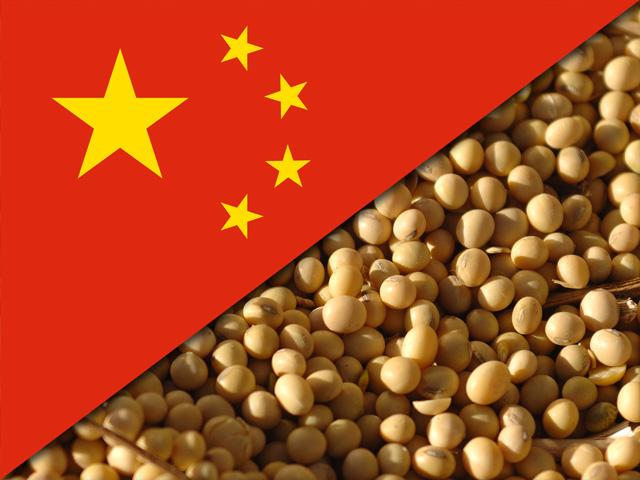
Soybean and corn both have their market-moving moments this week with the summit in China and Congress looking to vote on E15 legislation.
Cargill CEO Brian Sikes will be among 17 corporate executives who will travel with President Trump to China this week.
Sikes' presence raises the possibility of a deal for China to buy U.S. commodities.
Ben Smith of Semafor wrote. "In Donald Trump's personalist Washington, these big American companies… tend to drive policy far more than any broader strategy or ideology."
The stakes for the summit are higher now given the challenges with the war in Iran with expectations Trump will look to Chinese President Xi Jinping to help end the war.
Looking at soybeans, CoBank, the Denver-based bank for co-operatives, said in a newsletter Monday that "China doesn't need U.S. soybeans" but might commit to buying more corn, wheat, sorghum or other agricultural commodities.
Tanner Emke, CoBank's lead grain and oilseeds economist wrote, "Despite a late 2025 bilateral agreement committing China to purchase at least 25 million metric tons of U.S. soybeans annually through 2028, a 10% supplemental Chinese tariff remains in place on U.S. soybeans."
"China's soybean stocks are approaching historic levels, Brazil continues to hold a strong share of the market, and ongoing tensions related to Iran further hinder the normalization of U.S.-China trade," Emke said.
"As a result, it is unlikely that China will commit to purchasing more U.S. soybeans. China may instead commit to buying corn, wheat, sorghum or other agricultural commodities.
P[L1] D[0x0] M[300x250] OOP[F] ADUNIT[] T[]
"Soybean crush margins in China are also negative. With ample reserves of soyoil, China is now exporting soyoil to India," Emke said.
"Chinese consumption of soyoil, meanwhile, is not likely to be strong with a slowing economy. Chinese hog prices are also at 16-year lows, discouraging Chinese farmers from herd expansion or increasing feed rations. Additional soybean imports from the U.S. would have to be stockpiled at a time when Chinese soybean supply is already large and demand continues to slow."
Ehmke concluded, "The Iran war will likely dictate most of the discussion. It is not expected that U.S. agricultural export discussions will have the significance they once did."
E15 VOTE EXPECTED IN HOUSE
House Majority Leader Steve Scalise, R-La., has listed the bill to legalize the sale of E15 fuel nationwide and year round for a vote this week.
Scalise did not announce a day for the vote, but there have been reports it will be Wednesday.
The bill, H.R. 1346, is titled the "Nationwide Consumer and Fuel Retailer Choice Act of 2025." It is sponsored by Rep. Adrian Smith, R-Neb.
Smith and Reps. Michelle Fischbach, R-Minn., and Nikki Budzinski, D-Ill., and National Corn Growers Association President Jed Bower, an Ohio farmer, have scheduled a news conference today to promote the bill.
Representatives from the American Farm Bureau Federation, Growth Energy, the National Farmers Union, and the Renewable Fuels Association will also be available to answer reporters' questions.
The National Farmers Union sent its members an action alert on Monday telling them to urge Congress to vote for the bill.
Still, the bill is drawing pushback from high places. The Wall Street Journal's editorial on Monday suggested farm-state lawmakers and ethanol supporters, "threatened to hold the farm bill hostage" over E15. The WSJ suggested higher ethanol blends "can increase smog in warm weather, which is why EPA restricts its sale during the summer." The editorial also suggested higher ethanol blends "can corrode gasoline pumps, storage tanks and other infrastructure unless retailers and distributors make upgrades." The editorial stated the legislation would hurt small refiners as well.
"There may be a compromise in permitting year-round E15 in areas with low smog, in return for repealing the ethanol mandate. But the ethanol lobby wants to have it every which way, and it's taking advantage of election-year politics and sympathy in Congress for soybean and corn farmers hurt by tariffs," the WSJ wrote.
House leadership promised Midwestern Republicans a vote on E15 in order to get their votes for passage of the farm bill. Small and medium-sized refiners have objected to the content of H.R. 1346 and there have been rumors of changes to the bill.
House Democrats have called for a vote on E15 but a House Democratic aide said whether Democrats vote for it "really depends on the bill itself" and that there were "rumors over the weekend that the majority was watering it down to further appease refiners."
DTN Ag Policy Editor Chris Clayton contributed to this report.
Jerry Hagstrom can be reached at jhagstrom@nationaljournal.com
Follow him on social platform X @hagstromreport
(c) Copyright 2026 DTN, LLC. All rights reserved.
Comments
To comment, please Log In or Join our Community .