


An Urban's Rural View
Rudolph Diesel Was Thinking of Farmers When He Invented His Engine
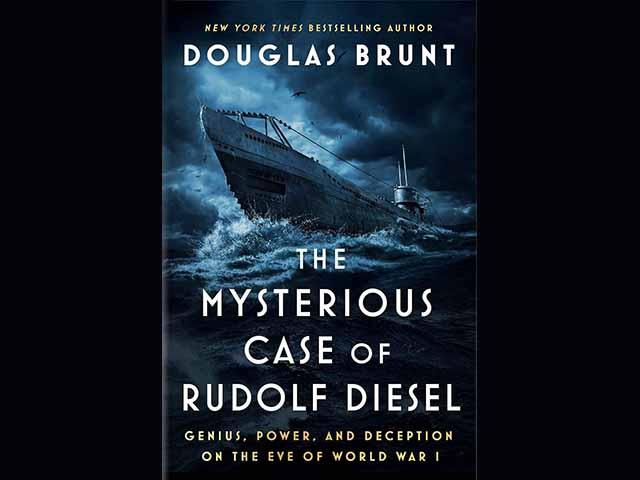
When Rudolph Diesel disappeared in 1913, many suspected foul play. The prime suspects were Germany's Kaiser Wilhelm II and U.S. oil man John D. Rockefeller.
Both would have had reason to want the inventor of the diesel engine dead.
The militaristic kaiser was building a diesel-powered submarine fleet. He had no interest in other countries being able to use the technology for similar purposes -- particularly Great Britain, the reigning naval power.
Though Diesel was German, he had lived as a boy in Paris and London and considered himself a citizen of the world. He was intent on spreading the technology to countries everywhere. He was actively helping the English perfect his engines.
To Rockefeller, the diesel engine looked like a potential competitive threat. Diesel's early engines could run on any kind of oil, including pure plant oils. When he showed off the engine at the 1900 World's Fair in Paris, it ran on 100% peanut oil.
Diesel hoped farmers would not only use his engines but grow their own fuels. Imagine Rockefeller's dismay had Diesel's dream of powering his engines with plant oils come true. Rockefeller wanted fossil-fuel-powered auto engines to dominate, as they ended up doing. The future business success of Rockefeller's Standard Oil Co depended on it.
P[L1] D[0x0] M[300x250] OOP[F] ADUNIT[] T[]
Despite the never-ending public speculation, it's unlikely that either the kaiser or the oil baron did Diesel in. In the recently published book "The Mysterious Case of Rudolph Diesel," author Douglas Brunt offers a different and intriguing explanation for the inventor's disappearance.
No spoilers here, but I can divulge this: Brunt convincingly rejects the most popular theories, including murder.
Much of the book retells Rudolph Diesel's biography. He lived an impressive life. As a child he was keenly observant and made drawings of things he saw. He had a gift for math and science.
His father was a financially strapped bookbinder but a relative recognized Diesel's talent and paid for his education. He always got the best grades.
Early in life he became obsessed with the idea of inventing a workable internal combustion engine. External-combustion steam engines were still the motive power of ships and factories, but the coal required to run them, the manpower required to fill those engines with coal and the pollution they produced were problematic.
A gasoline-powered internal combustion engine had been invented but it was small and of limited use. Diesel's university professors and employers saw the potential of the engine he was working on and encouraged him.
Reading this book, anyone who has followed the debate over biofuels has to wonder: What would have happened had Rudolph Diesel not disappeared? Could plant oils have become the reigning motive power of the automotive age? Was the predominance of fossil fuels inevitable?
This much can be said: Engines running on 100% plant oil would have been safer and less polluting. But would they have been as effective in powering automobiles?
Diesel engines did end up in cars, to be sure -- they're common in some parts of the world, including Europe -- but these diesels run on fossil fuels. As I understand it, one reason for this is that pure plant oils are too thick for the engines' fuel injectors and can cause congestion.
Biodiesel, which is increasingly used these days, isn't a pure plant oil. Soybean oil undergoes a chemical process to make it usable. And most of the biodiesel sold is only 5% or 20% bio. Engine makers won't warranty higher concentrations; 100% biodiesel is more susceptible to freezing in cold weather.
One other thing: the world's automobile fleet would likely have been smaller, or at least slower to grow, if fueled by plant oil alone. A great deal more land would have had to be put in cultivation. The world would have needed many more farmers, especially in the early days when crop yields were much lower than today's.
As tempting as it is to blame the oil companies for stifling the early competition from plant oils, the triumph of fossil-fuel auto engines was probably inevitable. Corn and soybean farmers weren't destined to get more than the piece of the action they're coming to get today.
Still, it's fun to play the counterfactual "what if" games. Brunt's book is a good place to start that speculation -- and a good read.
Urban Lehner can be reached at urbanize@gmail.com
(c) Copyright 2026 DTN, LLC. All rights reserved.
Comments
To comment, please Log In or Join our Community .