


An Urban's Rural View
What We Celebrate on Labor Day
Here it is again, September. Where has the year gone? In early September there's Labor Day, the holiday that pays tribute to American workers -- a broad category that includes everyone from factory workers to farmers, from accountants to astronomers, from hairdressers to hematologists. If you work for a living, the day is about you.
It didn't begin that way.
The stories behind some holidays are widely known. Most Americans could tell the tale of the pilgrims and the Indians at the first Thanksgiving or the child born in a manger in Bethlehem who inspired Christmas. But how many are familiar with the origins of Labor Day?
It's a story worth reviewing this year, Labor Day's 130th anniversary and the nation's 250th.
The holiday's declaration was the culmination of a series of events in the last two decades of the 19th century. It was a time of rapid industrialization. Working conditions in factories were unsafe and onerous -- long days and weeks, few breaks, fewer labor-law protections. Many of the factory workers were as young as five or six.
In response to these conditions, workers began to organize. The labor movement was born. Labor unions started demanding shorter hours and higher wages. Businesses resisted. There were strikes and, at times, riots.
P[L1] D[0x0] M[300x250] OOP[F] ADUNIT[] T[]
The first event to lay the groundwork for Labor Day was a parade by 10,000 workers in New York in September 1882. In response, several states passed legislation making the first Monday in September a workingman's day of rest. But it wasn't yet a national holiday.
On May 1, 1886, workers launched a general strike in Chicago demanding an eight-hour workday. The Haymarket affair, as it came to be called, went on for days and turned violent, with 11 people killed and many injured. Inspired by this event, dozens of countries around the world instituted a workers' holiday on May 1 under names like International Workers' Day and May Day.
Eight years later, a different event prompted the creation of a national Labor Day in the U.S. Stung by a depression that began in 1893, the Pullman Palace Car Company, which manufactured railroad cars, cut its workers' wages 25% but kept rents and grocery prices unchanged in the company town of Pullman, Illinois.
When workers asked to meet with George Pullman to discuss their grievances, he refused. He ordered them fired. In sympathy, railway workers boycotted trains pulling Pullman cars and then went on strike. As many as 250,000 workers in 27 states took part.
Violence ensued. President Grover Cleveland's attorney general got an injunction to break the strike, the first time that had happened. Cleveland sent in federal troops even though the Illinois militia appeared to have the situation under control. More violence, some fatal. In the end, the government prevailed.
Though Cleveland was a pro-business Democrat, he saw political benefit in making a conciliatory gesture to organized labor. On June 28, 1984, in the midst of the Pullman turmoil, he signed the law creating Labor Day.
Foreigners often wonder why the U.S. holiday is in September instead of May. It's partly because states had already instituted Labor Days in September after the 1882 New York parade. But there was something else: May Day was, in at least some minds, associated with socialism. Avoiding that association was a political imperative.
Thus, we have Labor Day on the first Monday in September. In cities like Chicago and New York, labor unions still hold parades or rallies to celebrate -- although this year, Chicago's will be the Saturday before the holiday and New York's, the Tuesday night after.
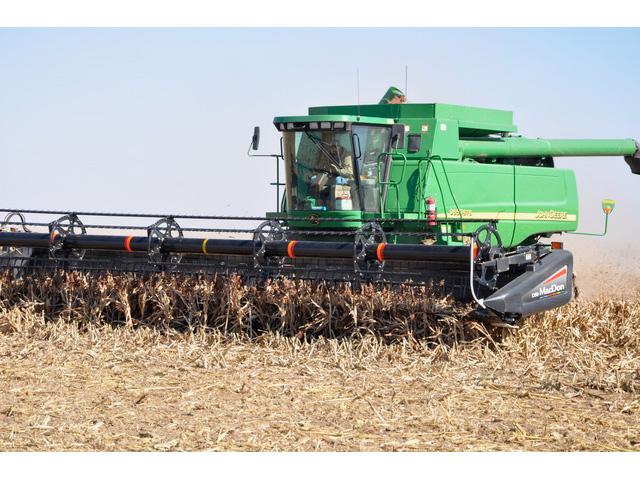
Most Americans won't do anything specifically related to workers on Labor Day, other than not work. (Some farmers, alas, will celebrate Labor Day by laboring, given the season.) Over time, Labor Day has mostly lost its connection with labor.
That type of loss afflicts many old holidays, and not just in the U.S. In Italy, the Aug. 15 holiday Ferragosto has become disconnected from not one, but two origins. It was first declared by the Emperor Augustus in ancient Rome and later became associated with the Roman Catholic feast of the Assumption. Today, for many Italians, it's just a day off.
In providing a three-day weekend, Labor Day set a valuable precedent. In 1968, President Lyndon B. Johnson signed the Uniform Monday Holiday Act, which moved three other holidays to Mondays. Today, five U.S. holidays fall on the first day of the week.
You might call that work well done.
Happy Labor Day.
Urban Lehner can be reached at urbanize@gmail.com
(c) Copyright 2026 DTN, LLC. All rights reserved.
Comments
To comment, please Log In or Join our Community .